Interfacial Stress
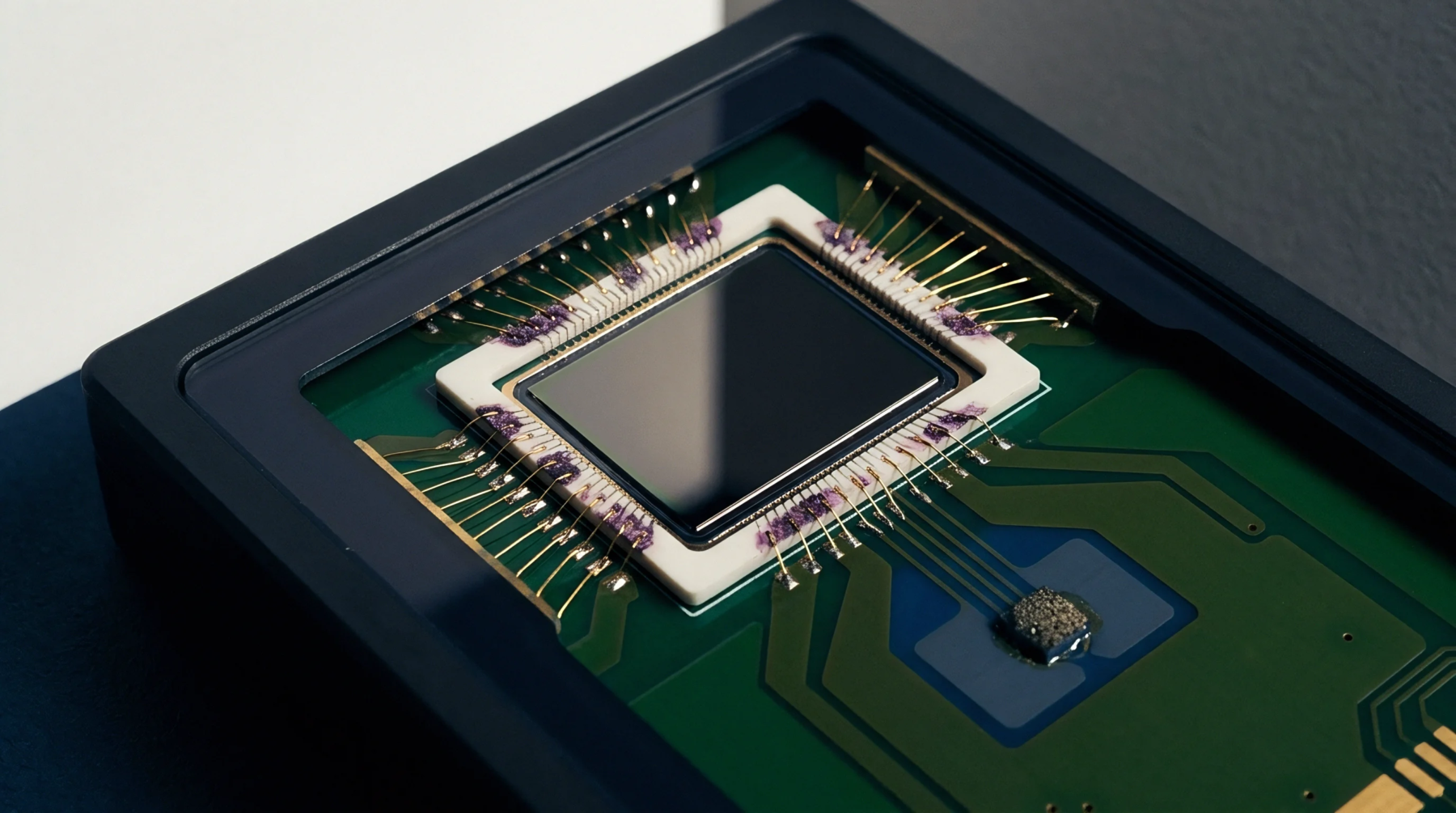
An interaction occurs when physical deformation from a circuit board or mounting structure is transmitted to an attached sensor or electronic component. This mechanical strain coupling can alter the electrical properties of piezoresistive or capacitive sensing elements, leading to measurement drift. Minimizing this effect is a primary concern in the design of precision transducers and high-accuracy measurement assemblies.
Transducer Interference
Temperature changes often induce differential expansion between the sensor housing and the substrate, causing unwanted output variations. This unwanted signal can be mistaken for a change in the physical quantity being measured.
Mounting Technique
Using compliant adhesives or flexible mounting tabs represents a common strategy to isolate the component from substrate stress. These soft interfaces absorb the deformation of the printed circuit board, reducing the stress that reaches the die. This isolation is verified through environmental thermal cycling where sensor outputs are monitored for hysteresis.
Calibration Stability
The stability of the sensor over long periods depends on the persistence of the isolation scheme used during installation. If the adhesive degrades or the mounting screws loosen, the transmission of strain changes, leading to unpredictable calibration drift. Accurate quantification of this coupling helps designers choose materials and geometries that resist these environmental influences.