Flexibility Metric
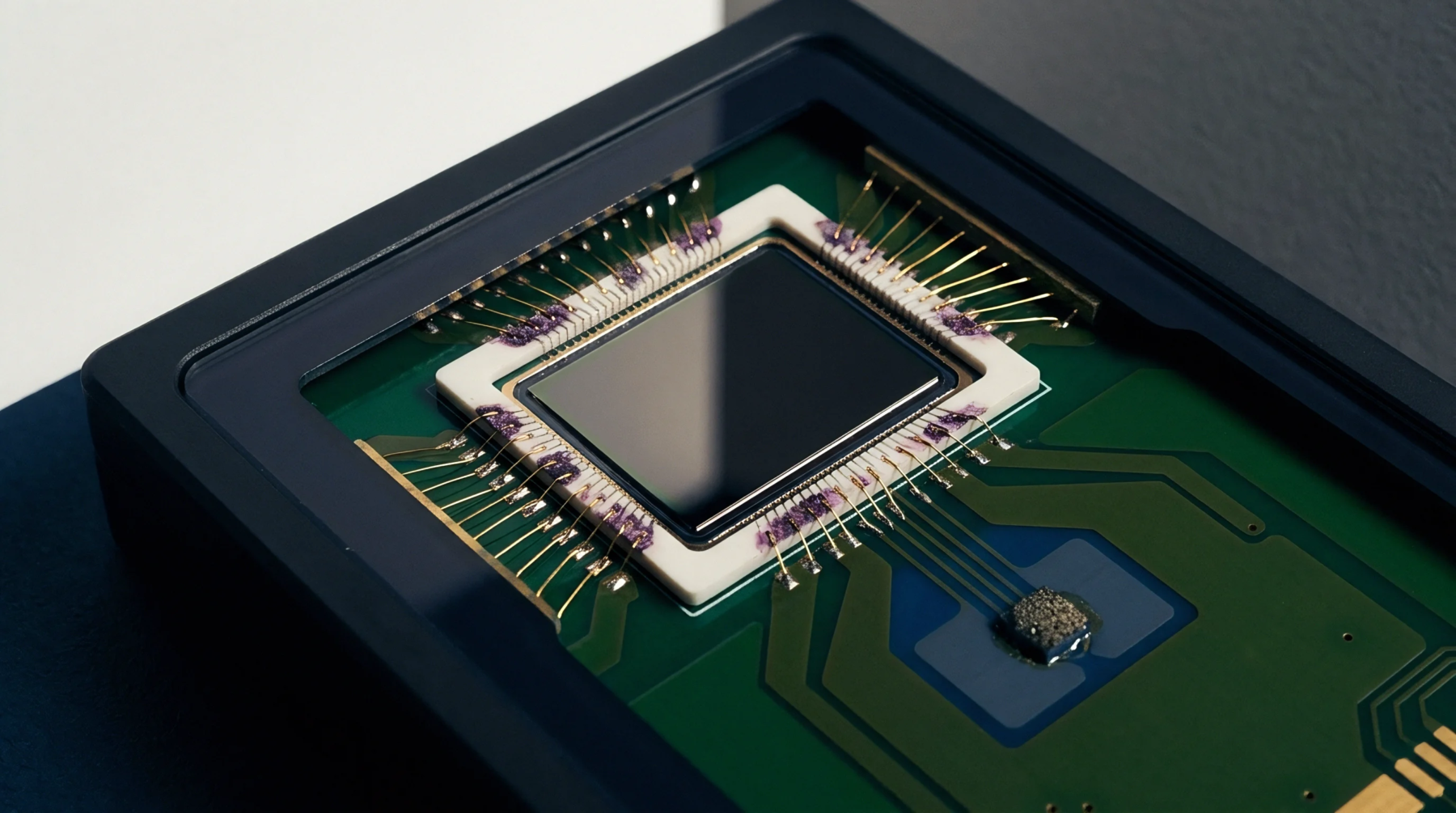
Mechanical flexibility of an adhesive or solder interface that allows it to deform under stress without losing structural integrity or electrical connectivity. Sufficient die-attach compliancy prevents the cracking of silicon chips caused by the mismatch in thermal expansion between the chip and its carrier. Flexible epoxy materials or soft solder alloys provide the necessary movement to absorb these strains.
Rigid attachments lead to delamination at the bond line.
Stress Mitigation
Internal tension within the package is distributed through the thickness of the attachment layer. High die-attach compliancy reduces the transfer of mechanical load from the substrate into the sensitive semiconductor die. This characteristic is particularly important for large chips mounted on organic laminate boards.
Measurement Procedure
Testing the die-attach compliancy involves measuring the shear strength and the modulus of elasticity of the cured interface material. Standard protocols use micro-tensile testers to observe the displacement versus the applied force. Failure occurs when the material cannot accommodate the mechanical load.
Process Influence
Curing temperature and the thickness of the bond line directly influence the resulting die-attach compliancy in a finished assembly. Over-curing can make a polymer interface too brittle for thermal cycling environments. Thick bond lines generally increase the total flexibility of the joint.