Predicting Long Term Interfacial Creep Shear Failure at Transient Thermal Interfaces beyond Two Hundred Degrees
Predicting long-term interfacial creep shear failure beyond 200°C requires Anand viscoplastic strain modelling validated by transient thermal structure functions.


Rheology
Deformation under constant load shifts rapidly once solid-state joint interfaces operate past sixty percent of their absolute melting temperature. Between 200°C and 300°C continuous operation, high-density thermal interface materials endure sustained shear stress from differential expansion across adjacent substrates. Silicon carbide power semiconductors, direct bonded copper ceramic substrates, and aluminum silicon carbide baseplates carry distinct thermal expansion coefficients spanning 3.7 to 18.0 parts per million per Kelvin.
During thermal transients with ramp rates above 50 Kelvin per second, this mismatch drives cyclic interfacial shear strain that triggers time-dependent inelastic flow.
At these temperatures, combined elastic, plastic, and viscoplastic strain rates govern mechanical response. Standard elastic approximations break down because high homologous temperatures drive simultaneous stress relaxation and microstructural accommodation. Viscoplastic strain rate equations capture this by tying current stress states to thermal activation energies and microstructural deformation resistance.
Viscoplastic Shear Deformation at High Homologous Temperatures
Under transient thermal gradients, inelastic shear strain accumulates at non-linear rates set by thermal activation. Solid-state sintered silver interlayers, transient liquid phase bonded joints, and soft metallic foils respond with distinct strain rates under cyclic shear above 200°C. Sub-micron sintered silver pastes, running at a homologous temperature near 0.40 at 220°C, show an initial transient response before settling into steady-state secondary deformation governed by grain boundary processes.
Sintered silver sub-micron pastes under 15 MPa bonding pressure maintain bulk shear strain rates below 1e-8 inverse seconds at 225 degrees Celsius under a constant 5 MPa shear load.
Thermal transients spike strain rates by driving up stress before relaxation can take place. Fast power pulses in wide-bandgap switches generate local thermal spikes that drive interface temperatures up by 80 Kelvin in under 100 milliseconds. The resulting shear strain rate scales exponentially with instantaneous absolute temperature through Arrhenius kinetics.

Garofalo Strain Equations for Sintered Silver Interlayers
The Garofalo hyperbolic sine model fits steady-state creep rates across broad stress ranges by connecting low-stress power-law behavior to high-stress exponential regimes:
dγ/dt = A · (sinh(α · τ))^n · exp(-Q / (R · T))
Here, dγ/dt is engineering shear strain rate, A is a material constant, α is the stress multiplier in inverse Megapascals, τ is applied shear stress in Megapascals, n is the stress exponent, Q is activation energy in Joules per mole, R is the universal gas constant, and T is absolute temperature in Kelvin. For micro-porous sintered silver at twenty percent void fraction, calibrated parameters are A = 1.2e5 per second, α = 0.08 MPa^-1, n = 3.4, and Q = 82.5 kJ/mol.
Anand constitutive models extend this framework with a single internal state variable for isotropic flow resistance. The evolution equation tracks strain hardening alongside dynamic recovery during thermal cycles. Above 200°C, dynamic recovery accelerates, reducing effective deformation resistance and permitting larger shear strain increments per cycle.
Static shear strength measurements made after assembly are often assumed to reflect lifetime joint integrity under thermal cycling.


Dislocation
Atomic transport mechanisms govern degradation rates when thermal interfaces remain above 200°C under stress. Diffusion follows distinct lattice and grain boundary paths depending on grain size, stress levels, and local temperature. Bulk lattice diffusion requires high activation energy, while grain boundaries offer lower-energy routes for vacancy movement during thermal swings.
Coble creep dominates fine-grained sintered interlayers at low to moderate stresses, where boundary vacancy flux sets the deformation rate. Higher shear stresses activate dislocation climb and glide, allowing dislocations to bypass obstacles, shifting the stress exponent and accelerating structural damage.

Diffusion Pathways along Interfacial Metallization Boundaries
Metallization stacks at the interface directly alter diffusion rates and void nucleation kinetics. Electroless nickel immersion gold (ENIG) and electroless nickel electroless palladium immersion gold (ENEPIG) finishes react with bonding elements to produce intermetallic compounds. Above 200°C, tin-based solders and transient liquid phase systems rapidly form binary phases including Cu6Sn5, Cu3Sn, and Ni3Sn4.
As intermetallics grow, they consume substrate metallization, creating arrays of Kirkendall voids from unbalanced atomic flux across the interface. These micro-voids merge along interface planes, cutting effective load-bearing area. Applied shear stress concentrates on the remaining metallic bridges, driving up local stress intensity until micro-cracks propagate.
Void Nucleation and Coalescence at Thermal Interfaces
Cyclic thermal stress accelerates void growth by pulling vacancies toward grain boundary triple junctions and interface steps. Thermal expansion mismatch against mechanical constraint generates local multiaxial stress states, promoting shear deformation along primary interface planes.
Interfacial degradation modes follow specific physical routes under high-temperature transient exposure:
- Intermetallic Void Coalescence occurs when differential diffusion rates across substrate boundary layers form planar void sheets that reduce shear load capacity.
- Grain Boundary Sliding manifests in fine-grained microstructures where adjacent crystals slip along boundary planes under sustained shear stress above half the absolute melting point.
- Pump-Out Displacement develops when thermal expansion pulses force low-viscosity or un-sintered interface phases laterally out of the joint gap during temperature crests.
- Transgranular Fatigue Cracking initiates at localized stress risers created by void clusters and propagates through primary crystal grains during transient thermal cycles.
Qualification under IEC 60749-25 mandates continuous thermal resistance monitoring because post-test electrical checks mask up to forty percent of localized interfacial delamination.
Microstructural evolution during high-temperature thermal dwells alters joint behavior. Grain growth reduces overall boundary area, shifting the dominant deformation mechanism from Coble creep to dislocation climb-assisted glide ~ a transition that leaves the joint more vulnerable to mechanical shock and vibration during startup.
Under steady thermal exposure, coarse grain structures resist long-term creep better than fine-grained interlayers.


Rupture
Extrapolating accelerated life test data requires verifying that deformation mechanisms remain unchanged across the test temperatures. Standard testing cycles components between harsh thermal limits to compress years of field operation into weeks. But crossing phase transition or oxidation thresholds alters how joints fail, invalidating empirical acceleration factors.
Larson-Miller formulations bundle exposure temperature and rupture time into a single scalar value, assuming activation energy and deformation mechanisms stay constant across the projection. Above 200°C, secondary effects like surface oxidation and phase decomposition break classical time-temperature superposition models.
What Acceleration Limits Bind Larson Miller Extrapolations above Two Hundred Degrees?
Larson-Miller parameter calculations utilize the standard expression:
LMP = T · (C + log10(t_r)) · 10^-3
Here T is absolute temperature in Kelvin, t_r is time to stress rupture in hours, and C is a material constant typically taken near 20 for metallic alloys. For sintered silver interfaces under 10 MPa shear stress, testing at 220°C (493 K) yields a rupture life of 1,200 hours, corresponding to an LMP of 11.38 at C = 20. Projecting this to an operational ceiling of 250°C (523 K) yields an estimated rupture time of 142 hours under identical stress.
This extrapolation holds only if grain growth remains linear. Above 240°C, silver grains grow rapidly and non-linearly, reducing grain boundary pinning and increasing dislocation mobility. The effective value of constant C falls from 20 to 14.2, causing true rupture life at 250°C to collapse to 28 hours.
Projections that ignore this mechanism shift overestimate interface life by a factor of five.

Strain Energy Density and Monkman Grant Correlations
Monkman-Grant relationships link minimum steady-state creep rate to total time to failure through the equation:
(dγ_min / dt)^m · t_r = C_MG
The exponent m approaches unity for most metallic joints, while C_MG represents the failure strain constant. Tracking accumulated strain energy density offers a clearer view in transient thermal regimes. Adding elastic strain energy to inelastic plastic dissipation per cycle gives the total damage work per thermal swing.
To see how lifetime prediction works under transient conditions, consider a power module interface cycling between 50°C and 230°C. The joint uses a 40-micrometer thick sintered silver layer between a Silicon Carbide die and a Direct Bonded Copper substrate. Thermal expansion mismatch drives an effective cyclic shear strain range of 0.015 at peak temperature (230°C). Dynamic stress relaxation measurements show an initial shear stress peak of 18 MPa, decaying to 4 MPa over a 120-second thermal dwell.
Calculating inelastic strain work per cycle gives an energy density dissipation of 0.18 Megajoules per cubic meter. Summing this work against a critical energy limit of 450 Megajoules per cubic meter yields a lifetime estimate of 2,500 thermal cycles. Raising peak dwell temperature to 250°C increases cyclic energy density to 0.38 Megajoules per cubic meter, dropping expected life to 1,184 cycles under identical stress.
Interfaces subjected to transient power pulses degrade faster through stress-driven grain boundary migration than through steady thermal exposure.
High-temperature joint degradation mirrors bond-coat oxidation in gas turbine thermal barrier coatings. In both systems, growing aluminum or chromium oxide scales deplete metallic elements near the boundary, creating localized stress points that trigger delamination.
Extrapolation accuracy relies heavily on parameter bounds. Published activation energies for nano-sintered pastes cite 82.5 kJ/mol based on short-term stress relaxation tests. However, thermal exposure beyond 1,000 hours lowers this value to 61.0 kJ/mol as surface oxidation takes hold.
Similarly, while the Monkman-Grant exponent is often reported as 0.95, it ranges from 0.72 to 1.10 depending on assembly bonding pressure. Accounting for this spread typically requires applying a 2.5 safety factor to calculated creep lifetimes until batch-specific data is available.
Structural modifications within sintered interlayers alter significantly when transient peak durations fall below ten milliseconds.

Verification
Validating high-temperature thermal interface performance requires in situ monitoring. Standard steady-state thermal conductivity measurements cannot catch transient interface degradation as it occurs. Transient thermal response techniques, by contrast, track localized resistance changes caused by micro-cracking and interfacial slip.
Dual interface thermal impedance methods capture transient curves before and after structural damage. Deriving structure functions from raw cooling curves separates the thermal resistance of the joint layer from the surrounding substrate bulk. Early shifts in cumulative thermal capacitance reveal void formation well before complete mechanical detachment.
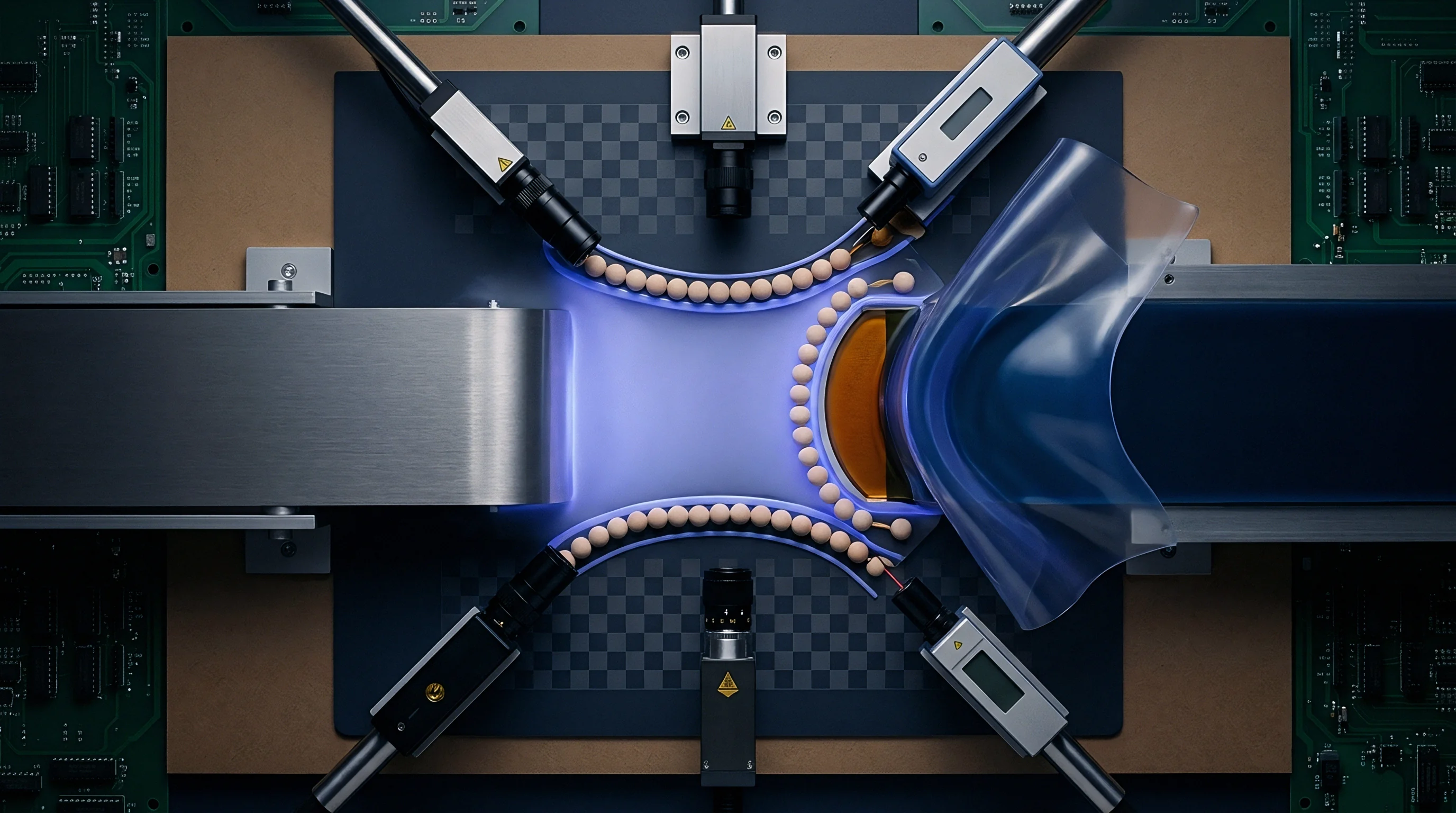
Transient Dual Interface Measurements via Thermal Impedance Mapping
Thermal impedance profiling per JEDEC JESD51-14 isolates joint resistance by comparing cooling curves recorded under two distinct heat sink surface conditions. The divergence point between the resulting structure functions marks the physical boundary between the package substrate and the thermal interface.
Running this test at 225°C requires high-temperature fixtures equipped with optical sensing or calibrated thermopile arrays. Transient 100-Watt power pulses applied for 10 milliseconds drive local heat fluxes past 200 Watts per square centimeter. Tracking cooling curves across five orders of magnitude in time registers local impedance shifts with millikelvin precision.

High Temperature in Situ Shear Strain Profiling
Bench testing thermal interfaces demands tight control over sample alignment, normal clamping force, and atmosphere. Laser flash analysis (LFA) measures cross-plane thermal diffusivity, but requires fixture modifications to apply shear pre-loads above 200°C. Dynamic mechanical analyzers (DMA) running in shear mode track storage modulus loss and phase angle shifts across thermal cycles.
Evaluating thermal interface durability involves a systematic experimental execution plan:
- Substrate Preparation requires polishing copper or ceramic mating surfaces to a mean roughness Ra below 0.2 micrometers, followed by solvent cleaning.
- Bond Line Calibration establishes uniform joint thickness using precision ceramic spacers or mechanical stop collars during cure.
- Initial Impedance Baseline records structure functions at 25°C and 200°C via transient power pulses to capture zero-cycle junction resistance.
- Isothermal Aging Exposure holds test assemblies at 225°C in 1,000-hour intervals inside a nitrogen-purged furnace to prevent oxidation.
- Transient Thermal Shock applies power pulses at 50 K/s ramp rates up to peak operational temperatures while recording continuous thermal response curves.
- Post-Test Acoustic Inspection uses high-frequency acoustic microscopy at 110 MHz to map void density and spatial delamination.
Interfacial acoustic reflectivity shifts before thermal resistance changes become measurable on standard thermopile sensors.
Continuous monitoring during environmental testing identifies microstructural changes that periodic offline testing misses. Thermal interface test procedures follow explicit execution steps:
- Mount the test package onto a cold plate held at a stable 150°C baseline.
- Apply a continuous 5 MPa clamping force using a calibrated spring pack with load cell monitoring.
- Energize the heater element to deliver 80 Watt power pulses on a duty cycle of two seconds on and four seconds off.
- Track junction-to-case temperature differentials continuously using fast-response infrared micro-bolometers.
- Log the cycle count at which thermal resistance rises twenty percent above baseline.
Measurement accuracy across elevated thermal testing regimes varies by methodology, as detailed in the comparative analysis below:
| Measurement Technique | Temperature Limit (°C) | Uncertainty (%) | Transient Resolution | Primary Failure Mode Sensitivity |
|---|---|---|---|---|
| Transient Structure Function (JESD51-14) | 300 | ± 3.5 | 10 microseconds | Interfacial Delamination and Voiding |
| High-Temp Steady-State (ASTM D5470 Mod) | 250 | ± 5.0 | 10 seconds | Bulk Thermal Conductivity Degradation |
| Pulsed Laser Flash Analysis (LFA) | 500 | ± 2.5 | 1 millisecond | Phase Transformation and Sintering Loss |
| High-Frequency C-SAM (110 MHz) | 25 (Offline) | ± 1.0 (Spatial) | Static NDT | |
| Uncertainty figures reflect a k=2 coverage factor yielding a ninety-five percent confidence level under controlled laboratory environments. | ||||
Purchase specifications referencing ISO 10012 measurement standards mandate traceable calibration for thermal impedance test benches, adjusting batch acceptance criteria whenever temperature uncertainty exceeds 0.5 Kelvin.
Penalty
Material selection for high-temperature thermal interfaces involves balancing raw material costs against reliability and warranty risk. Sintered silver pastes provide high thermal conductivity (above 200 W/m·K) and low strain accumulation, but bring steep material costs and high processing pressure requirements. Transient liquid phase bonding reduces assembly pressure while producing stable intermetallic joints capable of continuous operation at 300°C.
Silicone and fluorosilicone filled elastomers offer low initial costs but suffer from rapid pump-out and dry-out above 200°C. Polymer degradation elevates bulk thermal resistance quickly, increasing the risk of thermal runaway in power modules.
Commercial Sourcing Mechanics and Material Grade Selections
Procurement decisions strongly influence total ownership costs across production runs. Paste material costs often represent a minor share of total assembly expenses once capital equipment is included. For example, pressure-sintered silver requires specialized tooling operating at 10 to 30 MPa and 250°C, raising capital expenditures relative to pressureless alternatives.
Contractual quality assurance clauses define batch-level verification rules. Lot acceptance testing typically includes sintered interlayer density measurements, cross-sectional void analysis, and high-temperature shear testing. Accepting incomplete certificates leaves manufacturers vulnerable to widespread field failures.
Procurement evaluations balance key material performance parameters across high-temperature interface classes:
| Interface Class | Processing Conditions | Landed Cost (USD/cm²) | 225°C Lifetime (Hours) | Impedance Drift Rate (%/1k hrs) |
|---|---|---|---|---|
| Pressure-Sintered Nano-Silver | 250°C, 20 MPa, N2 atmosphere | 1.85 | 20,000 | |
| Pressureless Micro-Silver Paste | 230°C, 0.1 MPa, Air | 0.95 | 8,500 | 5.5 |
| Transient Liquid Phase (Cu-Sn) | 280°C, 2 MPa, Vacuum | 1.20 | 15,000 | 3.8 |
| Fluorosilicone Metallic Paste | 25°C Dispense, In situ cure | 0.25 | 1,200 | 28.0 |
Sub-tier supplier substitutions introduce risk when alternative formulations lack long-term thermal aging data. Lower-cost silver pastes with modified binder systems can leave organic burnout residues that accelerate voiding during early high-temperature thermal dwells.
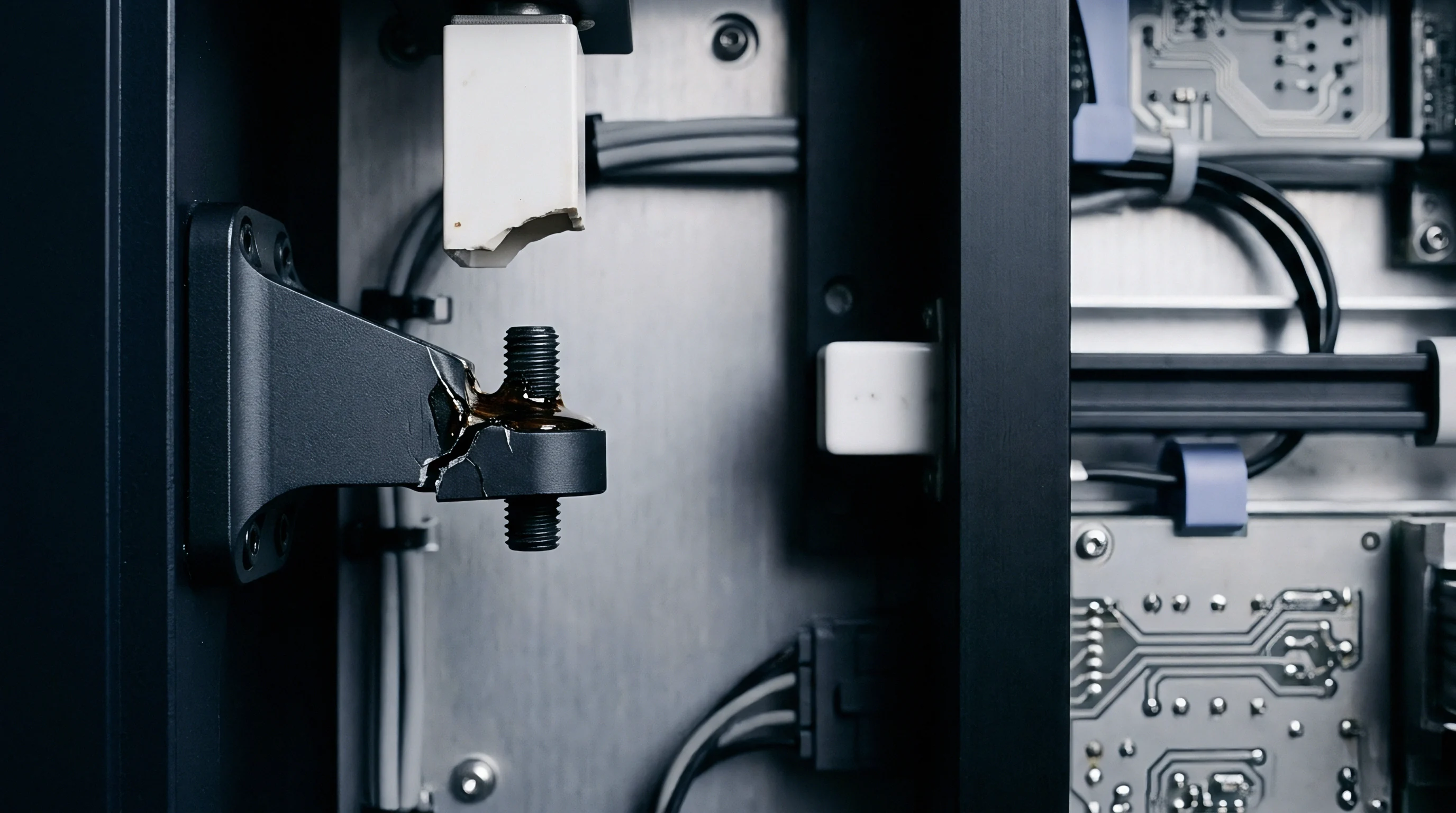
Inadequate material qualification and unverified creep models lead directly to premature joint failure ~ triggering expensive field recalls, package destruction, and costly downtime across critical power infrastructure.