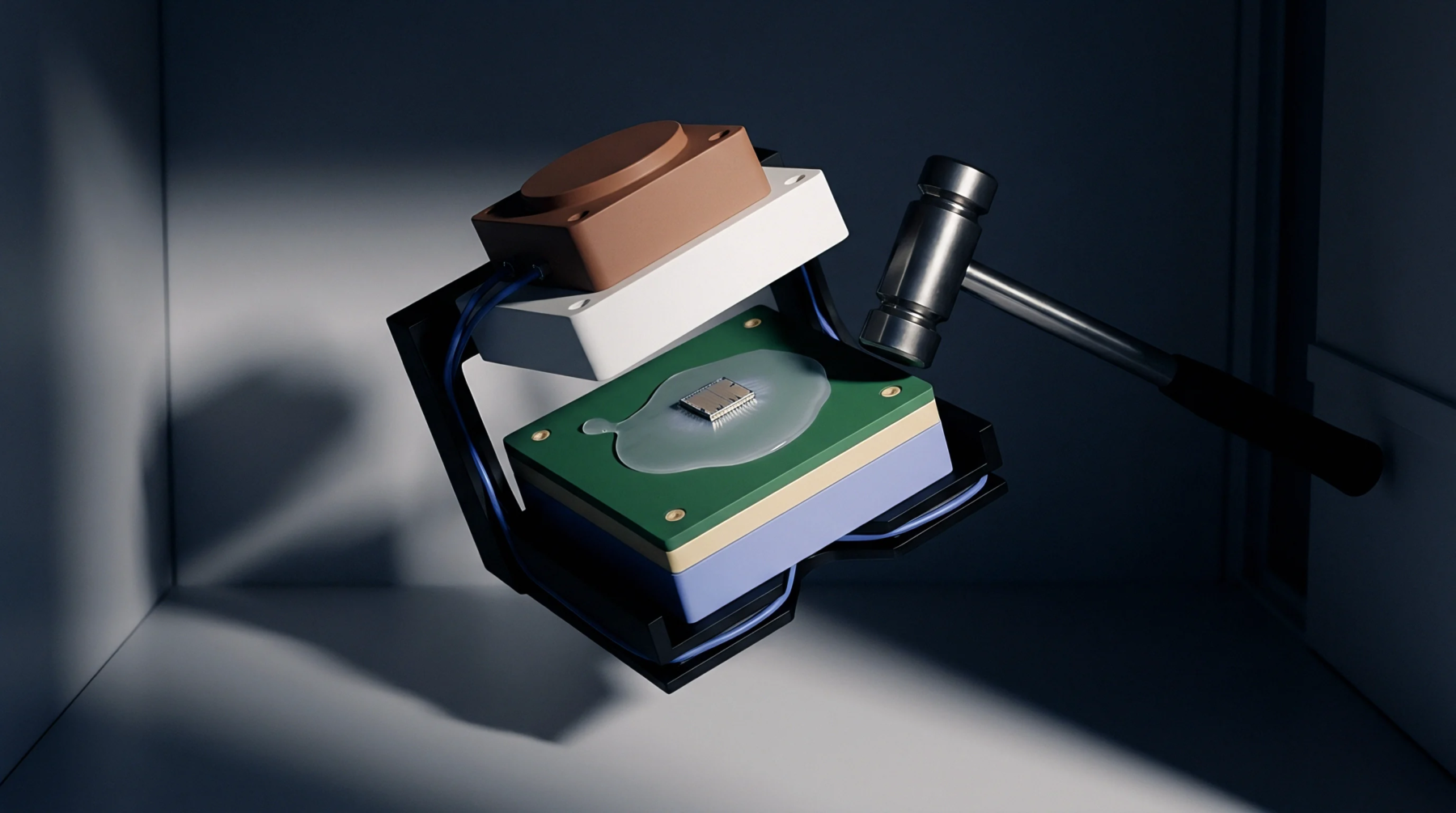
Phase Boundary
Solid-state contraction during extreme cooling induces structural strain within sensor housings, a phenomenon categorized as cryogenic thermal shift. Thermomechanical hysteresis occurs when repeated immersion in liquid nitrogen alters the dimensions of the transducer assembly. Structural displacement degrades the coupling between the piezoelectric element and the mounting substrate.
Calibration drift accelerates once the internal stress exceeds the elastic limit of the joining compound. Subsequent expansion during ambient temperature recovery fails to restore the original mechanical zero point.
Thermal Offset
Strain gauge calibration protocols account for zero-point errors caused by rapid temperature transitions. Transducer manufacturers apply compensation algorithms to correct the voltage output against measured housing deformation. Thermal transient interference generates parasitic charge signals across the sensing interface during cooling phases.
Reference standards maintained by national metrology institutes define the acceptable limits for output deviation following deep thermal cycling. Field technicians verify sensor linearity by comparing post-cooling responses against certified baseline pressures.
Material Hysteresis
Mismatched coefficients of thermal expansion between dissimilar metals create localized shear stresses during the cooling cycle. Austenitic stainless steel housings bonded to titanium diaphragms experience differential contraction rates under extreme cold. Intermolecular bonds within the structural epoxy degrade after repeated exposure to cryogenic temperatures.
Micro-cracking along the adhesive layer alters the mechanical transmission path from the process medium to the sensing element. Complete relaxation of the internal stress field requires extended annealing cycles at elevated temperatures.
Systemic Error
Measurement uncertainty expands significantly when uncompensated deformation alters the effective gauge factor of the transducer. Instrument degradation manifests as a permanent offset in the electrical output at reference conditions. Post-installation recalibration frequency increases in applications involving continuous cycling between room temperature and cryogenic states.
Long-term stability depends entirely on the mechanical integrity of the internal assembly under repetitive thermal shock loading.