Calculating Long Term Zero Drift from Sensor Moisture Ingress Kinetics
Long-term zero drift is calculated by coupling Fickian moisture diffusion kinetics with the polymer hygroscopic swelling coefficient to predict strain drift.
Diffusion
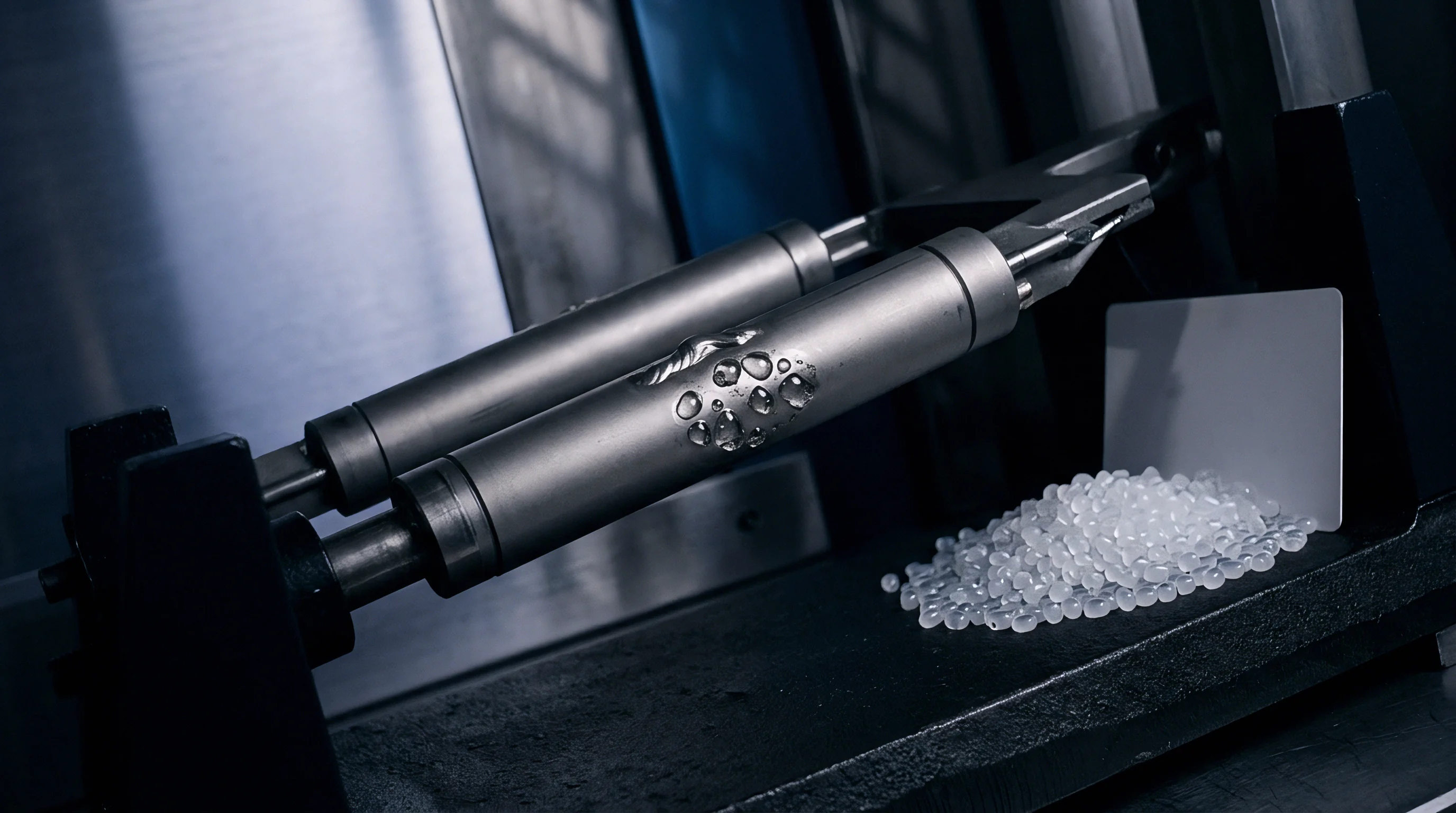
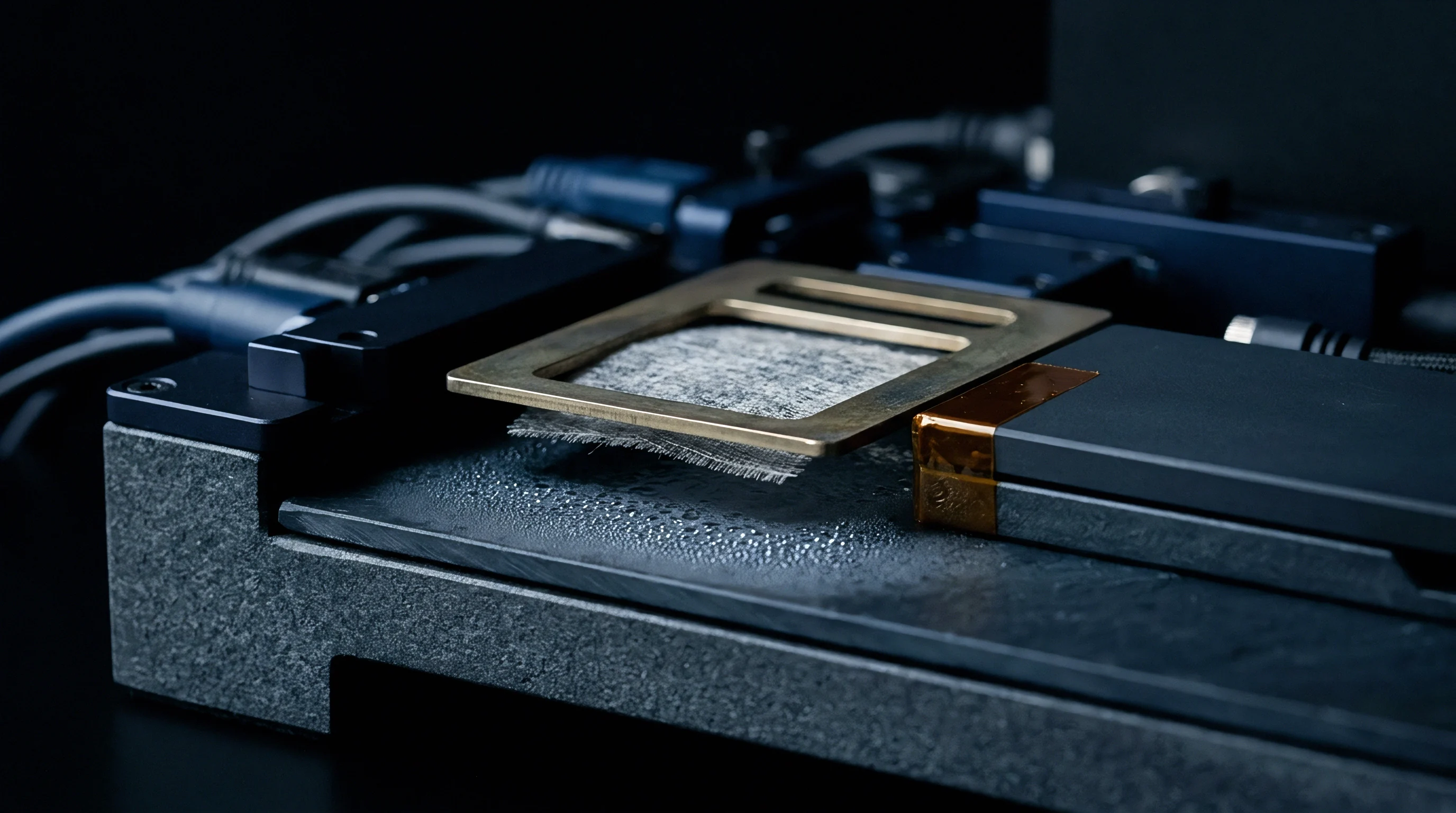
Vapor pressure differentials drive ambient moisture through polymer encapsulants, potting resins, and housing gaskets directly toward transducer structures. Moisture penetrates the internal cavities of pressure sensors, force-measuring load cells, and capacitive micro-electro-mechanical assemblies. Fickian transport kinetics govern this primary ingress pathway, establishing a mass flux dependent on temperature and ambient relative humidity.
At elevated operating temperatures, the diffusion coefficient escalates along Arrhenius relationships, shortening the time required for moisture to reach active sensing elements.
Zero drift develops when moisture alters the dielectric properties of baseline media or exerts parasitic mechanical forces on sensing structures. In capacitive pressure sensors, ingress into the reference cavity shifts the dielectric constant of the fill material, raising the zero-pressure capacitance baseline. In strain-gauge transducers, water absorption within polyimide backing layers causes volumetric expansion that stresses piezoresistive traces directly.
Water transport into these zones follows Fick’s second law of diffusion, yielding non-linear concentration profiles across both time and depth.
Water migration is rarely confined to homogenous polymer matrices; interfacial boundaries between dissimilar materials offer lower energy barriers for moisture movement.
- Potting Compound Interfaces develop micro-channels along assembly walls when adhesive bonds fracture under thermal cycling.
- Glass To Metal Seals develop localized oxide layers that allow moisture vapor to percolate along grain boundaries over years of service.
- Substrate Polymer Laminates absorb ambient vapor and alter bulk electrical impedance between adjacent signal traces.
- Silicone Gel Packaging protects circuitry from direct liquid immersion while remaining highly permeable to water vapor, reaching equilibrium with ambient humidity rapidly.
Encapsulants chosen strictly for mechanical dampening frequently suffer from high water vapor transmission rates. Standard silicone gels reach saturation within several hundred hours of continuous humidity exposure. Epoxies offer lower permeability, but their rigid cross-linked networks retain absorbed water and release it into internal cavities over extended operating lifespans.
Calculating baseline offsets accurately requires knowing the exact diffusion constant, activation energy, and solubility coefficient of every organic material surrounding the measurement cell.
Hermetic sealing specifications are frequently claimed across an entire product family without supporting helium leak test data or water vapor transmission rates for lower-cost enclosure variants.
Swelling
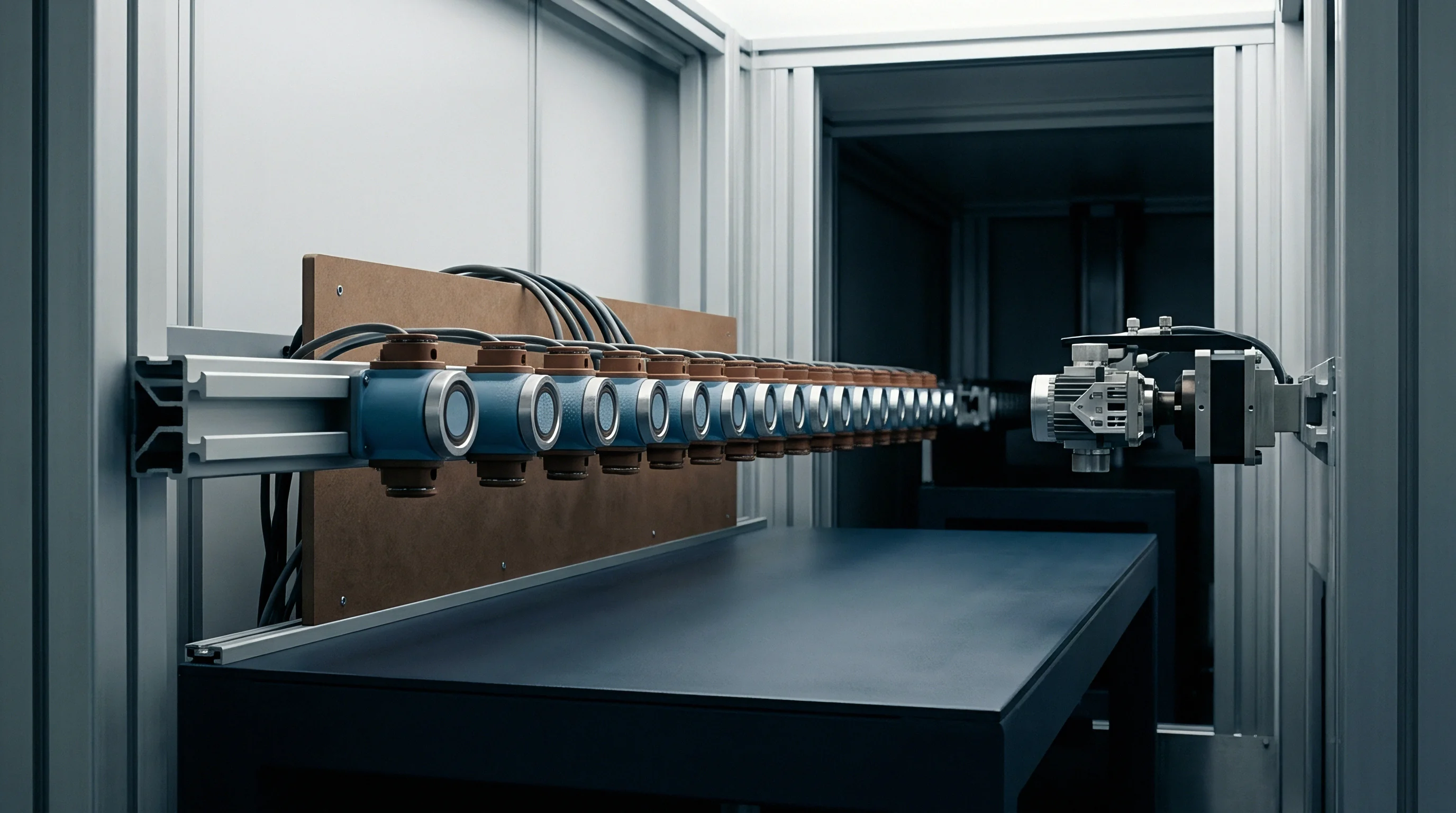
Absorbed water induces spatial expansion throughout polymeric sensor components. This dimensional change follows the material’s Coefficient of Hygroscopic Swelling, producing localized strain fields that register as false measurement signals. In piezoresistive force sensors, volumetric expansion within an adhesive carrier distorts the bond line beneath silicon strain elements.
That mechanical deformation mirrors the strain produced by genuine external loads, generating zero offset drift that persists until humidity drops and dry-out cycles complete.
Hygroscopic swelling alters the internal geometry of capacitive and piezoresistive sensing assemblies in distinct ways. In capacitive differential pressure cells, swollen dielectric spacers shift the rest gap between the flexible diaphragm and the fixed backplate. A displacement as slight as five nanometers changes baseline capacitance enough to consume twenty percent of the annual zero tolerance budget.
Total mechanical strain from absorbed moisture depends on both the material expansion coefficient and the instantaneous localized water mass fraction.
Relative humidity levels maintained at eighty-five percent yield a zero offset shift of zero point four five percent of full scale span within nine hundred hours across epoxy-encapsulated strain elements.
Evaluating polymer performance involves balancing water transport rates against volumetric expansion coefficients. The properties listed below detail moisture transmission and swelling behavior for common sensor potting compounds and structural elements under standard bench conditions.
| Polymer Matrix Type | Diffusion Coefficient at 23 Degrees C (cm2/s) | Activation Energy (kJ/mol) | Coefficient of Hygroscopic Swelling (mm3/g) | Equilibrium Water Uptake Rate (Percent) |
|---|---|---|---|---|
| Anhydride Cured Epoxy | 1.2 x 10^-9 | 42.3 | 0.28 | 1.15 |
| Addition Cured Silicone Gel | 4.5 x 10^-6 | 18.1 | 0.04 | 0.12 |
| Polyimide Film Substrate | 3.1 x 10^-9 | 38.7 | 0.35 | 2.80 |
| Polyether Ether Ketone | 8.0 x 10^-10 | 46.5 | 0.15 | 0.45 |
Rigid metal housings constrain polymer expansion, directing swelling stresses inward toward sensitive silicon diaphragms or quartz crystal resonators. This compressive stress field drives long-term zero drift that scales non-linearly with ambient vapor concentration. Ignoring hygroscopic stress accumulation during design routinely causes field failures where sensors drift past published accuracy limits long before any seal mechanically fails.
Strain
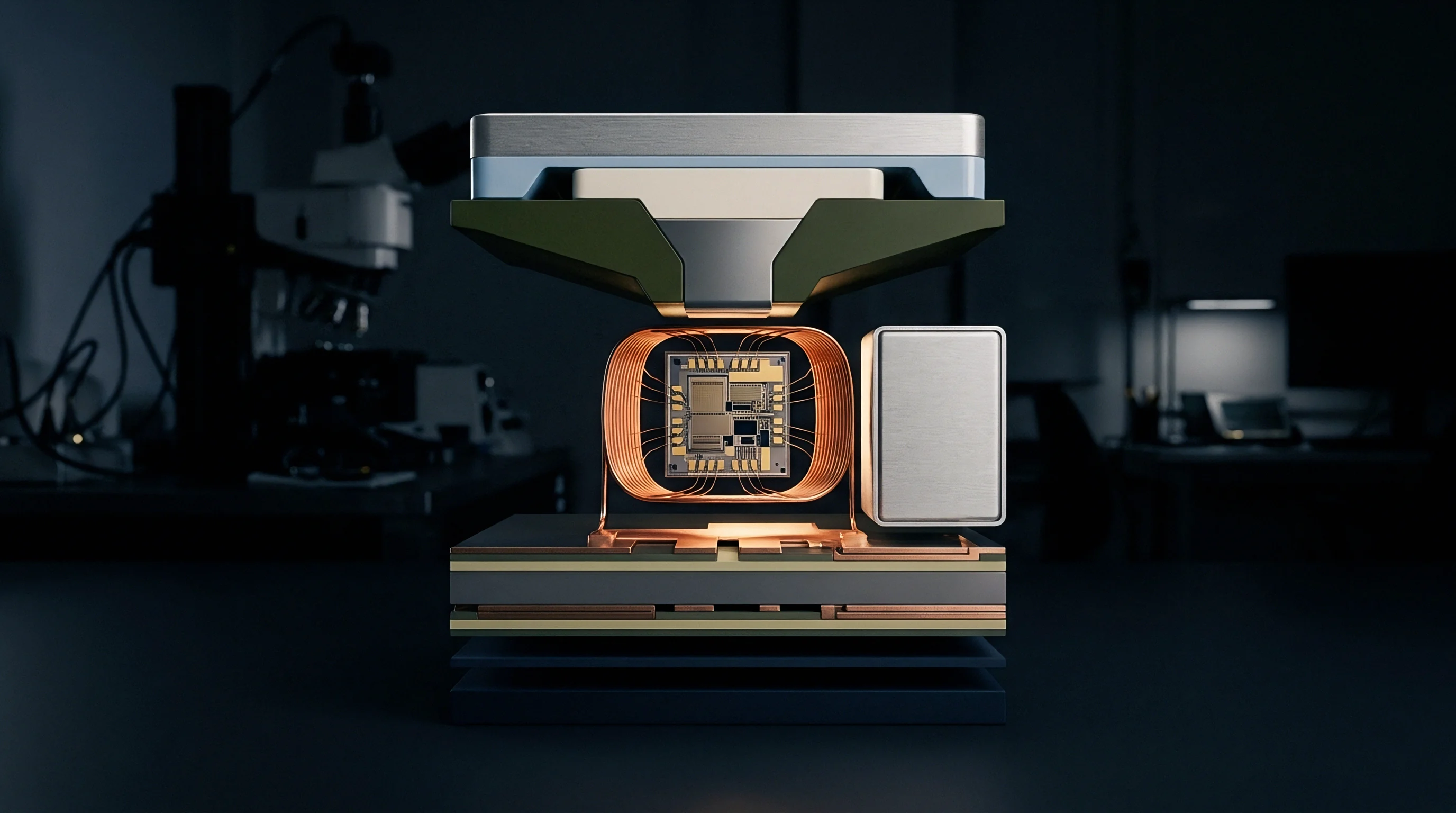
Quantifying zero drift mathematically requires solving coupled diffusion and mechanical stress equations across the sensor assembly. Water concentration profiles vary continuously over time and position. Integrating these localized values yields the net hygroscopic force exerted on the transducer, which stress calculations then convert into electrical output shifts via the device’s electromechanical sensitivity matrix to predict drift rates over time.
Calculating time-dependent zero drift involves determining moisture distributions through the sensor substrate in a sequence of defined steps.
- Determine the dry-state baseline output voltage of the sensor cell under reference temperature and atmospheric pressure conditions.
- Measure ambient relative humidity and absolute temperature in the operating environment to determine partial water vapor pressure.
- Calculate the temperature-adjusted diffusion coefficient using Arrhenius parameters calibrated for the encapsulation polymer.
- Solve Fick’s second law for continuous spatial concentration profiles through the moisture barrier layer thickness.
- Compute localized hygroscopic strain by multiplying concentration values by the polymer’s verified expansion coefficient.
- Use finite element stress equations to convert spatial strain distributions into net forces acting on piezoresistive or capacitive elements.
- Translate net strain into zero voltage drift by multiplying calculated deformation by the measured transducer sensitivity factor.
Tracking cumulative zero drift over long exposure periods shows how fast initial surface saturation gives way to slow, persistent baseline creep as moisture penetrates deeper structures.
| Operating Humidity Profile | 30 Day Zero Shift (Percent Span) | 180 Day Zero Shift (Percent Span) | 365 Day Zero Shift (Percent Span) | 1095 Day Zero Shift (Percent Span) |
|---|---|---|---|---|
| 50 Percent RH Continuous at 25 C | 0.02 | 0.06 | 0.11 | 0.18 |
| 85 Percent RH Continuous at 25 C | 0.07 | 0.21 | 0.38 | 0.62 |
| 85 Percent RH Continuous at 60 C | 0.31 | 0.85 | 1.42 | 2.15 |
| Cyclic 30 to 90 Percent RH at 40 C | 0.14 | 0.42 | 0.71 | 1.08 |
Arrhenius acceleration models use high-temperature chamber data to project multi-year zero drift in the field, assuming thermal stress does not shift diffusion mechanisms or push polymers past their glass transition temperatures. Calculating reliable acceleration factors requires accurate activation energy values, which typically span thirty-five to fifty-two kilojoules per mole for common industrial potting compounds.
Hygroscopic stress accumulation inside polymer packaging limits long-term sensor baseline stability long before external liquid water breaches outer seal perimeters.
Non-linear moisture concentration gradients across thick potting layers can induce permanent zero shifts that persist even after thorough thermal and atmospheric bake-out cycles.
Chamber
Accelerated environmental testing validates drift calculations by exposing sensor lots to controlled humidity and temperature profiles. Standard protocols apply steady-state damp heat to drive moisture ingress fifty to one hundred times faster than normal service conditions. Under IEC 60068-2-78, exposure runs at forty degrees Celsius and ninety-three percent relative humidity for up to fifty-six continuous days, isolating moisture-driven shifts from baseline drift caused by structural stress relaxation, thermal aging, or metal creep.
Accelerated test profiles must accelerate moisture transport without introducing artificial failure modes that never occur in field operation.
- Steady State Damp Heat maintains continuous vapor pressure gradients to measure fundamental long-term diffusion and zero drift parameters.
- Cyclic Damp Heat Testing introduces condensation cycles to evaluate housing seal integrity under rapid atmospheric pressure swings.
- High Temperature High Humidity Bias applies electrical excitation during damp heat exposure to surface ionic migration effects alongside mechanical swelling.
- Step Stress Humidity Profiling increments ambient moisture levels systematically to verify linear response limits of internal hygroscopic swelling equations.
Separating thermal relaxation from moisture-driven drift requires running parallel control groups during qualification testing. Operating one control group in dry nitrogen at the target temperature isolates shifts caused strictly by thermal stress, structural relaxation, or solder creep. Subtracting that dry baseline vector from the total drift observed in damp heat leaves the net shift attributable to moisture ingress and hygroscopic swelling.
Standard damp heat qualification test profiles specified under IEC 60068-2-78 define baseline environmental endurance requirements for industrial measurement hardware.
Industrial supply contracts frequently invoke IEC 60068-2-78 clause 4.3, treating any zero drift exceeding zero point five percent of full scale span after twenty-one days of damp heat exposure as grounds for complete lot rejection.


Interval
Understanding field zero drift dynamics provides a rational basis for setting recalibration intervals in process installations. Maintenance schedules planned without regard to ambient moisture risk premature loss of accuracy or wasted service spend. A pressure sensor operating in an arid environment holds its zero baseline roughly four times longer than an identical unit installed in a humid washdown area, requiring plant engineers to balance routine physical calibration against digital tare adjustments in host software.
Which Environmental Factors Accelerate Zero Drift Calibration Penalties?
Temperature and relative humidity continuously influence the rate of baseline drift away from factory calibration. Elevated ambient vapor pressure drives moisture through housing seals into internal cavities, altering dielectric properties and mechanical preloads. The table below outlines field recalibration interval multipliers across representative environmental conditions and enclosure protection ratings.
| Mean Annual Relative Humidity | Mean Ambient Temperature | IP65 Polyurethane Sealed Housing | IP67 Epoxy Potting Enclosure | IP69K Hermetic Welded Stainless Housing |
|---|---|---|---|---|
| Below 50 Percent RH | 20 Degrees C | 1.00 (Standard Interval) | 1.25 (Extended Interval) | 2.00 (Maximum Interval) |
| 50 to 75 Percent RH | 30 Degrees C | 0.65 (Reduced Interval) | 0.85 (Slight Reduction) | 2.00 (Maximum Interval) |
| 75 to 95 Percent RH | 40 Degrees C | 0.30 (Frequent Calibration) | 0.45 (Reduced Interval) | 1.80 (Minor Reduction) |
| Continuous Condensing | 50 Degrees C | 0.15 (Immediate Drift Risk) | 0.25 (Frequent Calibration) | 1.50 (Slight Reduction) |
Firmware-based zero-trim thresholds allow control systems to absorb minor moisture drift before baseline errors distort process measurements. Software compensation fails, however, once internal moisture compromises bulk impedance or causes insulation resistance breakdown across circuit traces. Field verification must therefore differentiate between recoverable drift from elastic swelling and permanent offsets caused by internal condensation or corrosion.
Recalibration schedules linked directly to ambient moisture exposure preserve measurement integrity while reducing unnecessary field service expenditure.
Housing seals and elastomeric gaskets degrade progressively over prolonged service life.
Yield
Specifying sensor packaging and potting chemistry requires weighing procurement cost against total cost of ownership. Basic elastomer gaskets and polyurethane potting reduce initial bill-of-materials costs by thirty to forty percent compared to hermetically welded stainless steel enclosures. Lower-tier enclosures permit continuous moisture ingress, however, generating compounding downstream costs through frequent recalibration cycles, process downtime, and premature replacement.
Warranty exposure models must reflect the distribution of drift rates across operating populations. In humid installations, non-hermetic units typically follow a Gaussian drift distribution whose upper tail breaches tolerance thresholds within twelve to eighteen months. Because replacing a single failed transmitter in a remote plant often exceeds the price of a hermetic unit by an order of magnitude, low-cost packaging rarely delivers real savings over a three-to-five-year operating lifespan.
Procurement specifications that define maximum acceptable zero drift under damp heat exposure effectively transfer long-term reliability risk back to suppliers. Requiring continuous lot testing and material certifications prevents out-of-spec potting resins or unapproved gasket compounds from reaching production lines. Evaluated over full operating lifecycles, robust barrier materials, qualified potting chemistry, and verified hermetic joints consistently produce the lowest cost per operating hour.