Vaporization Pressure
Internal gas pressure rises in closed volumes when trapped liquid water transitions to steam under elevated temperatures. The variable known as steam vapor pressure increases exponentially with temperature during the solder reflow process. This pressure can overwhelm the adhesion between the internal materials of a plastic electronic package, leading to catastrophic physical damage.
Phase Transition
Thermodynamic tables describe how this pressure scales during the heating profile of a reflow oven. As temperature rises to the reflow peak, steam vapor pressure within the microscopic gaps of a component can exceed several megapascals. If the rate of pressure buildup is faster than the moisture can diffuse out, the package will swell and eventually crack.
This behavior is the driving force behind the common popcorning failure mode.
Measurement Standard
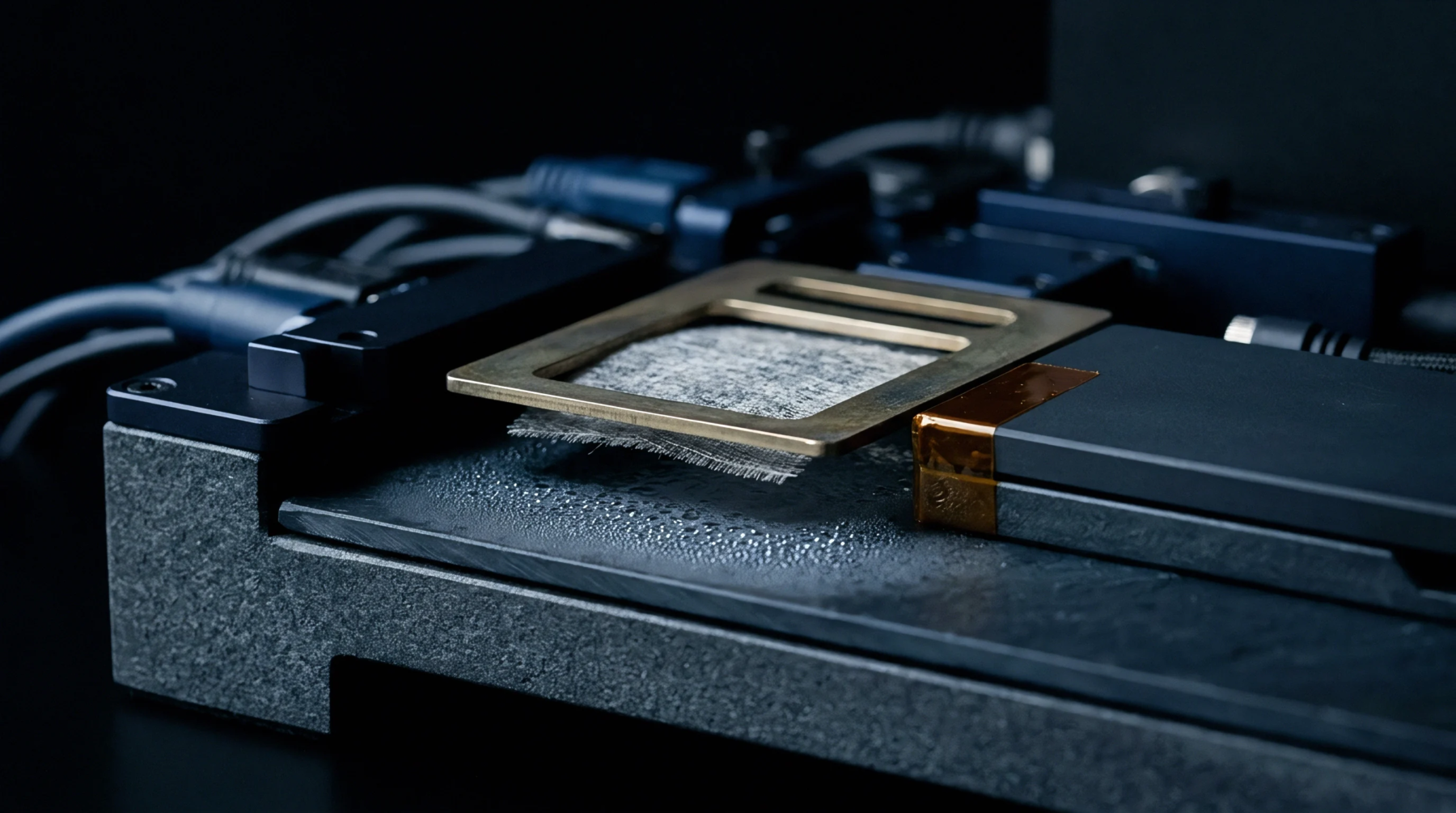
Measurement of these internal pressures is accomplished indirectly by tracking package swelling with high-speed laser sensors during a simulated reflow cycle. This deformation data is combined with finite element models to estimate the pressure at the internal interfaces. This research helps to define the maximum safe moisture content for specific package sizes.
The values are verified against standard steam tables.
Pressure Consequence
The physical strength of the mold compound limits the maximum pressure the package can withstand before cracking. This threshold requires that moisture levels are kept low through the use of dry bags and desiccant packs during storage.