Force Coupling
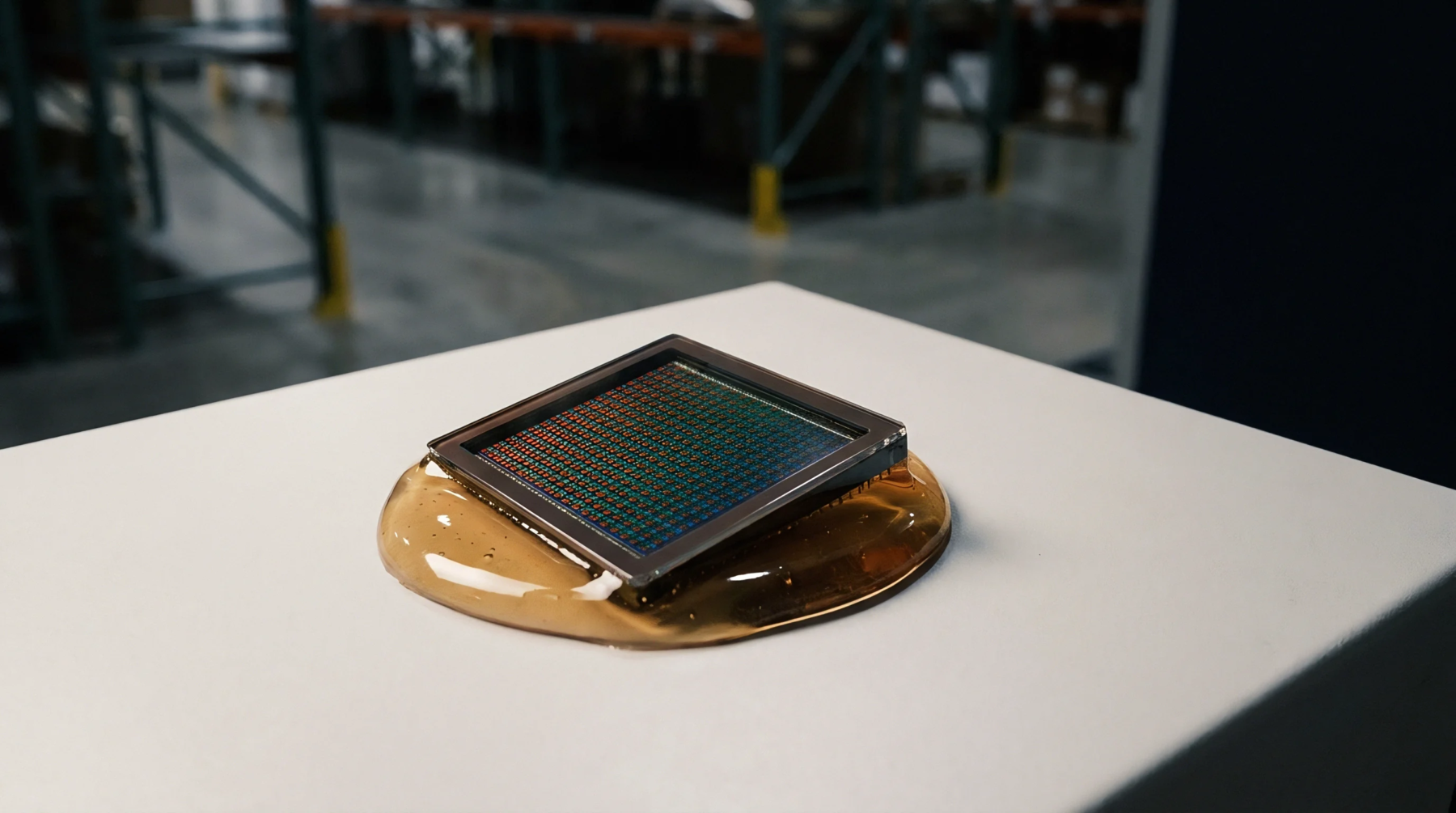
Elastic deformation propagation describes the movement of mechanical energy through a semiconductor substrate to a sensing element. Silicon strain transfer involves the coupling of external forces from the package through the die attach material to the active regions of the chip.
Bond Influence
Adhesive layers between the sensor and the package act as a bridge for mechanical loads. If the adhesive is too soft, the silicon strain transfer will be inefficient, leading to a loss of sensitivity and a reduced signal to noise ratio.
Mechanical Linearity
Performance of the transducer depends on a linear relationship between the applied load and the resulting deformation. When silicon strain transfer is consistent, the output of the piezoresistors or resonators matches the theoretical model of the device. Non uniformities in the bond line or voids in the adhesive can create localized stress concentrations that distort the measurement.
These irregularities often lead to hysteresis, where the sensor output depends on whether the load is increasing or decreasing.
Calibration Drift
Metrologists measure the efficiency of this energy movement by applying known loads and observing the electrical response. Long term stability of the silicon strain transfer is verified through accelerated aging tests. These tests ensure that the mechanical properties of the interface do not degrade over time, which would cause the sensitivity of the instrument to change.