Spatial Configuration
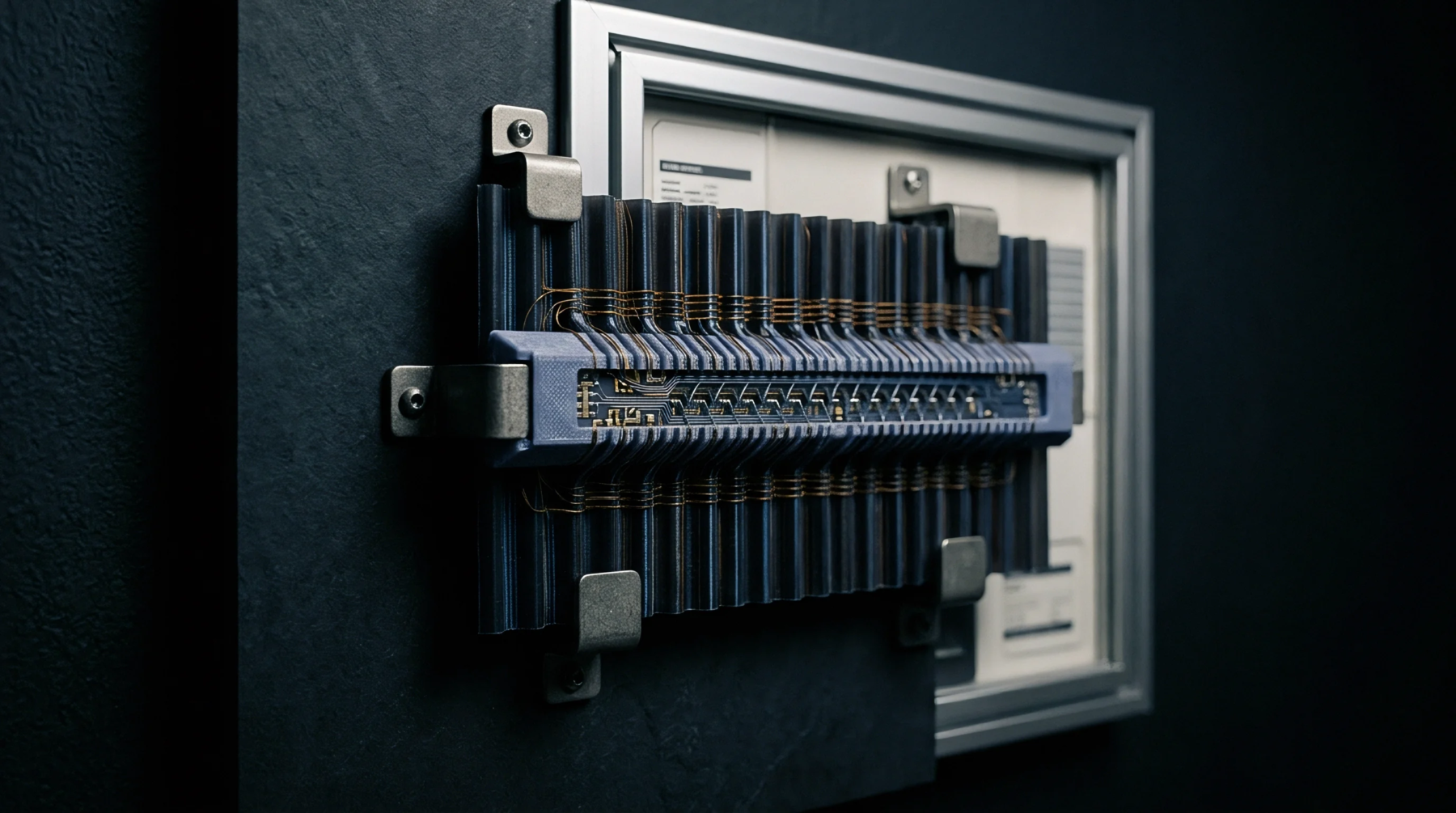
A collection of individual sensing elements arranged in a specific geometric pattern to capture data across a surface or a volume. Because sensor arrays provide a more detailed view of a physical field than a single point measurement, they allow for the detection of gradients and the localization of sources. These systems are used in imaging, gas detection, chemical analysis and pressure mapping where the relationship between adjacent points is as important as the absolute values.
Signal Integration
The outputs from the various elements are processed simultaneously to improve the signal to noise ratio and to perform beamforming or source separation. By using sensor arrays, a system can distinguish between a target signal and background interference through spatial filtering. This requires precise timing and synchronization across all channels to maintain the phase relationship between the inputs.
System Reliability
Failure of a single element does not disable the entire measurement capability.
Channel Matching
Variations in the sensitivity and offset of each individual element must be corrected to ensure a uniform response across the entire grid. Sensor arrays are calibrated by exposing the entire surface to a known, uniform stimulus and calculating the unique correction factor for every point. This process accounts for the drift in individual sensors and the interference between neighbors.
Regular recalibration is necessary to maintain the spatial accuracy of the system over its operating life.