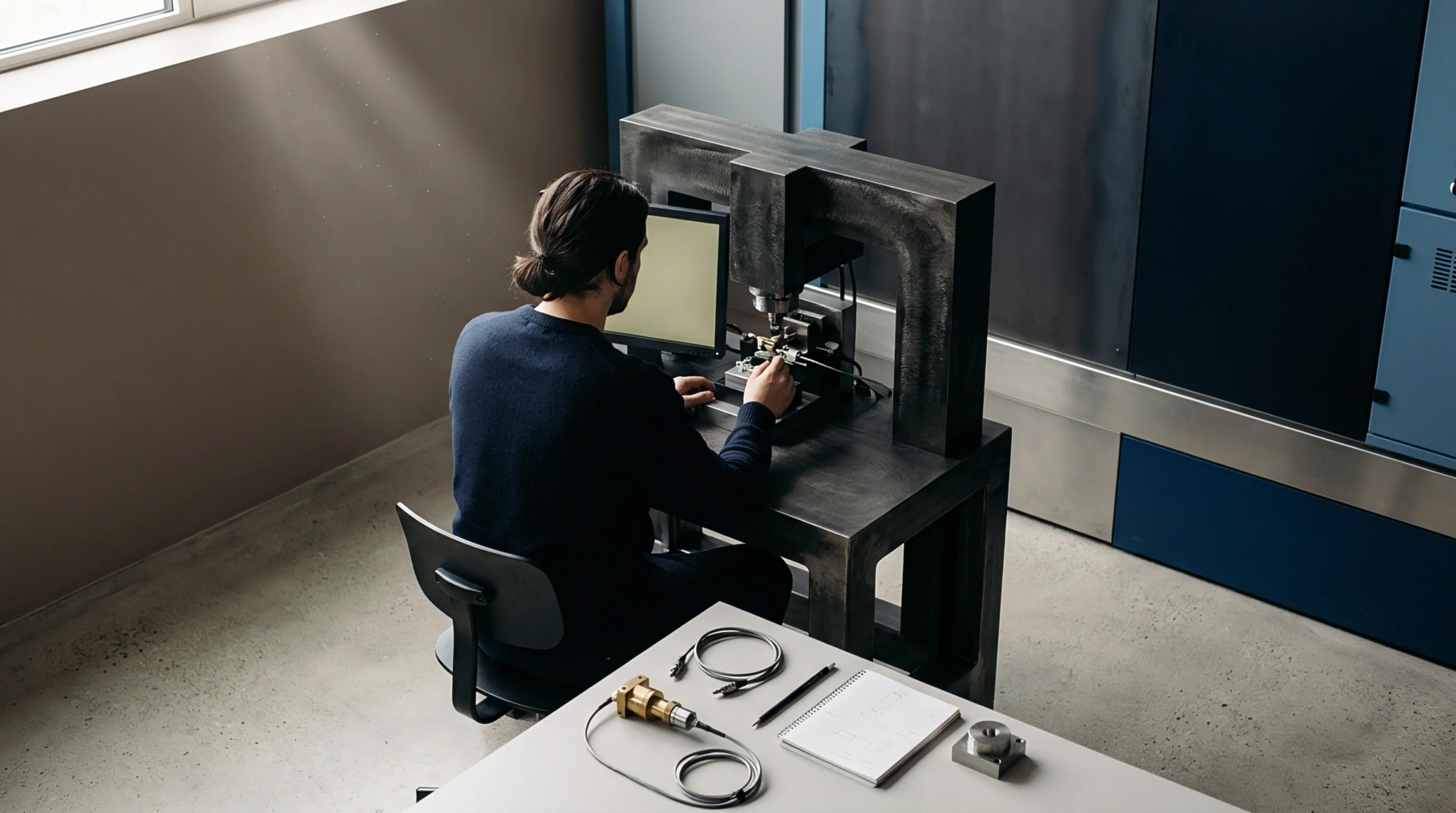
Acceptance Sampling Methods for Microelectromechanical Inertial Measurement Units
Variable acceptance sampling under ISO 3951-1 verifies continuous MEMS IMU drift profiles while protecting production lines from latent silicon wafer defects.
Sustained exposure to non repetitive mechanical oscillations evaluates the endurance of sensors under dynamic environmental loads. During random vibration soak, a device undergoes a continuous spectrum of movements that simulate the wideband noise experienced inside a flying aircraft or a running industrial vehicle. This test measures the resistance of the internal elements to fatigue and structural loosening over many hours.
Unlike a discrete sine sweep, this method forces the component to respond at all its resonant frequencies simultaneously. The limit of the test is governed by the total power spectral density specified for the duration of the run. It provides a more realistic measure of reliability than simpler vibration sequences by capturing the interaction between different mechanical modes.
The technique is essential for qualifying hardware for rugged deployment.
Drive control accuracy ensures the energy delivered to the test table matches the mathematical profile of the noise spectrum. To manage random vibration soak, sophisticated digital controllers monitor the response through feedback sensors at the fixture mounting points. They adjust the electromagnetic shaker force thousands of times per second to keep the input within the target envelope.
If the controller drift exceeds three decibels, the test valid coverage is compromised and may need to be repeated. Sourcing reliable feedback accelerometers requires high frequency bandwidth and minimal temperature sensitivity. Measurement inaccuracy in the controller leads to either overstressing the sensor or failing to identify latent mechanical weak spots.
Frequent verification with calibrated mass loads confirms the performance of the overall table drive logic. These checks keep the mechanical interference low and the findings defensible.
Physical feedback from the sensor module itself can bias the measured acceleration at the attachment interface. When random vibration soak is applied, the mass of the item under test might create local anti resonances that confuse the control computer. These spikes in energy can break delicate silicon proof masses or detach tiny wire bonds if not correctly damped.
This mechanism highlights the need for rigid and flat fixtures that avoid adding their own noise to the signal path. Monitoring the coherence levels of the feedback channel tells the technician if the system is correctly following the drive signal. Drift in sensor offset or gain after the test is verified using stationary readings on a granite slab.
If the drift is higher than two percent, the assembly is typically deemed unreliable for long duration missions. Installation effects at the mounting bolts are minimized through the use of specific torque wrenches and repeatable patterns.
Analysis files summarize the spectral results to classify the device according to its vibration resistance class. If the unit completes the whole random vibration soak sequence without structural or electrical failure, it passes the mechanical robustness threshold. These records allow sourcing managers to select between competing providers based on survival percentages during peak loads.
If failures do emerge, the spectral logs reveal which specific frequencies triggered the breakdown, pointing engineers toward needed structural reinforcements. Calibration sequences are rerun at the end of line to confirm the signal holds up after the severe mechanical stress. Sourcing higher quality housing materials usually allows for a broader spectrum of survival during these grueling cycles.
Final outcome verification happens when the logs show the power was consistently held within the specified decibel guard bands for the entire soak duration.
Variable acceptance sampling under ISO 3951-1 verifies continuous MEMS IMU drift profiles while protecting production lines from latent silicon wafer defects.
Expertise is a utility, not a secret. sentiention™ publishes its working knowledge as open reference: intelligence layer covering the materials it sources, the markets it enters, and the reference that serves both.