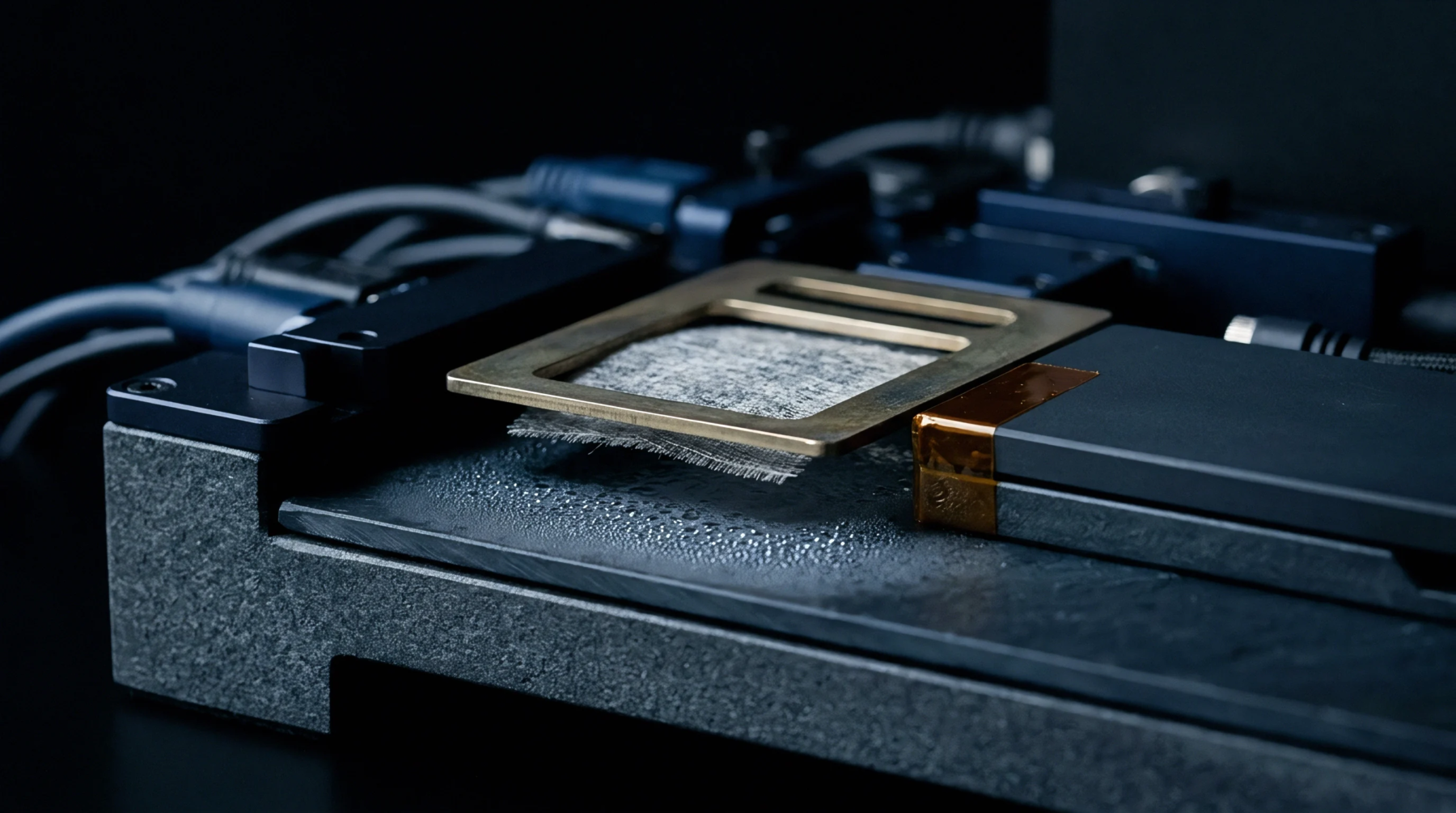
Physical Discontinuity
Delamination resulting from trapped moisture vapor pressure during surface mount reflow soldering defines this thermal failure mode. Popcorning occurs when hygroscopic moisture inside a plastic integrated circuit package expands rapidly at high temperatures. The resulting vapor pressure exceeds the structural strength of the mold compound or the adhesive bond between the lead frame and the package body.
Internal separation propagates until reaching the external surface, where a characteristic audible crack follows the rupture of the casing.
Thermal Stress
Rapid transition through the solder reflow profile forces sudden expansion of volatile elements within the semiconductor housing. Popcorning proceeds as a mechanical fracture once the internal pressure surpasses the fracture toughness of the epoxy resin used for encapsulation. High moisture levels accumulated during storage decrease the glass transition temperature of the polymer, further weakening the material against internal gas expansion.
Manufacturers mitigate this phenomenon by enforcing strict dry packing protocols and moisture sensitivity level classifications for all components before production.
Storage Control
Humidity exposure creates the primary vector for moisture absorption within the molding resin over time. Components held in ambient conditions absorb water from the surrounding air until the internal concentration reaches a saturation point relative to the local environment. Moisture sensitivity level standards dictate the maximum duration of floor life allowed before a component requires controlled baking to drive out accumulated vapors.
Proper atmospheric management prevents the internal pressure build up that triggers package failure during subsequent heating cycles.
Material Property
Reliability analysis confirms that the coefficient of thermal expansion mismatch between the silicon die, the metal lead frame and the plastic encapsulant governs the integrity of the package. Popcorning happens when these varied materials pull apart under the influence of steam generated within the interstitial spaces. Design engineers optimize the adhesion characteristics of the mold compound to resist the peeling forces created by moisture vapor.
Superior adhesion strength at the interface prevents crack initiation even when moisture levels remain present at the threshold of the component tolerance.