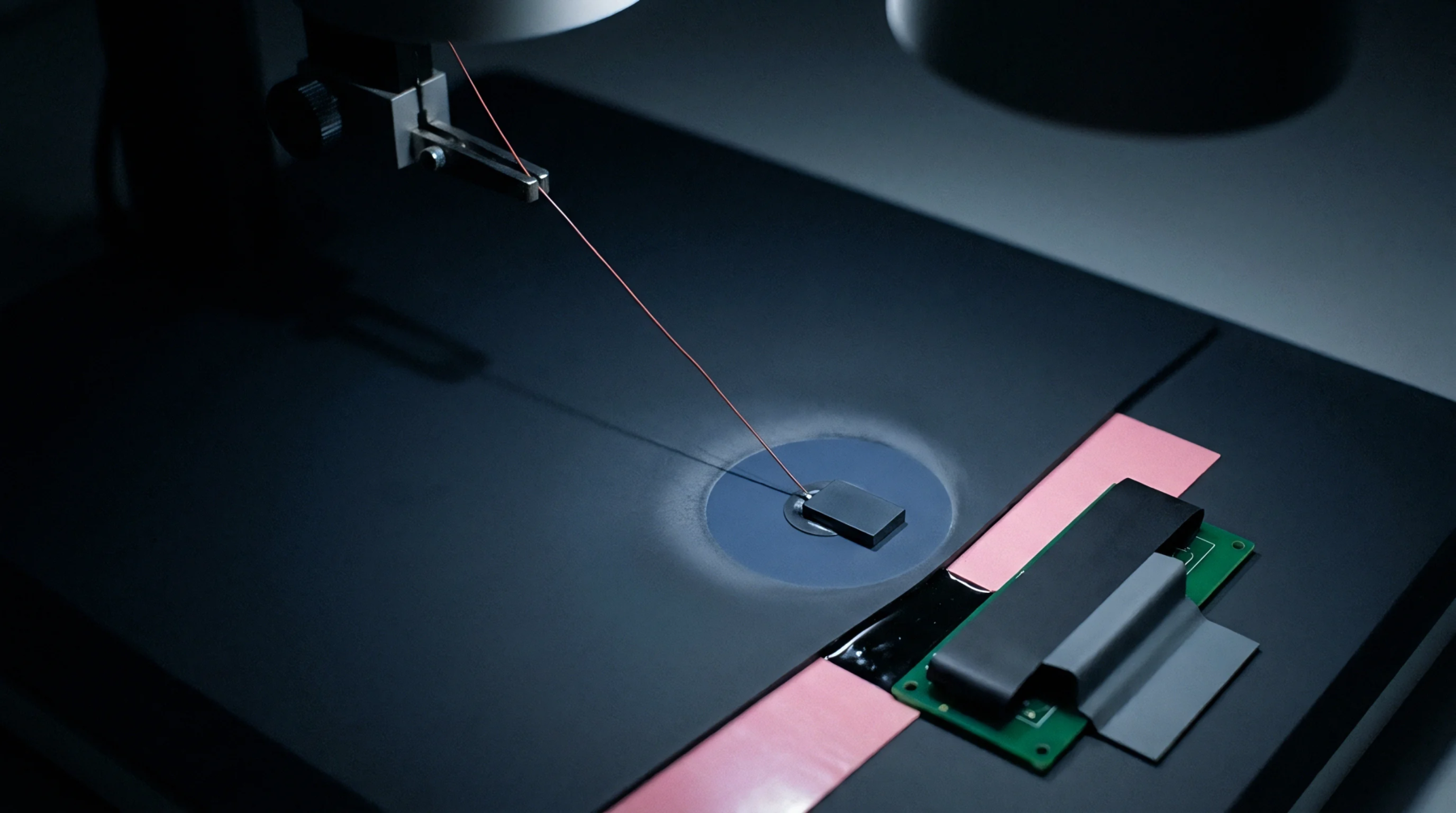
Crystal Lattice
Deformation mechanics depend entirely upon atomic bond orientation within a monocrystalline structure. The piezoresistive silicon coefficient quantifies how electrical resistivity shifts under mechanical strain applied along specific crystallographic axes. Bulk resistors fabricated via boron diffusion exhibit anisotropic resistance variations because carrier mobility changes differentially with shear and longitudinal stress tensors.
Operating limits are bounded by plastic deformation thresholds where permanent crystal lattice disruption replaces elastic strain.
Calibration Drift
Thermal gradients interact directly with the piezoresistive silicon coefficient during high temperature operation. Resistors bonded to metallic substrates experience mechanical preloads arising from mismatched thermal expansion coefficients between silicon and the housing material. Strain gauge outputs require compensation algorithms to separate true mechanical stress from thermally induced resistance fluctuations.
Metrological Traceability
Primary standards laboratories calibrate working sensors against deadweight tester references under isothermal conditions. Secondary verification steps record output voltages across repeated loading cycles to quantify hysteresis errors introduced by packaging adhesives. Certified calibration protocols establish the exact conversion multiplier needed for analog to digital signal conditioning electronics.
Bridge Circuitry
Wheatstone configurations translate resistance changes into measurable voltage differences across instrumentation amplifiers. Excitation voltage stability dictates overall measurement precision because supply voltage variations introduce direct proportional errors into the output signal. Constant current drive circuits eliminate excitation drift by fixing carrier density within the diffused resistive elements.