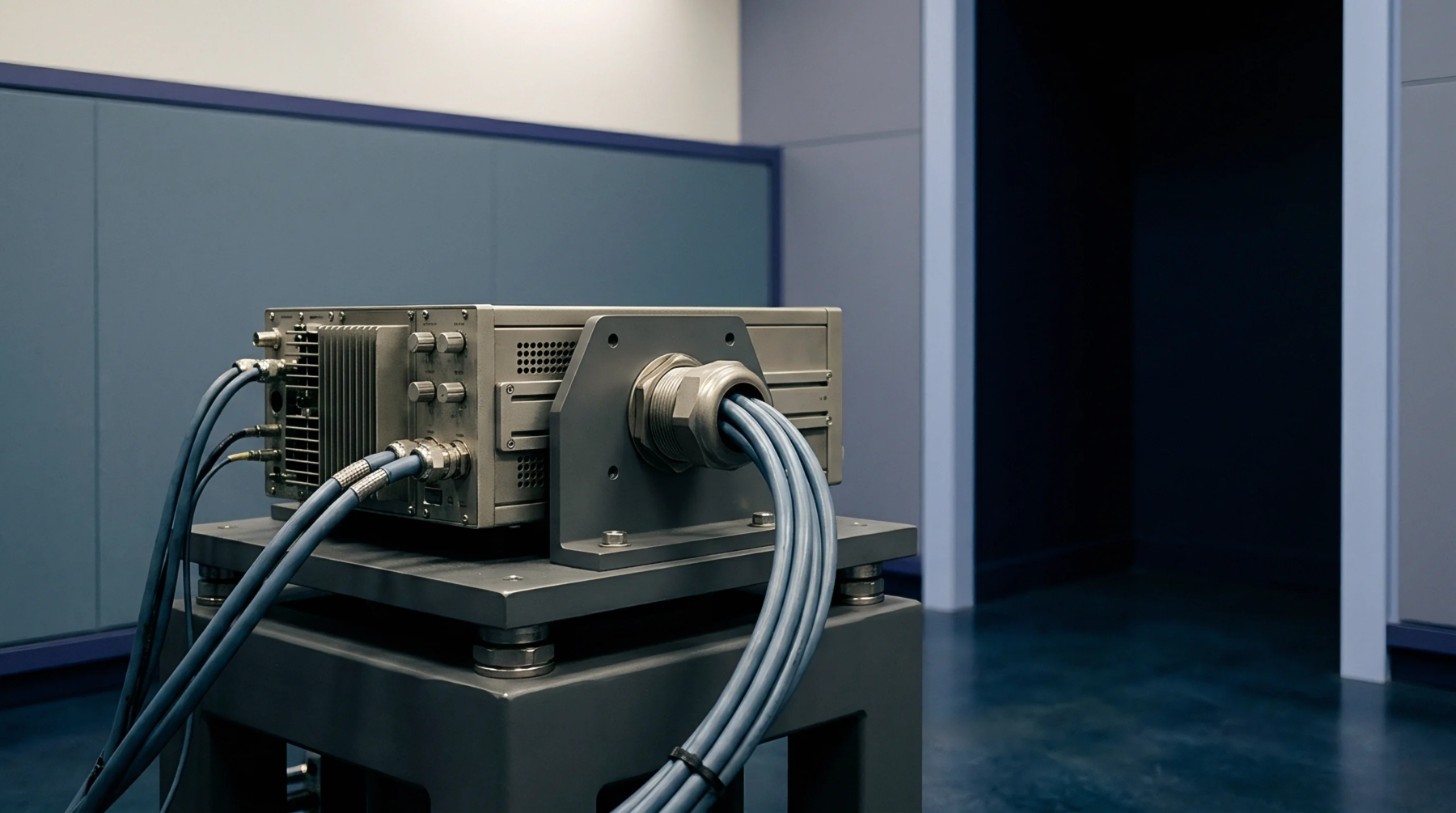
Instrument Configuration
An active thermal management system integrated into a vacuum measurement device maintains the sensing element at a constant temperature above the process environment. Utilizing a heated sensor head prevents the condensation of volatile contaminants or process byproducts on the internal surfaces of the gauge. This configuration is standard for applications involving precursor gases or condensable vapours in semiconductor manufacturing.
Accuracy Benefit
Constant temperature operation eliminates the drift associated with ambient fluctuations in the factory environment. Because a heated sensor head remains at a stable setpoint, usually 45 or 100 degrees Celsius, the sensitivity of the internal electronics stays uniform over long production runs. Thermal stability reduces the frequency of zeroing procedures required to maintain process repeatability.
Technical Execution
Resistance heating elements and precise thermistor feedback loops control the internal environment of the device. The heated sensor head requires a warmup period to reach thermal equilibrium before the measurement becomes valid for qualification. Insulation around the housing protects adjacent components from heat transfer while ensuring the internal sensing cavity remains uniform.
Dedicated controller modules manage the current flow to prevent temperature overshoot during initial power up sequences.
Integration Requirement
Power consumption and heat dissipation must be accounted for during the system design phase. A heated sensor head may influence the local gas density, necessitating the use of thermal transpiration corrections for accurate pressure calculation.