Hermetic Isolation
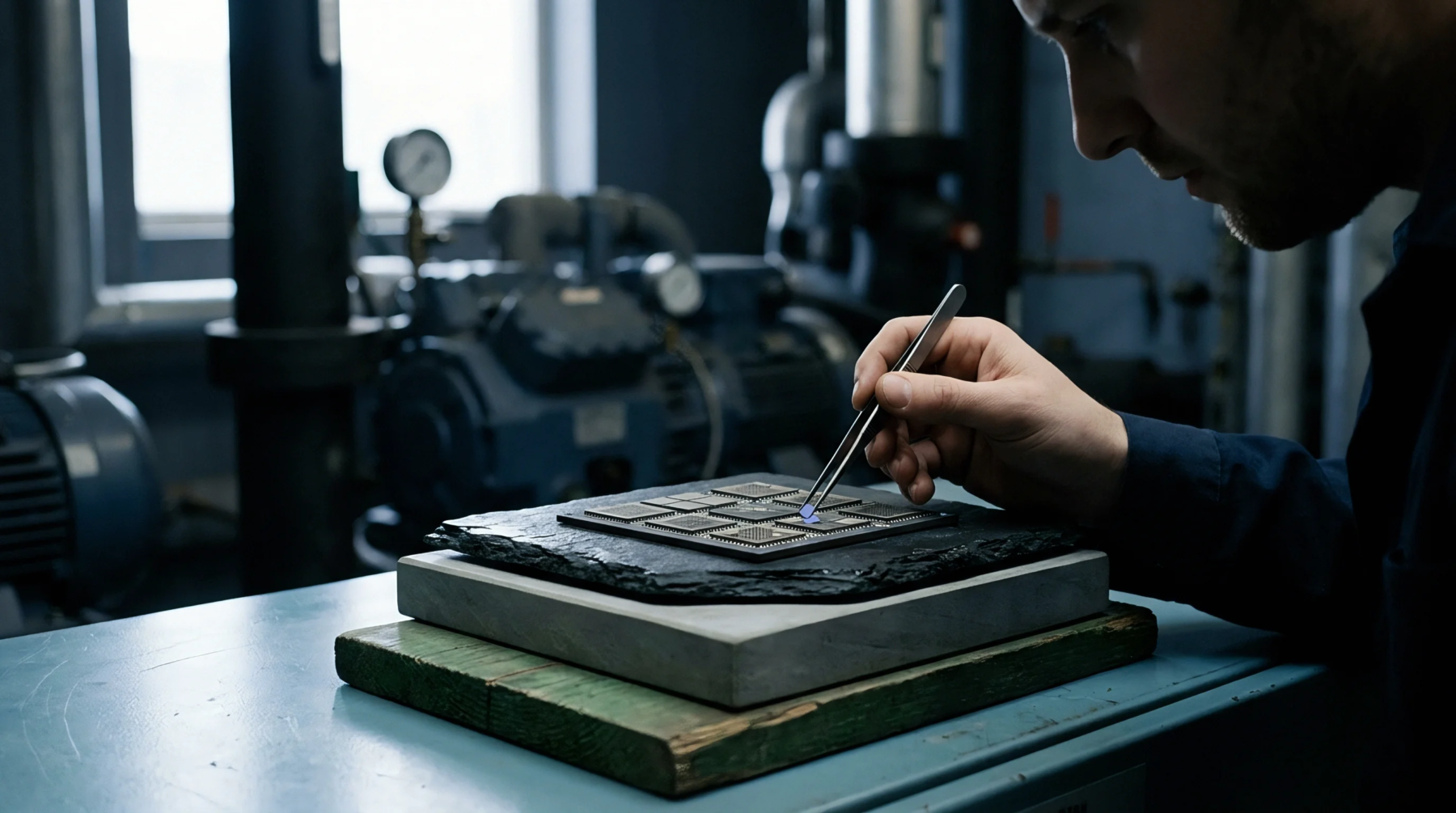
Hermetic microelectronic encapsulation technology provides a moisture-proof environment for sensitive semiconductor dies. Ceramic LCC packaging employs a multi-layer co-fired alumina base with metalized pads instead of leads to house precision integrated circuits. This structure prevents moisture ingress, which ensures that internal resistors and reference junctions remain unaffected by atmospheric humidity.
Co-fired Layering
Internal electrical routing occurs through a series of tungsten vias embedded within high-temperature co-fired ceramic layers. This three-dimensional routing pattern establishes low-impedance electrical connections while keeping the package profile flat. Precision trace layouts reduce parasitic inductance, which is beneficial for high-frequency or rapid switching signals.
These layers are fired together at high temperatures to form a monolithic ceramic body.
Solder Joint Strain
Rigid mounting of leadless carriers directly onto printed circuit boards creates mechanical stress due to differing thermal expansion coefficients. Since ceramic lacks the compliance of copper alloy lead-frames, thermal cycling induces shear forces on the solder joints. Large packages are particularly susceptible to this strain during operation under temperature swings.
Designers resolve this by utilizing specialized board materials with matched coefficients or by introducing compliance through specific joint heights, which mitigates solder fatigue. High-density designs with pads on a narrow pitch of one point twenty-seven millimeters require carefully controlled reflow profiles to prevent solder bridging and ensure uniform fillet formation.
Metrological Stability
Metrological applications rely on this housing method to prevent long-term voltage drift in precision voltage references. The rigid alumina structure resists physical deformation from external bending forces that would otherwise distort the silicon die beneath. Such structural rigidity guarantees that stress-sensitive analog circuits maintain their calibrated accuracy over extended operating intervals.
This stability is verified through accelerated lifetime testing under varying humidity levels.