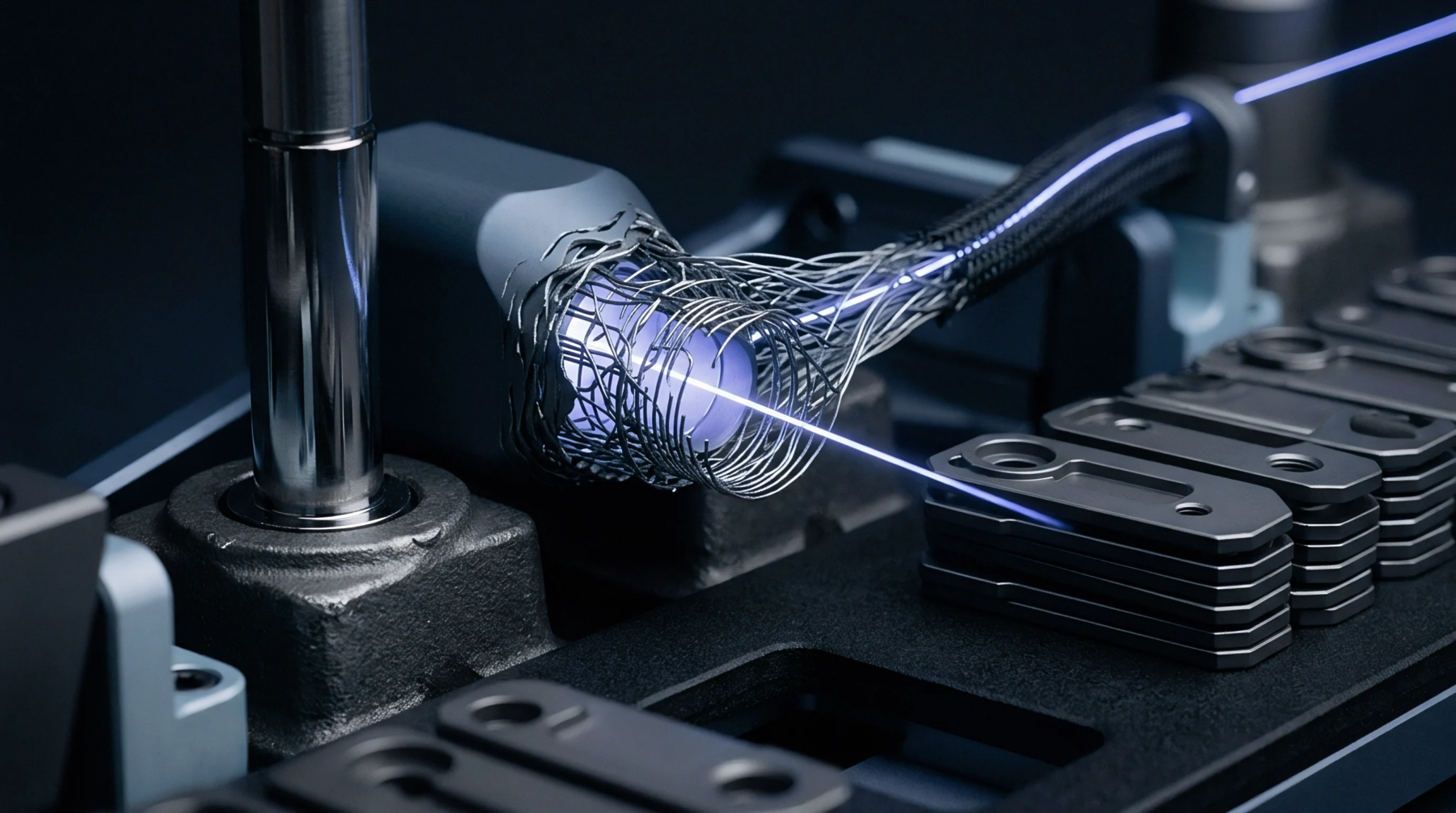
Angular Comparator
Optical instruments measure small angular displacements by projecting a beam of light and sensing its reflection from a mirrored surface. The autocollimator provides a non contact method for checking the flatness of surface plates or the alignment of machine tool ways. It detects the deviation between the outgoing and returning beam, translating this offset into an angular value.
Return Reflection
A collimated light source exits the objective lens and strikes a plane mirror positioned on the target component. The returning rays pass back through the same lens to focus on a detector or an eyepiece reticle. Because the system relies on parallel rays, the distance between the instrument and the mirror does not change the angular reading within the specified operating range.
Alignment errors appear as a displacement of the image relative to the optical axis. This displacement is converted into an angular measurement using the focal length of the objective lens as a known constant. Sensitivity is further enhanced by using a long focal length to increase the physical movement of the image for a given tilt.
Environmental Sensitivity
Temperature fluctuations in the air path between the lens and the target create refractive index variations that cause beam steer. Mechanical stability of the instrument mounting determines the repeatability of measurements over long durations. Regular calibration against a master sine bar or a rotary table ensures the accuracy of the internal scale.
Dust on the mirrored surface reduces signal strength but does not typically introduce an angular bias.
Alignment Performance
Modern electronic versions use charge coupled devices to automate the detection of the reflected spot. High resolution sensors permit the measurement of arcs as small as 0.01 seconds, providing the resolution necessary for validating the geometry of high precision air bearing stages. This precision allows for the verification of squareness between orthogonal axes.
Proper setup requires that the mirror remains perpendicular to the beam to avoid vignetting.