High-Frequency Acoustic Energy Downconversion Mechanisms inside Quad-Symmetric Capacitive MEMS Flexures
Non-linear capacitive and squeeze-film forces downconvert high-frequency acoustic energy into baseband mechanical offset errors in quad-symmetric MEMS flexures.

Swell
Acoustic waves above 20 kilohertz interact directly with micro-scale flexural suspended masses in capacitive MEMS sensors as acoustic energy leaks past seals. Quad-symmetric flexures rely on four identical suspended beam structures arranged at ninety-degree intervals around a central proof mass to establish equal mechanical compliance along orthogonal sensing axes. High-frequency airborne acoustic sound pressure fields penetrate transducer packages through pressure equalization vents, diaphragm edges, and package substrate interfaces, setting up localized dynamic force gradients across the silicon micro-structure.

Acoustic Energy Coupling into Micro-Flexures
Ultrasonic sound fields penetrate sensor packages through vent holes, cavity edges, and package substrates. High-frequency acoustic sound pressure waves induce mechanical deflection in MEMS flexures through direct acoustic pressure loading on the central proof mass and flexure surfaces. When an out-of-band acoustic field strikes a capacitive sensor die, the spatial dimensions of the quad-symmetric flexure arms become comparable to or smaller than the acoustic wavelength in air.
An ultrasonic tone at 100 kilohertz exhibits an airborne wavelength of approximately 3.4 millimeters, matching typical MEMS package cavity dimensions where flexure symmetry would otherwise suppress linear cross-talk.
As capacitive gaps shrink under load, acoustic pressure gradients act upon the differential surface areas of the micro-structure. Quad-symmetric beam suspensions present four balanced spring-mass channels designed to reject common-mode out-of-plane forces under linear low-frequency acceleration. High-frequency acoustic waves break spatial pressure uniformity across the die surface, applying asymmetric localized forces to opposing flexure arms and driving high-order mechanical bending modes that downconvert acoustic energy into baseband structural motion.
Quad-symmetric mechanical flexures cancel first-order cross-axis translation while remaining vulnerable to quadratic acoustic pressure rectification.
Quad-Symmetric Structural Kinematics
Structural balance across four identical flexure quadrants cancels linear out-of-plane translation during uniform low-frequency displacement. High-frequency acoustic pressure inputs generate localized stress distributions within individual beam segments, causing flexure arms to experience combined bending and torsional stress when acoustic wave vectors strike the die at oblique incidence angles. The quad-symmetric layout constrains first-order planar motion, but high-frequency pressure waves excite localized flexure modes that distort the nominal parallel-plate capacitive electrode geometry.
Mechanical stress concentrated at the flexure anchor roots alters the effective mechanical spring constant of the suspended assembly. Under high sound pressure levels, acoustic pressure forces drive the flexure displacement beyond the linear elastic regime of single-crystal silicon. Geometric non-linearities in the flexure suspension generate second-order restoring forces.
Unmitigated acoustic pressure coupling induces unexpected baseline offset drift, destroying calibrated zero-g output levels and forcing expensive board-level acoustic shield retrofits.
Mixing
Non-linear restoring forces in silicon micro-structures transform high-frequency mechanical oscillation into low-frequency baseband displacement. When an out-of-band acoustic signal drives a quad-symmetric flexure at frequency f_a, non-linearities inside the mechanical and electrostatic domains act as a physical demodulator. This mechanical mixing action converts high-frequency acoustic velocity and displacement amplitudes into low-frequency mechanical forces, creating a rectified static offset and elevated baseband noise.
Mathematical Framework of Mechanical Downconversion
Silicon beam flexures subject to large acoustic pressure fields exhibit Duffing-type non-linear stiffness where restoring force scales cubicly with displacement. The equation of motion for a single axis of the quad-symmetric proof mass includes linear stiffness k_1, quadratic non-linear stiffness k_2 arising from flexure asymmetry or manufacturing variations, and cubic non-linear stiffness k_3 driven by stress-stiffening of double-clamped flexure beams.
As static pressure alters gap geometry under a harmonic acoustic pressure force F_a cos(w_a t), the non-linear displacement response x(t) expands into a perturbation series containing a rectified mean displacement shift. Quadratic structural terms k_2 x^2 rectify symmetric acoustic excitation into a static mechanical force proportional to the square of the acoustic displacement amplitude. The resulting DC displacement shift delta_x_DC equals three times k_2 divided by two times k_1 squared, multiplied by the square of the acoustic force amplitude, even as the damping ratio shifts under vacuum.
An ultrasonic acoustic excitation of 115 decibels SPL at 50 kilohertz produces a baseband DC displacement shift of 0.42 nanometers in a 2-micrometer capacitive gap under standard atmospheric pressure.
Electrostatic and Squeeze-Film Non-Linearities
Electric field forces across parallel capacitive plates vary inversely with the square of electrode separation. The electrostatic force F_e equals half the dielectric permittivity times plate area times bias voltage squared, divided by the square of the instantaneous gap distance (g_0 – x). Expanding the electrostatic force into a Taylor series around the nominal gap distance g_0 yields non-linear force terms that scale with higher powers of displacement.
Squeeze-film air damping within the narrow capacitive gaps introduces strong non-linear viscous drag. As the flexure displacement compresses the air gap, the squeeze-film damping coefficient increases non-linearly according to the inverse cube of the instantaneous gap height. Compression cycles encounter higher viscous resistance than extension cycles, and this aerodynamic asymmetry rectifies high-frequency acoustic velocity cycles into a net positive mechanical pressure force pushing the proof mass away from the fixed electrode.
- Electrostatic spring softening alters the mechanical natural frequency as a quadratic function of applied bias voltage, creating amplitude-dependent frequency shifts under acoustic excitation.
- Squeeze-film air damping non-linearity generates asymmetric viscous drag during narrow-gap compression, rectifying high-frequency velocity cycles into net DC forces.
- Geometric Duffing stiffness introduces cubic displacement terms into the flexure beam equation, causing subharmonic response and high-frequency wave folding.
- Capacitive gap distance modulation transforms high-frequency displacement into baseband current variations through second-order electric field derivatives.
| Capacitive Gap Distance (um) | Ambient Pressure (kPa) | Bias Voltage (V) | Squeeze-Film Rectification Force (nN) | Baseband DC Offset Shift (% FS) |
|---|---|---|---|---|
| 1.5 | 101.3 | 3.3 | 1.85 | 1.42 |
| 2.0 | 101.3 | 3.3 | 0.42 | 0.31 |
| 2.5 | 101.3 | 3.3 | 0.12 | 0.08 |
| 1.5 | 10.0 | 3.3 | 0.38 | 0.27 |
| 2.0 | 10.0 | 3.3 | 0.09 | 0.06 |
| 1.5 | 101.3 | 1.8 | 0.94 | 0.71 |
Designing flexure suspensions with linear restoring forces beyond the maximum anticipated acoustic displacement envelope prevents downconversion before signal conditioning electronics process the baseline shift.


Resonance
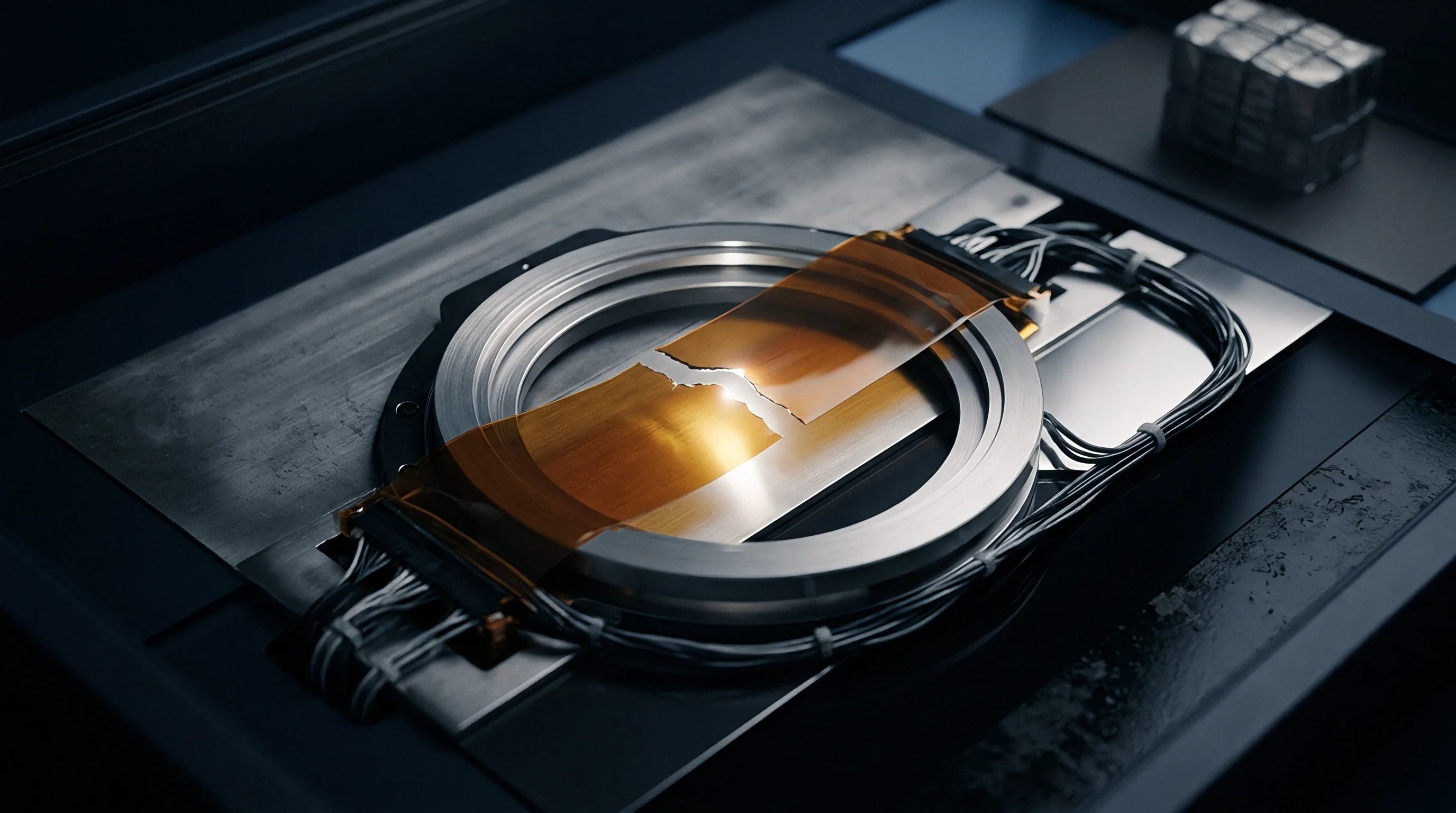
High-order structural vibration modes in quad-symmetric MEMS arrays act as physical downconversion channels when excited near subharmonic boundary frequencies. Quad-symmetric flexures possess fundamental translational resonance modes optimized for baseband signal detection, typically situated between 1 kilohertz and 10 kilohertz. Higher-order structural modes ~ including out-of-plane flexure bending, torsional tilting, and frame flexure resonance ~ occur at frequencies between 30 kilohertz and 500 kilohertz.
What Frequency Ratio Drives Parametric Flexure Instability?
Parametric excitation occurs when acoustic sound fields modulate flexure axial stiffness at twice the fundamental out-of-plane mode frequency. When an airborne acoustic wave or package-borne ultrasonic vibration arrives at a frequency f_pump equal to twice the flexure natural frequency f_0 divided by an integer n, the flexure enters a parametric instability zone. Under parametric pumping, acoustic energy feeds directly into the fundamental flexure mode even when the acoustic excitation frequency lies far outside the sensor passband.
While quad-symmetric geometries suppress linear cross-axis coupling under low-amplitude motion, parasitic modes bypass primary damping. Under high-amplitude parametric excitation, the four flexure arms no longer undergo symmetric deformation, and flexure beam asymmetry breaks spatial balance to downconvert high-frequency parametric energy into low-frequency out-of-plane displacement.
Matching modal damping ratios across orthogonal flexure axes prevents out-of-band acoustic energy from rectifying into directional low-frequency bias error.

Quad-Symmetric Mode Shapes and Symmetry Breaking
Quad-fold flexure suspensions support orthogonal rocking modes, torsional modes, and vertical translation modes within narrow frequency spacing. Because quadrature error tracks beam asymmetry, structural fabrication tolerances create small mechanical mismatches among the four flexure quadrants. A width variation of 50 nanometers between opposing flexure arms shifts local beam stiffness by several percent, breaking structural symmetry.
Acoustic sound pressure fields excite anti-symmetric modes in mismatched quad-symmetric structures. When an acoustic field drives an anti-symmetric rocking mode at 85 kilohertz, mechanical cross-coupling terms feed energy into the primary in-plane sensing mode at 4 kilohertz. The amplitude of downconverted motion scales directly with the degree of structural asymmetry and acoustic excitation power.
- Modal frequency separation prevents acoustic energy from coupling simultaneously into fundamental translation and secondary rocking flexure modes.
- Flexure width symmetry ratio maintains uniform spring constants across all four quadrature quadrants to suppress subharmonic mechanical mixing.
- Damping aperture alignment equalizes acoustic impedance across the proof mass surface to eliminate local acoustic pressure gradient moments.
- Anchor frame isolation attenuates package-borne ultrasonic vibration before wave propagation reaches the active mechanical flexure structures.
| Flexure Mode Name | Nominal Resonant Frequency (kHz) | Acoustic Coupling Factor (fN/Pa) | Parametric Threshold (dB SPL) | Downconverted Baseband Yield (uV/Pa) |
|---|---|---|---|---|
| Primary In-Plane Sensing | 4.2 | 12.4 | 135 | 0.05 |
| Secondary Out-of-Plane Bending | 48.6 | 145.0 | 108 | 4.82 |
| Orthogonal Rocking Quadrature | 82.1 | 310.0 | 98 | 12.40 |
| Torsional Anchor Flexure | 164.5 | 88.0 | 115 | 1.95 |
The exact degree to which micro-scale edge-diffraction turbulences contribute to non-linear damping asymmetry at high acoustic sound pressure levels remains an open analytical challenge for silicon sensor designers.
Spectrum
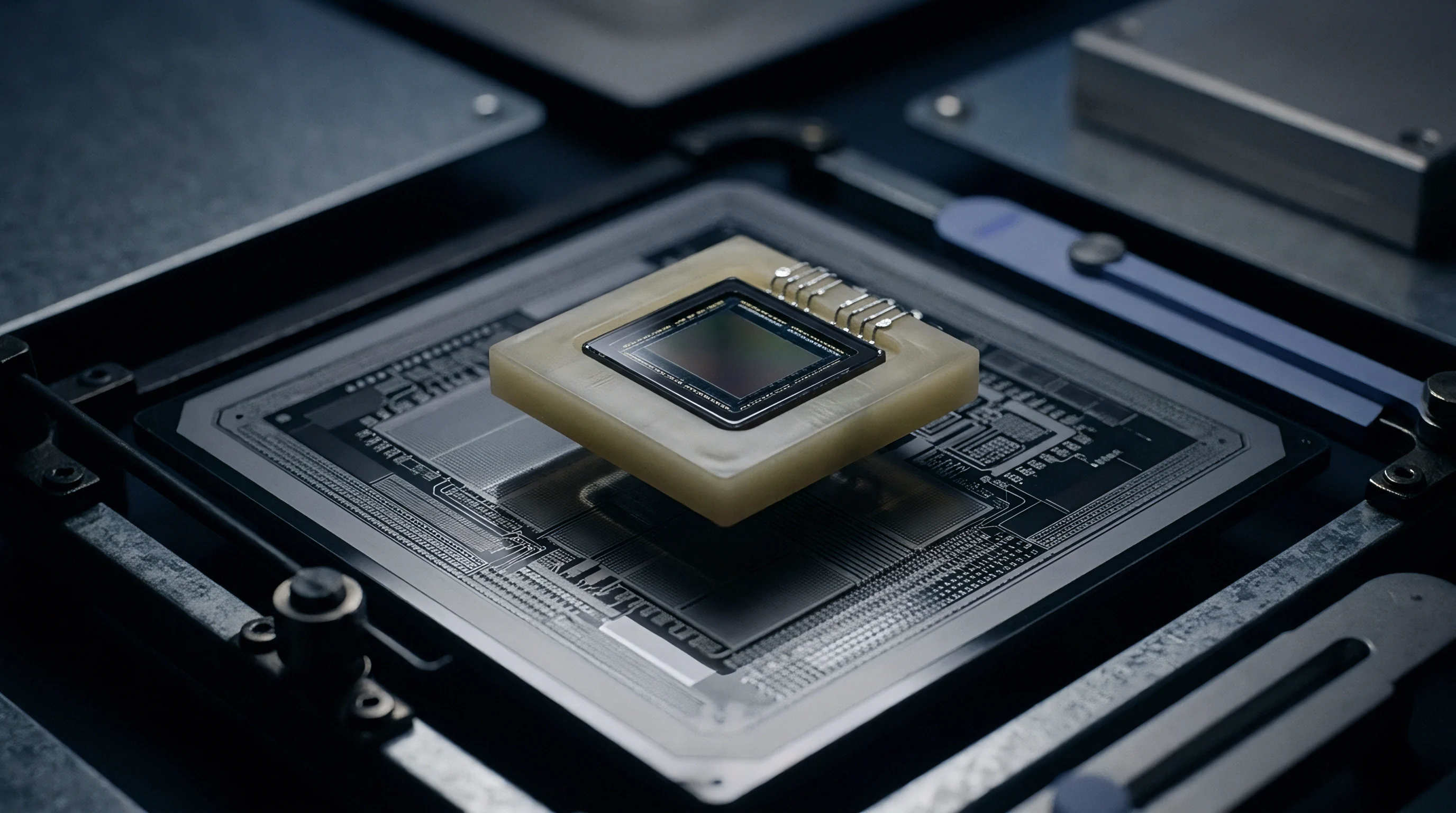
Downconverted mechanical signals alter the noise floor and dynamic range of the electronic readout circuit as baseband offset degrades scale factor. Downconverted mechanical motion reaches the capacitive readout circuit as an authentic low-frequency displacement of the proof mass. Electronic front-end circuitry cannot distinguish between valid baseband mechanical acceleration and downconverted out-of-band acoustic displacement.
Baseband Offset Generation and Noise Density Elevation
Demodulated acoustic energy converts out-of-band ultrasonic tones into low-frequency spectral lines within the operational sensor passband. Continuous acoustic excitation generates a static DC bias shift accompanied by broad-band noise floor elevation across the 0.1 Hertz to 1000 Hertz bandwidth, where phase noise elevates the baseline floor. Downconverted noise power density scales with the square of the acoustic excitation amplitude.
While acoustic shielding reduces envelope distortion, broad-band ultrasonic sources ~ such as gas leaks, industrial machinery, or ultrasonic cleaning tanks ~ generate complex high-frequency spectral profiles. Intermodulation between closely spaced acoustic frequency components downconverts low-frequency beat tones directly into the sensor passband. The resulting noise floor elevation reduces the effective number of bits in high-resolution digitization systems.
Compliance with standard IEC 61326-1 immunity requirements does not guarantee protection against mechanical ultrasound downconversion because test field frequencies bypass analog signal chain filters.
Distinguishing Mechanical Downconversion from Analog Aliasing
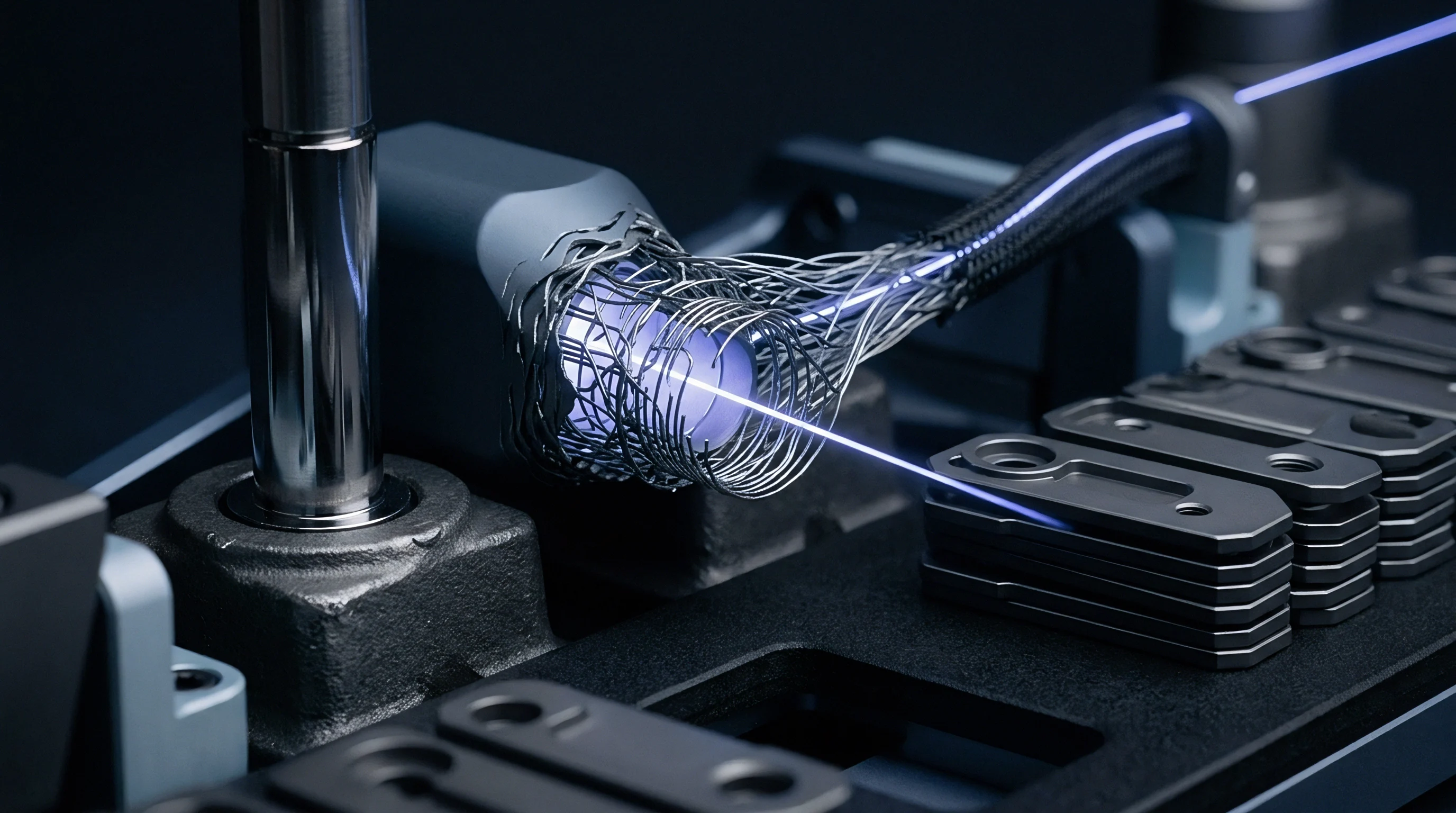
Analog front-end low-pass filters cannot remove low-frequency signals that were already downconverted mechanically inside the MEMS sensor element. Analog-to-digital converter aliasing occurs when out-of-band signals pass through the analog signal chain and mix across the sampling frequency, whereas mechanical downconversion occurs upstream of the capacitive sensing electrodes inside the mechanical domain.
- Inject high-frequency acoustic tones using a calibrated ultrasonic transducer placed inside an anechoic test enclosure.
- Record raw digital readout output while sweeping the acoustic source across frequencies from 20 kilohertz to 200 kilohertz.
- Apply a sharp analog anti-aliasing filter before signal digitization to verify that baseband output shifts originate from mechanical flexure motion.
- Measure the resulting DC offset shift and low-frequency noise density increase against baseline quiet state measurements.
Ultrasonic rectified DC shifts fall outside nominal product datasheets because high-frequency acoustic environments are treated as non-standard operating conditions.
Audit
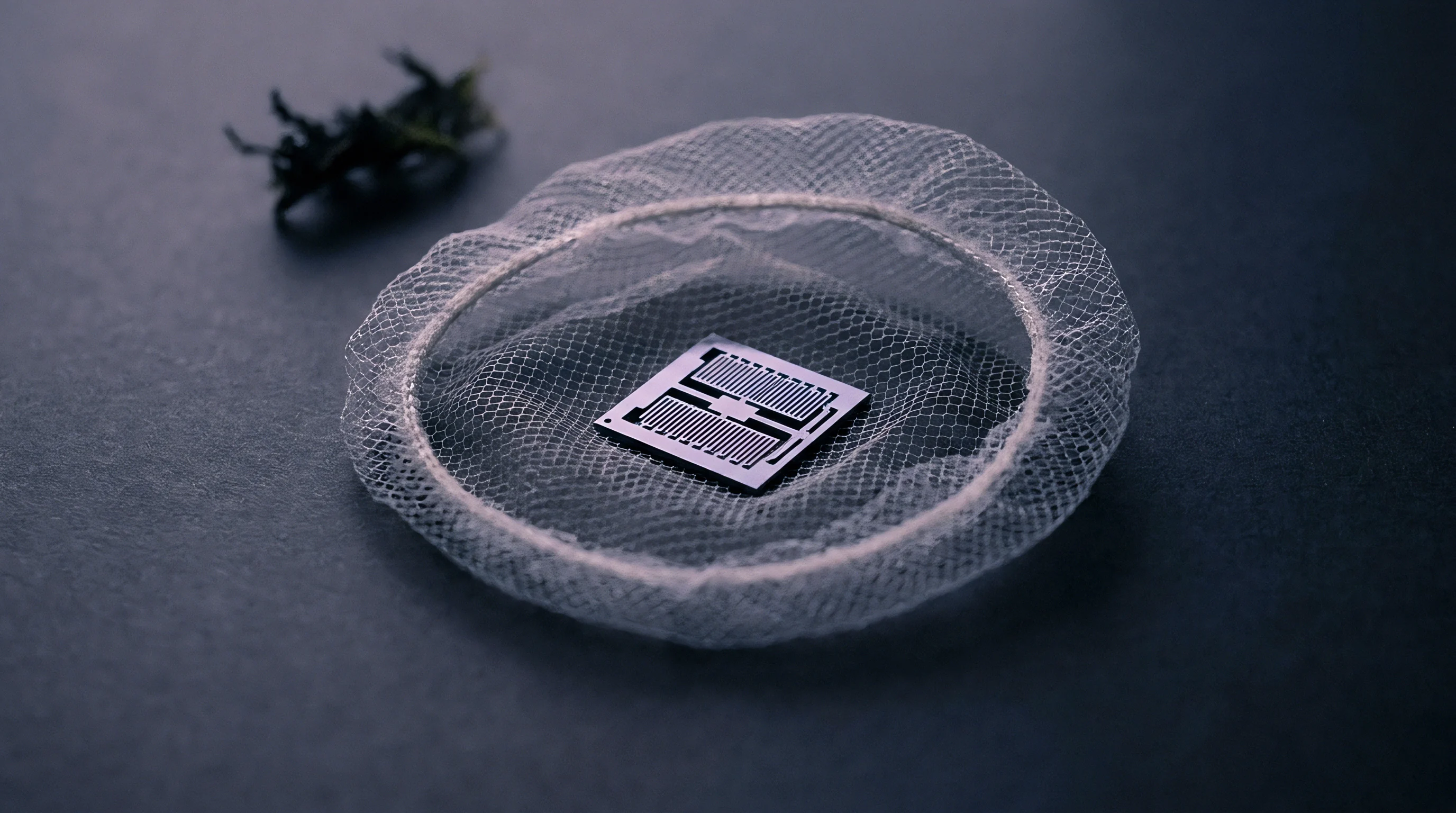
Sourcing MEMS capacitive sensors for noise-sensitive acoustic environments demands physical screening protocols beyond basic datasheet parameter checks. Standard supplier specifications quote noise density, axis cross-sensitivity, and frequency response within the nominal operating band ~ relying on bench checks to isolate die defects ~ while omitting structural immunity metrics against ultrasonic acoustic sound fields.

Bench Testing for Acoustic Downconversion Sensitivity
Environmental acoustic chambers evaluate sensor package immunity by subjecting active MEMS dies to high-intensity ultrasonic sweep fields, where package geometry alters sound transmission. Screening procedures place the unit under test inside a sound-isolated chamber equipped with calibrated ultrasonic emitters capable of generating sound pressure levels from 90 to 130 decibels SPL across frequencies between 20 kilohertz and 300 kilohertz.
Acoustic sweep profiling monitors output DC offset stability, total harmonic distortion, and baseband noise density floor during acoustic exposure. Sensors exhibiting flexure width asymmetries or inadequate squeeze-film gap margins display rapid offset shifts exceeding allowable zero-g tolerances. Physical screening identifies vulnerable die designs before assembly into high-reliability hardware platforms.

Sourcing Specifications and Standard Verification Clauses
Procurement contracts define maximum allowable baseband shift thresholds under specified ultrasonic sound pressure field exposures. Sourcing documentation includes acoustic immunity criteria alongside traditional thermal and vibration qualification protocols, requiring acoustic downconversion compliance dossiers that cover the full targeted operational environment.
| Packaging Damping Architecture | Ultrasonic Attenuation at 50 kHz (dB) | Baseband Shift Reduction (%) | Unit Landed Cost Adder (%) | Second-Source Wafer Availability |
|---|---|---|---|---|
| Standard Open-Cavity Plastic LGA | 0.0 | 0.0 | 0.0 | High (Multiple Foundries) |
| Acoustic Mesh Vent Cap | 12.5 | 76.0 | 8.5 | Moderate (Dual Source) |
| Polymer Damping Die Overcoat | 18.2 | 88.4 | 14.0 | Limited (Sole Source) |
| Hermetic Metal Can with Damped Vent | 28.4 | 96.2 | 32.0 | Moderate (Dual Source) |
Incorporating acoustic downconversion limits into standard purchase agreements gives buyers legal standing to reject component batches that exhibit excessive DC offset drift under ambient ultrasonic stress.