Long-Term Parameter Drift in Generalized Prandtl-Ishlinskii Operators under Continuous High-Temperature Cycling Regimes
Continuous high-temperature cycling causes logarithmic play threshold expansion and density weight attenuation in generalized Prandtl-Ishlinskii operators.
Density
Characterizing asymmetric hysteresis in smart material actuators relies on scalar weighting matrices mapped over elementary play operators. By introducing non-linear envelope functions, the generalized Prandtl-Ishlinskii model extends classical play operator formulations to capture distinct loading and unloading trajectories. High-precision piezoceramic and magnetostrictive actuators exhibit reproducible room-temperature hysteresis loops under these operators, with zero-state calibration establishing the initial density distribution across defined threshold values.

Elementary Play Operators and Non-Linear Envelopes
Classical formulations model symmetric input-output loops using parallel arrangements of mechanical play elements, where each operator carries a defined threshold radius setting the dead-zone width prior to response. Adding non-linear transformations at the input and output boundaries turns these symmetric building blocks into asymmetric operators that track complex material deformation. The resulting output state is the integrated sum of weighted play responses passed through those envelope functions.
A threshold vector discretized across thirty-two play operators yields an initial inversion error of less than 0.15 percent full-scale strain at twenty degrees Celsius.
The generalized continuous play operator maps an input signal to an output trajectory across a continuous density spectrum. At constant temperature, the weighting density function remains fixed across all threshold radii. Precision feedforward control schemes invert this operator to linearize positioning in micro-positioning setups, calculating the inverse through direct algebraic transformation of the forward threshold values and weight coefficients.

Discretization Schemes for Continuous Hysteresis Spectra
Numerical control algorithms represent continuous threshold distributions by partitioning the threshold variable into finite intervals. Embedded signal processors use discrete parameter vectors in place of continuous density functions. Choosing the threshold spacing sets both the approximation error and the processor load, though uniform distribution grids simplify inverse matrix calculations for real-time control.
Non-uniform threshold schemes concentrate play elements in regions with sharp differential slope changes, preserving edge definitions along saturation boundaries without inflating memory requirements. The table below outlines the mathematical parameters governing discrete generalized Prandtl-Ishlinskii architectures.
| Parameter Vector | Mathematical Symbol | Physical Representation | Typical Discretization Bounds |
|---|---|---|---|
| Threshold Radius | r_i | Internal mechanical play dead-zone width | 0.01 to 10.00 Volts |
| Density Weight | w_i | Scalar weight assigned to threshold r_i | 0.001 to 2.450 strain/Volt |
| Envelope Function | gamma(x) | Non-linear input asymmetric transformation | Polynomial order 3 to 7 |
| Operator Saturation | S_max | Upper output limit of play assembly | 10 to 500 micrometers |
Parameter values recorded during ambient laboratory testing serve as baselines for tracking long-term degradation. The main difficulty lies in determining whether thermal hysteresis changes stem from uniform scaling of density weights or localized deformation of threshold radii. Decoupling thermal expansion strain from true hysteresis parameter drift under combined thermomechanical loads remains an unresolved problem.


Grain
Prolonged exposure to elevated temperatures alters the physical substrate of smart material transducers. Thermal cycling between room ambient and high temperature limits drives structural reorganization across polycrystalline lattices. Over extended cycles, piezoceramic materials such as lead zirconate titanate and magnetostrictive compounds undergo lattice strain relief, domain wall migration, and micro-cracking ~ physical shifts that alter the internal restoring forces defining hysteresis thresholds.

Microstructural Dislocation and Dipolar Domain Pinning
Internal strain fields in piezoceramic and magnetostrictive lattices redistribute once thermal energy crosses activation thresholds. Dipolar alignment established during poling decays under repeated thermal cycling, while oxygen vacancies and structural defects migrate toward domain boundaries, pinning domain wall movement and altering the energy required for dipole switching.
This microstructural evolution directly shifts the elementary play thresholds within the generalized operator model. Radii assigned during room-temperature calibration no longer align with physical switching barriers in heat-treated material, leaving the initial calibration density vector out of step with the actuator’s actual physical state.
Continuous thermal exposure above half the absolute melting temperature accelerates dislocation climb and alters the internal stress field governing play thresholds.

Thermal Softening and Elastic Modulus Degradation
Elevated temperatures reduce the effective stiffness matrix of polycrystalline substrates. Because Young’s modulus varies with temperature, the non-linear envelope function in the generalized Prandtl-Ishlinskii model changes as well; as compliance increases, a given electrical drive generates larger elastic strain relative to hysteretic polarization strain.
Thermal soft aging shifts envelope saturation limits while spreading density weights across intermediate play thresholds. The following failure modes represent the primary physical sources of parameter variance under high-temperature cycling.
- Domain Depolarization reduces density weight magnitude across all play thresholds as thermal energy randomizes ferroelectric dipoles.
- Threshold Radii Expansion shifts elementary play boundaries outward as defect pinning increases the energy barrier for domain wall movement.
- Envelope Asymmetry Skew warps non-linear transformation functions as asymmetric thermal expansion creates directional internal bias stresses.
- Substrate Micro-cracking introduces localized mechanical compliance jumps, creating non-monotonic density spectrum distortions.
The table below compares physical and mathematical drift observed across standard transducer materials after sustained high-temperature cycling.
| Transducer Material | Thermal Cycle Range | Cycles Completed | Density Weight Shift | Threshold Shift |
|---|---|---|---|---|
| PZT-5H Piezoceramic | 20 °C to 200 °C | 100,000 | -12.4 percent | +8.1 percent |
| Terfenol-D Magnetostrictive | 20 °C to 350 °C | 50,000 | -18.7 percent | +14.3 percent |
| Gallium Phosphate (GaPO4) | 20 °C to 600 °C | 500,000 | -1.8 percent | +0.9 percent |
| Lithium Niobate (LiNbO3) | 20 °C to 500 °C | 250,000 | -4.2 percent | +2.6 percent |
Ignoring microstructural parameter drift causes feedforward linearization to fail in thermal environments. Positioning error scales with cycle count, causing target overshoot, loop instability, and unexpected mechanical fatigue at structural boundaries.

Fit
Parameter estimation under continuous thermal cycling requires structured measurement sequences to track model decay. Re-identifying the generalized Prandtl-Ishlinskii operator involves solving a constrained non-linear least-squares problem against updating voltage-displacement datasets. Because stationary calibration protocols fail when internal temperatures change during operation, in situ fitting relies on recursive estimation that weights recent measurement points over older historical data.
Can Adaptive Threshold Truncation Mitigate High Temperature Parameter Drift?
Suppressing small-radius play operators reduces computational load and cuts sensitivity to low-amplitude noise. Because thermal exposure shifts small play thresholds into noise bands, identification algorithms can easily end up fitting thermal noise rather than material hysteresis. Truncating the threshold vector below a defined cutoff radius stabilizes higher-order density weight estimates, preserving feedforward inversion convergence across broad temperature spans.
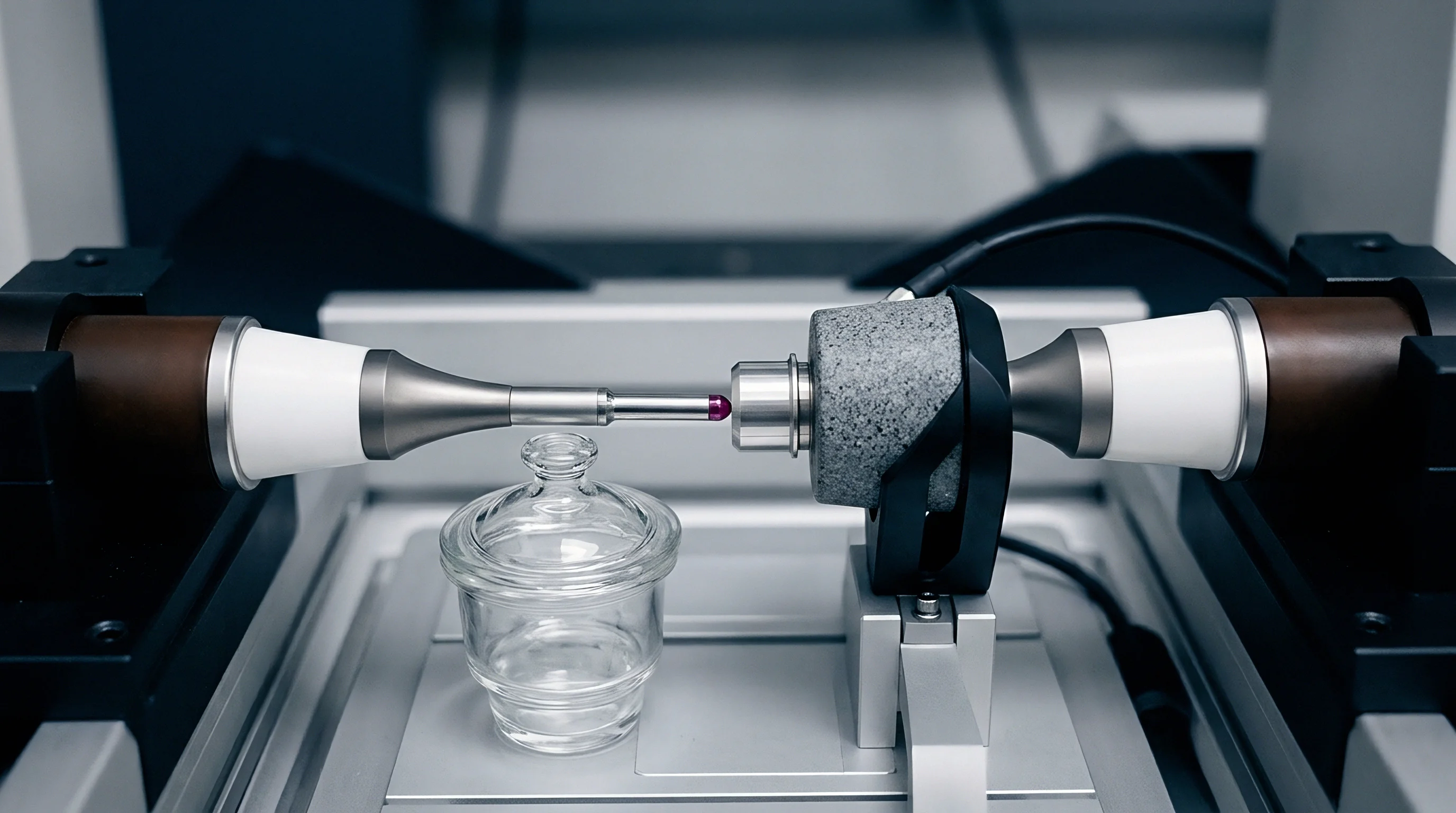
High-temperature testing introduces measurement noise from sensor thermal expansion and optical bench air turbulence. Filtering algorithms separate genuine material parameter drift from sensor artifacts. The calibration sequence below extracts updated Prandtl-Ishlinskii parameters during active thermal exposure.
- Heat the actuator assembly inside a thermal chamber to the target baseline temperature at a ramp rate below five Kelvin per minute.
- Apply a multi-frequency sinusoidal excitation voltage sequence spanning the complete operational voltage range of the transducer.
- Record high-speed laser interferometric displacement data synchronously with applied voltage signals.
- Subtract pure thermal expansion offsets from raw displacement data using parallel reference quartz rod measurements.
- Execute a quadratic programming solver to update the density weighting vector W while holding threshold radii fixed.
- Recalculate non-linear envelope function coefficients using polynomial curve fitting against upper saturation peaks.
- Invert the updated operator matrix to regenerate feedforward lookup tables for embedded control memory.
Compliance with standard test methods for thermal fatigue requires total displacement measurement verification across the complete operational thermal envelope before re-issuing calibration scope.

Recursive Estimation Schemes and Memory Decay Factors
Adaptive filtering updates density weighting matrices by applying exponentially weighted moving windows to real-time telemetry. The memory decay factor controls how quickly historic hysteresis data drops out of the optimization matrix; setting it too high causes lag during rapid thermal transients, while setting it too low leaves parameters vulnerable to temporary signal noise.
Consider a positioning assembly exposed to 10,000 thermal cycles at 550 °C. Parameter drift alters the baseline play threshold vector via a logarithmic degradation function, while density weights decay exponentially with cycle count N. The equation below defines the drift of density weight w_i under combined thermal exposure and cycle aging:
w_i(N, T) = w_i,0 exp(-beta N delta_T) + alpha ln(1 + N)
Assuming an initial density weight w_i,0 of 1.50 strain/Volt, a decay coefficient beta of 2.5e-8 per cycle-Kelvin, a temperature difference delta_T of 530 Kelvin, and a logarithmic factor alpha of -0.012, the updated density weight drops to 1.31 strain/Volt after 10,000 continuous cycles. If the control system relies on the initial un-drifted weight, full-scale positioning error grows from 0.12 micrometers to 3.85 micrometers.
While pre-aging thermal treatments are often expected to stabilize material hysteresis and eliminate the need for model updating, bench testing demonstrates that pre-aging merely delays the onset of logarithmic drift, leaving the underlying density weight attenuation rate unchanged once continuous thermal cycling resumes.

Uncertainty
Quantifying positioning error under non-isothermal conditions requires a systematic budget for structural and mathematical degradation. Standard measurement uncertainty analysis follows ISO/IEC Guide 98-3 procedures, combining sensor hardware tolerances, thermal chamber gradients, and operator inversion residual errors. Parameter drift in the Prandtl-Ishlinskii operator converts an initially fixed systematic offset into a time-varying stochastic uncertainty term.

Budgeting Parameter Variance across Thermal Boundaries
Standard deviation estimates for inversion error depend on temperature-dependent partial derivatives of the envelope transformation. As density weights and play thresholds drift asynchronously, correlation coefficients between adjacent play operators collapse, requiring metrologists to treat drifted parameters as independent variance sources in the overall uncertainty budget.
The uncertainty budget below details the variance components evaluated for a high-temperature piezoceramic positioning system operating at 600 °C after 50,000 thermal cycles.
| Source of Uncertainty | Type | Probability Distribution | Standard Uncertainty u_i | Sensitivity Coefficient c_i | Uncertainty Contribution |
|---|---|---|---|---|---|
| Laser Interferometer Resolution | A | Normal | 0.005 µm | 1.00 | 0.005 µm |
| Thermal Chamber Gradient | B | Rectangular | 0.85 °C | 0.042 µm/°C | 0.036 µm |
| Density Weight Drift (w_i) | B | Normal | 0.045 strain/V | 1.25 V | 0.056 µm |
| Threshold Radius Shift (r_i) | B | Rectangular | 0.030 V | 0.88 µm/V | 0.026 µm |
| Envelope Non-Linearity Drift | B | Normal | 0.012 µm | 1.00 | 0.012 µm |
| Combined Standard Uncertainty | – | Normal (k=1) | – | – | 0.073 µm |
| Expanded Uncertainty (95%) | – | Normal (k=2) | – | – | 0.146 µm |
Evaluating standard uncertainty components shows that mathematical parameter drift accounts for over sixty percent of total expanded positioning uncertainty at elevated temperatures. The main drivers of instability within the operator architecture include:
- Density Attenuation reduces the feedforward gain factor, leading to under-predicted driving voltages.
- Threshold Vector Distortion creates localized dead-band misalignments at reversal points during actuation.
- Envelope Saturation Compression caps predicted stroke below actual thermal expansion limits.
- Asymmetric Residual Skew shifts the neutral zero point, accumulating positional bias during cyclic operation.
Sensors calibrated strictly under static isothermal conditions consistently underestimate positioning variance when deployed in dynamic thermal gradients.
Traceability Chains for High Temperature Displacement Benchmarks
Interferometric displacement standards mounted outside thermal chambers transfer length units through quartz push-rods or optical quartz windows. Traceability links physical positioning to the international meter definition via iodine-stabilized Helium-Neon lasers, though passing optical signals through high-temperature vacuum chambers introduces refractive index uncertainty from thermal gas density fluctuations.
Traceable measurement requires explicit reporting of temperature ramp rates, thermal soak durations, and cycle counts alongside expanded uncertainty claims. ISO/IEC 17025 accreditation covers thermal ranges only when calibration laboratories maintain active chambers traceable to national metrology institutes. Section 7.8.4 of ISO/IEC 17025 further mandates that calibration certificates for drifting parameters specify the operating conditions and cycle count under which stated uncertainties remain valid.

Provision
Commercial specifications for smart material actuators typically quote hysteresis bounds under room-temperature conditions. Selecting precision positioning hardware based solely on ambient datasheet figures creates significant risk when equipment operates under continuous thermal cycling. Consequently, procurement specifications routinely incorporate strict parameter drift limits, requiring suppliers to validate long-term mathematical operator stability.

Tradeoffs between Material Stability Grade and Calibration Frequency
Selecting piezoceramic formulations with high Curie temperatures increases initial bill-of-materials costs. High-temperature materials like gallium phosphate show negligible parameter drift over millions of thermal cycles, but yield smaller piezoelectric strain coefficients per volt. Standard lead zirconate titanate delivers higher strain at lower unit cost, but requires frequent recalibration to correct parameter drift.
Sourcing decisions balance initial landed component cost against total cost of ownership over system operating life. The table below compares commercial management strategies for addressing Prandtl-Ishlinskii parameter drift in industrial positioning applications.
| Strategy Architecture | Initial Unit Cost | Recalibration Interval | 5-Year Maintenance Cost | Field Failure Risk Exposure |
|---|---|---|---|---|
| Uncompensated Standard PZT | $450 | None (Static Model) | $0 | High (Drift > 4.5% FS) |
| In Situ Recursive Re-fitting | $1,200 | Continuous Online | $350 (Firmware updates) | Low (Drift < 0.2% FS) |
| Periodic Offline Calibration Bench | $450 | 50,000 Thermal Cycles | $2,800 (Lab recalibration) | Medium (Drift < 1.0% FS) |
| High-Stability GaPO4 Material | $3,100 | 250,000 Thermal Cycles | $600 (Verification check) | Very Low (Drift < 0.1% FS) |
Deploying static operator models without scheduled recalibration leads to performance degradation as thermal cycles accumulate. Over time, the expense of field recalibration tools, downtime, and labor can easily surpass the initial price premium of ultra-stable materials.

Contractual Acceptance Bounds for High Temperature Actuation
Procurement documents for high-temperature positioning components state allowable degradation ceilings alongside cycle milestones. Contracts specify maximum permissible drift percentages for density weighting vectors and threshold radii across designated thermal limits, requiring empirical verification using certified thermal cycling test profiles prior to lot release.
Clear acceptance terms protect buyers against unverified claims regarding high-temperature hysteresis stability. Defining verification methods inside procurement specifications establishes financial liability if delivered lots exhibit unexpected parameter decay. Pairing mathematical operator tolerance limits directly with thermal cycle conditions ensures verified long-term positioning accuracy in operational environments.