Physical Cutout
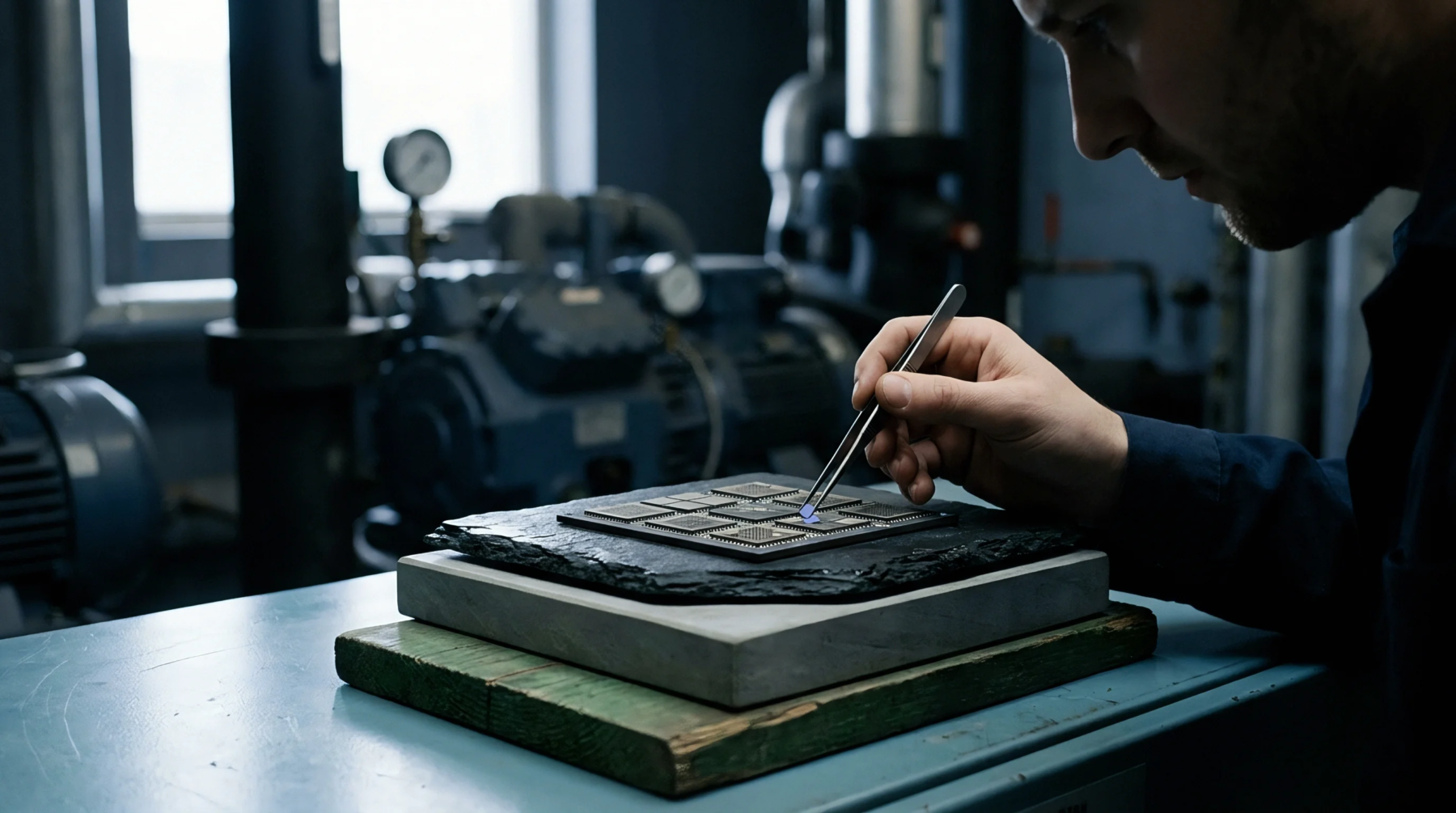
Printed circuit board design feature interrupts the continuous copper and laminate layers to prevent heat transfer between adjacent board regions. A thermal isolation slot acts as a physical barrier to the lateral conduction of heat from high-power components to sensitive analog stages. By removing the material, this narrow air gap reduces the rate of heat propagation across the substrate.
This structural separation helps to maintain a stable local temperature for precision components.
Gradient Reduction
The gradient reduction achieved by this cutout prevents localized heating from creating thermal offsets in precision analog circuitry. When high-current components operate, they generate localized hot spots that radiate outward through the circuit board. By routing a slot around the sensitive device, designers force the heat to flow around the slot, which dampens the temperature spike.
This creates a more uniform thermal environment for the protected components, preserving their calibrated accuracy during high-load events. Additionally, this isolation is particularly valuable for protecting reference diodes and precision operational amplifiers that are prone to thermal feedback from adjacent power-management stages.
Routing Constraint
Routing constraints must be carefully managed when implementing these slots because they split the ground planes. An interrupted ground plane can force return currents to take long, loop-filled paths, which increases electromagnetic emissions and noise. Designers must balance thermal isolation needs with signal integrity by ensuring that high-speed traces do not cross over the slot.
This requires deliberate placement of power lines and signal traces to avoid creating unwanted loop antennas.
Metrological Protection
Metrological protection of voltage references and analog-to-digital converters depends on this mechanical barrier to block low-frequency drift. In high-resolution systems, a thermal drift of even a fraction of a degree can shift the output beyond the allowed error budget. This passive barrier technique is verified by using thermal imaging cameras to monitor heat propagation during active board operation.