Computational Drift
Inertial navigation platforms compute position, velocity and attitude by continuously integrating the outputs of body-mounted accelerometers and gyroscopes. The strapdown navigation error represents the accumulated difference between the estimated trajectory and the true physical path of the vehicle. This error grows over time because the integration process mathematically amplifies any uncorrected sensor biases, scale factor errors and mounting misalignments.
Inertial Sensor Deviation
The primary drivers of this deviation are the deterministic and stochastic errors of the individual inertial sensors. If a gyroscope has a constant bias drift, the strapdown navigation error in attitude will grow linearly with time, which in turn causes the velocity error to increase quadratically and the position error to grow cubically. Environmental factors like vibration and temperature fluctuations worsen this drift by introducing non-linear sensor responses that are difficult to model in real time.
Lab Assessment
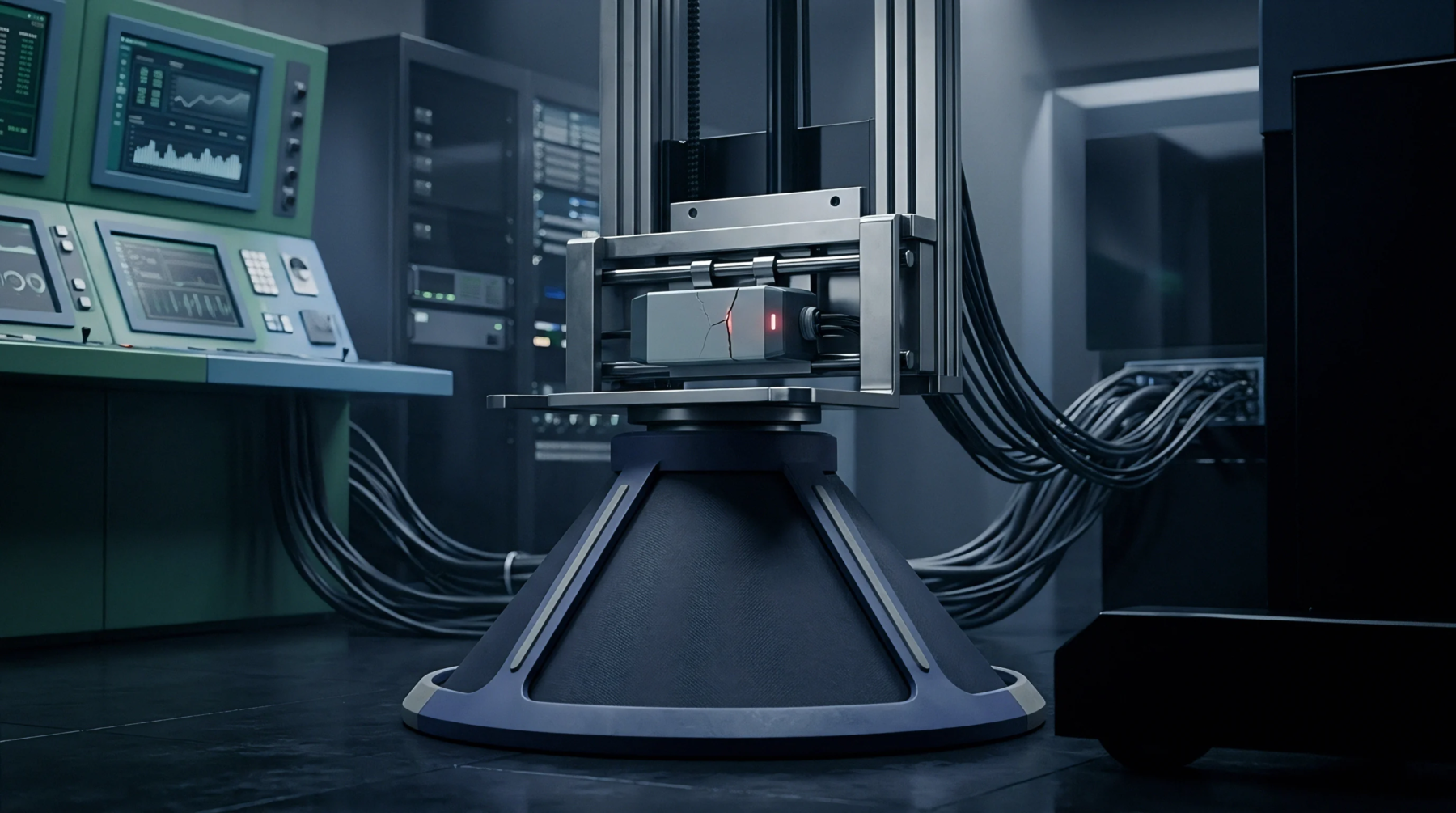
Laboratory testing of this error involves mounting the complete navigation unit on a high-precision multi-axis rate table and executing a standard trajectory simulation. Comparing the system’s computed output against the highly accurate reference measurements of the rate table yields the error growth profile over the duration of the run.
Correction Scheme
Modern navigation suites mitigate this drift by integrating the inertial sensors with external aiding sensors, such as GPS or Doppler velocity logs, using a Kalman filter to estimate and correct the navigation errors.