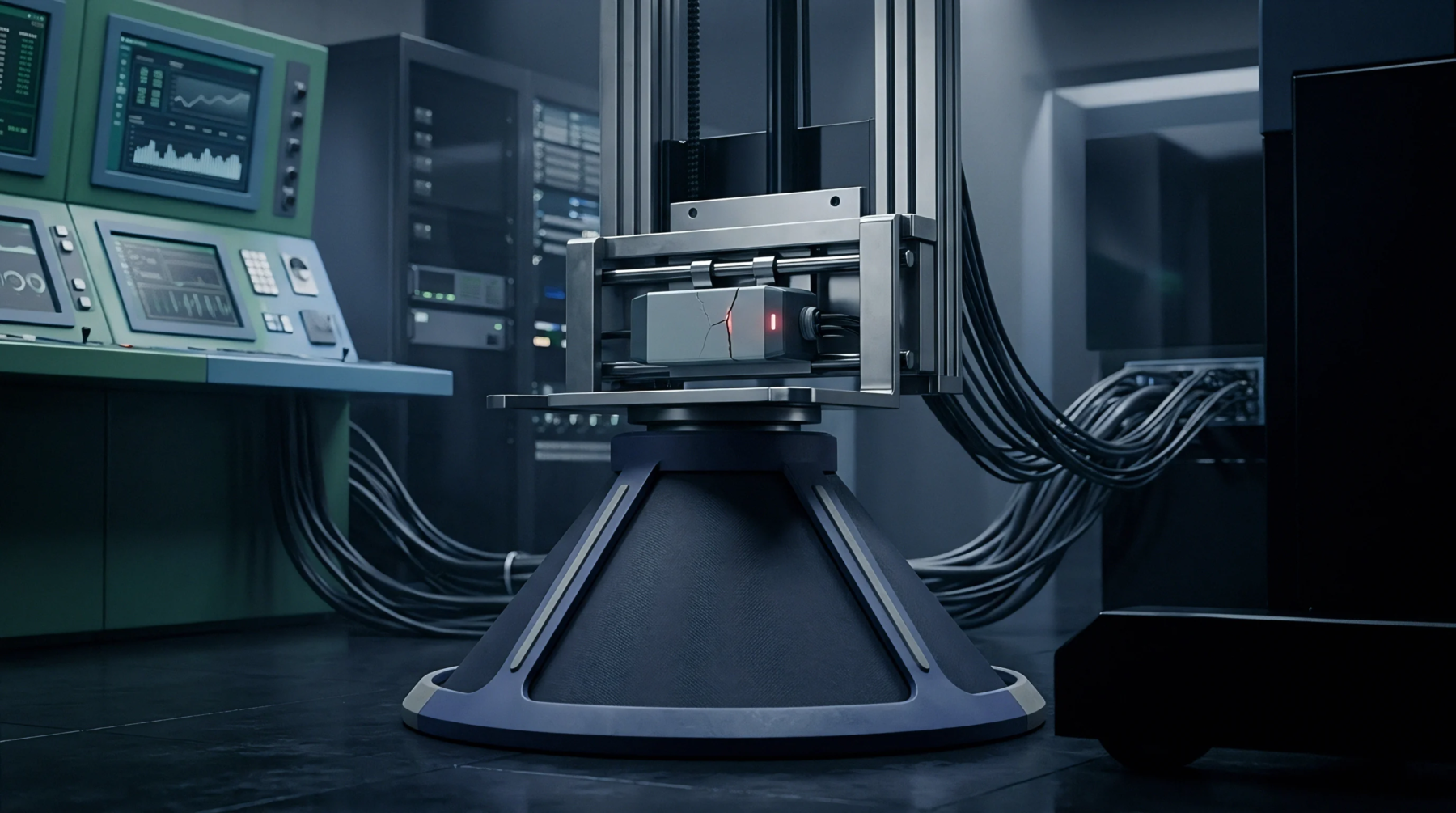
Metrological Extrapolation
Mathematical formulation of systematic and stochastic output changes across continuous temporal windows establishes lifetime measurement confidence intervals for sensing hardware. Accurate sensor drift modeling generates empirical and physics-based representations that decouple ambient environmental perturbations from genuine zero-point and sensitivity shifts over time. The analytical scope ceases to apply when unmodeled physical shocks or gross chemical contamination introduce non-linear discontinuities that permanently alter the mechanical or electrical transfer function.
Kinetic Formulations
Temporal instability originates from physical degradation mechanisms within the active sensing element and its packaging. Logarithmic functions model long-term mechanical stress relief in micro-machined membranes and packaging adhesives, while power-law equations capture ionic transport and surface contamination across chemical electrodes. Arrhenius formulations scale the rate of drift against operational temperature profiles, accelerating simulated degradation pathways under controlled burn-in procedures.
Random walk processes and low-frequency flicker noise overlay these deterministic drift trends, requiring stochastic modeling techniques like Allan variance analysis to identify the boundary between correctable systemic drift and uncorrectable random noise.
Calibration Verification
Environmental chambers equipped with high-stability reference standards provide controlled temperature, pressure, and humidity steps to isolate sensor responses during multi-month stability evaluations. Drift data extraction requires reference standards possessing measurement uncertainties at least four times smaller than the stability margin claimed by the unit under test. Baseline offset and scale factor variations are recorded at regular temporal intervals.
Failure to decouple thermal hysteresis from genuine baseline drift corrupts the predictive coefficients of the model, generating false flags during downstream compensation runs.
Compensation Integration
Firmware embedded in signal conditioning electronics integrates these predictive drift models to continuously trim digital sensor outputs. Sourcing contracts define maximum acceptable drift rates across five-year or ten-year operational horizons, requiring suppliers to provide validated aging model coefficients for each production lot. Acceptance testing involves short-term high-temperature accelerated aging of sample sensors to verify that measured drift rates conform to predicted model envelopes prior to final lot acceptance.