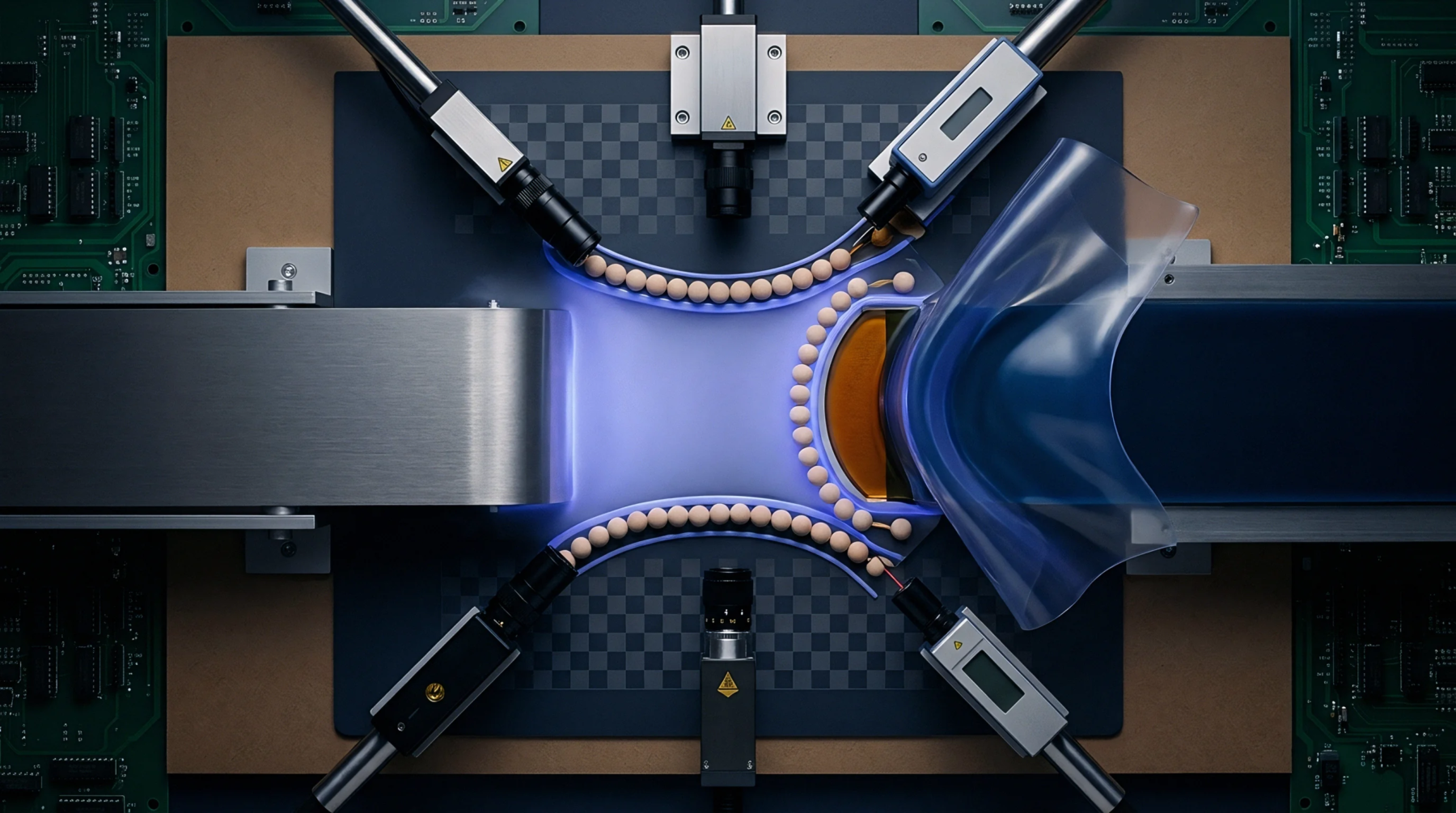
Thermal Threshold
Maximum heat exposure defines the operating boundary for solder alloy transition during surface mount assembly. Reflow temperature tracks the specific heat intensity required to turn solid solder paste into a liquid state while avoiding substrate degradation. Precise control of this parameter prevents cold joints where the alloy fails to wet the pad properly.
Process Requirement
Calibration of the heating profile relies on accurate thermocouple placement across the printed circuit board assembly. Monitoring the peak value of reflow temperature ensures that all components reach the target state without thermal shock or component damage. Sensor drift within the oven architecture introduces a risk of localized cool spots, which requires regular validation against a calibrated thermal profiler.
Validation equipment verifies that the thermal zones maintain stability within the tolerance bands defined by the alloy manufacturer.
Heat Transfer
Convection or infrared radiation provides the energy needed to drive the thermal transition. Airflow dynamics in the oven chamber influence how effectively the reflow temperature distributes across the complex topography of a densely populated assembly. Large components act as heat sinks that change the local environment, creating a delta between the set point and the actual temperature recorded at the joint.
Maintaining a uniform thermal gradient across the board surface minimizes the discrepancy between the smallest and largest connections.
Measurement Accuracy
Instrumentation accuracy relies on the cold junction compensation and internal reference stability of the profiling device. Ambient conditions around the oven output can interfere with cooling rate calculations if the exhaust system induces draft variations. Frequent verification of the measurement chain against a secondary standard corrects for thermocouple degradation caused by repeated exposure to high temperatures.
Stability in the thermal sensing loop determines the consistency of the metallurgical bonds formed during the solidification phase.