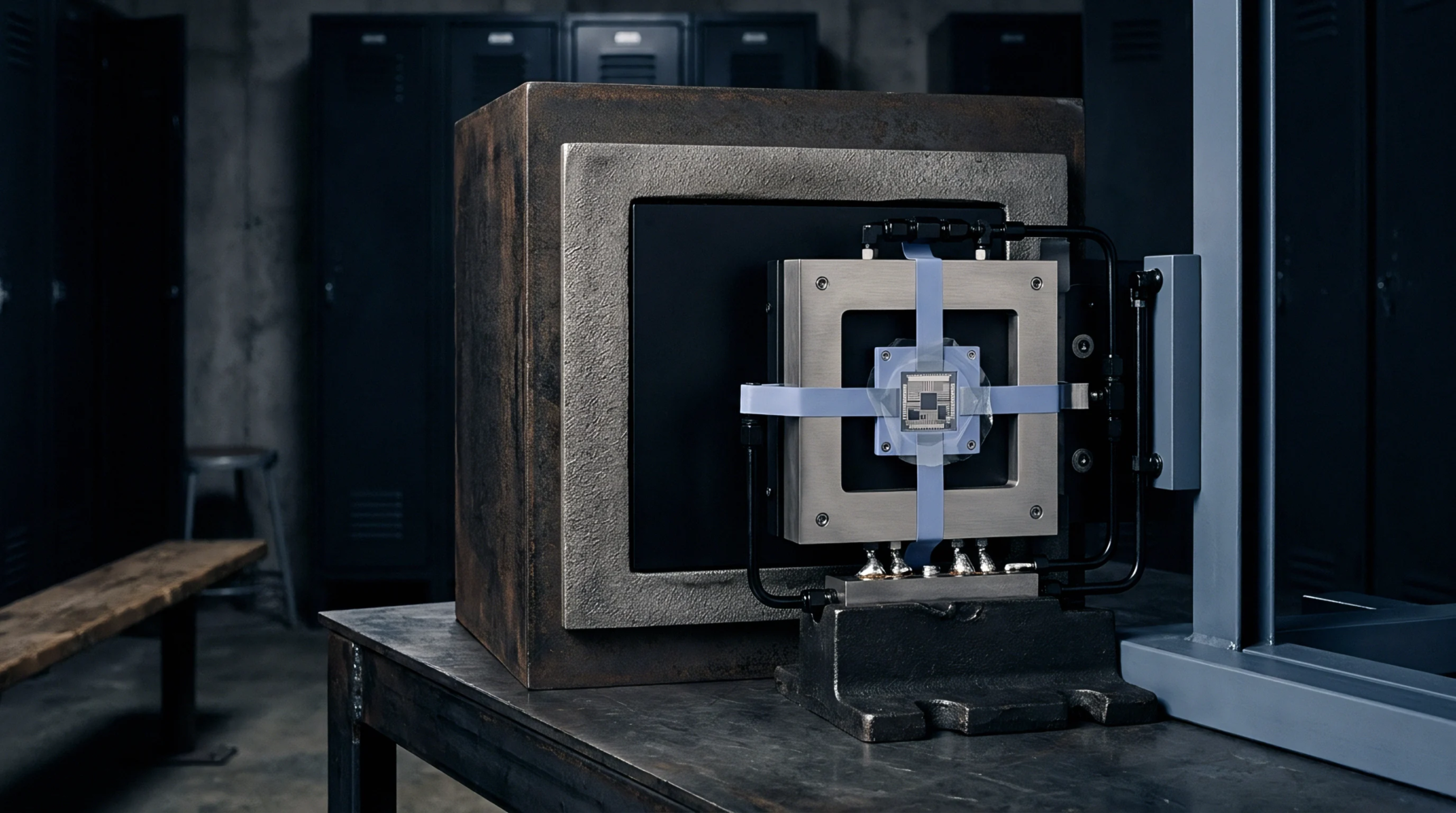
Polymer Encapsulation
Barrier deposition is an industrial shielding technique where protective macromolecular layers surround sensitive electronic components to prevent environmental ingress. Polymer encapsulation protects delicate sensor assemblies from moisture exposure and ionic contamination during prolonged field deployment. The process relies on liquid resin dispensing followed by thermal curing or ultraviolet crosslinking to form a dense outer sheath.
Manufacturers establish specific viscosity parameters before application to ensure complete coverage without void formation inside the cavity. Signal attenuation occurs when trapped volatile compounds outgas during the final polymerization phase.
Dielectric Isolation
Electrical protection depends entirely upon the bulk resistivity of the cured resin matrix. Dielectric breakdown voltage thresholds dictate maximum operating limits for encapsulated sensing arrays in high voltage circuits. Moisture absorption over extended operational periods degrades insulation performance and introduces capacitive leakage currents.
Laboratory tests measure dissipation factor variations at standard reference frequencies to quantify the onset of material degradation. Environmental stress screening protocols verify that thermal expansion mismatches between the substrate and the protective coating do not shear internal wire bonds.
Curing Kinetics
Chemical transformation rates dictate production throughput and final mechanical stability. Exothermic reaction peaks generate internal thermal gradients that can warp delicate transducer diaphragms if cooling rates remain uncontrolled. Temperature sensors embedded within the dispensing fixture monitor reaction progress to ensure stoichiometric completion across every batch.
Retraction forces develop during volumetric shrinkage, which places mechanical stress upon underlying piezoresistive elements.
Verification Standards
Metrological certification requires destructive cross section analysis alongside non-destructive acoustic microscopy to detect internal voids. Calibration drift values recorded after accelerated aging tests establish the long term reliability of the protective barrier. Regulatory bodies specify maximum allowable moisture vapor transmission rates for components deployed in corrosive atmospheres.
Final acceptance depends strictly upon passing rigorous thermal shock cycling without mechanical delamination at the substrate boundary.