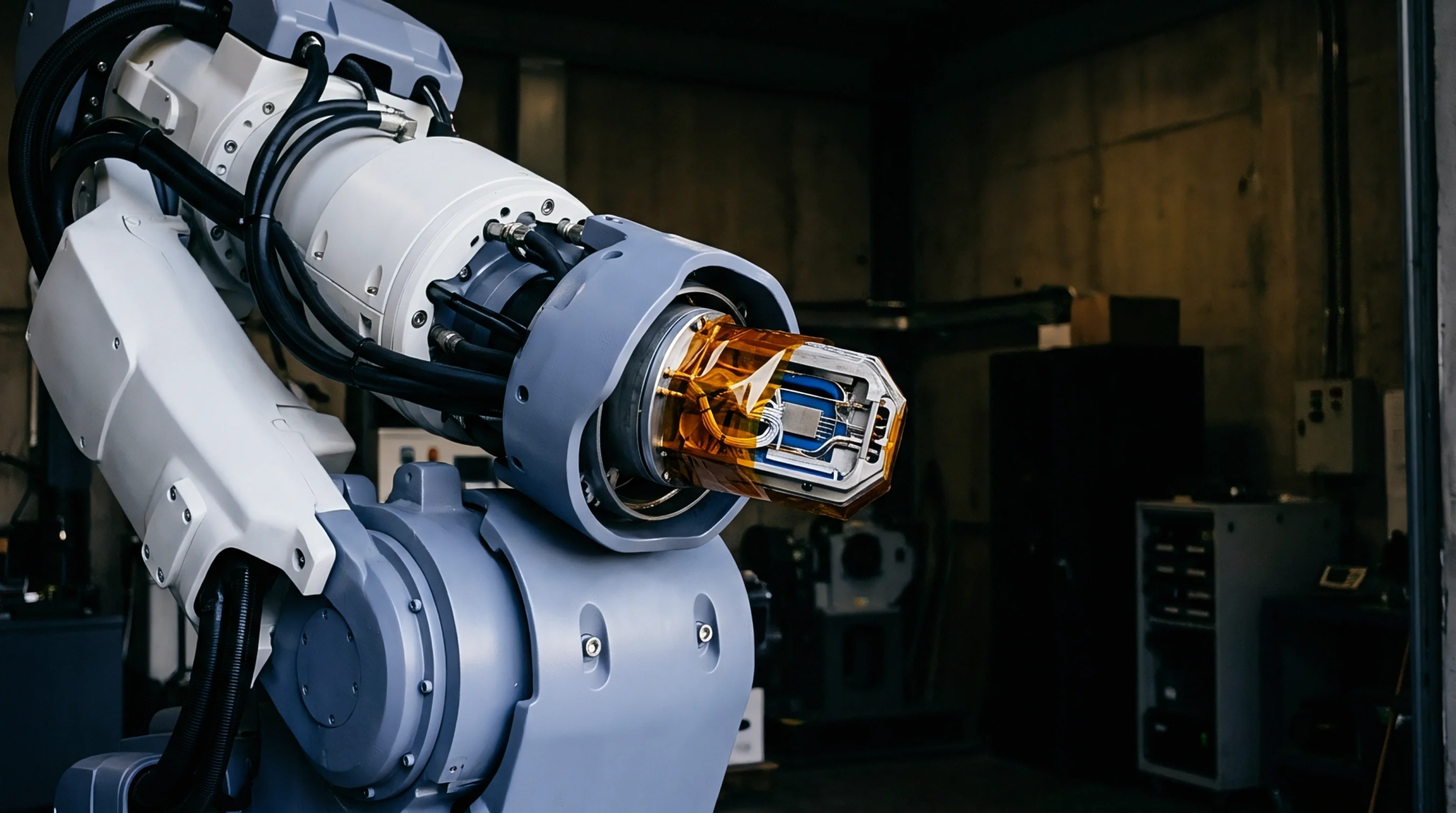
Decoupling Multi Axis Shaker Table Cross Motion in Inertial Calibration
Multi-axis shaker cross-motion decoupling relies on synchronized multi-channel reference arrays and dynamic frequency-domain matrix inversion.
Multi-channel data acquisition systems and distributed sensor networks depend on strict temporal alignment between concurrent signal channels to maintain relational accuracy across dynamic measurements. In multi-phase electrical power instrumentation, beamforming acoustic arrays, and structural modal testing systems, phase synchronicity defines the degree to which discrete measurement channels capture identical point-in-time phenomena without introducing channel-to-channel phase skew. Technical sourcing specifications stipulate tight phase matching bounds across the target frequency bandwidth to prevent spatial and relational reconstruction errors.
The boundary where phase coherence breaks down is established by digital sampling clock jitter, analog filter component tolerances, and physical transmission path delays.
Analogue anti-aliasing filters introduce frequency-dependent phase shifts that vary between channels due to component manufacturing tolerances in capacitors and operational amplifiers. To maintain phase synchronicity, precision instrumentation employs matched active filter topologies alongside simultaneous sampling analog-to-digital converters driven by a shared, low-jitter master clock. Multiplexed conversion architectures degrade synchronicity by introducing fixed inter-channel time delays, necessitating digital phase-advancement filters in firmware to reconstruct temporal alignment.
Temperature gradients across printed circuit assemblies alter propagation speeds and passive component values, introducing relative phase drift across parallel signal paths over extended operation.
Metrological qualification of channel synchronisation involves splitting a certified, low-distortion sinusoidal signal from a primary frequency generator across all instrument inputs simultaneously. Measuring phase synchronicity requires dual-channel high-speed digitizers traceable to international time and frequency standards to capture the phase difference between channel pairs across the full operating frequency range. Conformance demands that channel-to-channel phase skew remain below zero point one electrical degrees at fifty hertz for power quality analysers, and within tight sub-microsecond bounds for dynamic vibration platforms.
Factory test reports certify worst-case phase offsets and include calibrated phase-delay tables across varying input gain ranges.
Operating across wide thermal environments degrades passive component matching, causing channels to exhibit asymmetric phase drift that compromises synchronised vector calculations. Long signal cabling introduces transmission line delays and uneven capacitive loading that degrade phase coherence in high-frequency multi-sensor arrays unless active delay compensation is implemented. Asynchronous clock domains between distributed acquisition nodes generate cumulative timing drift that corrupts phase-dependent analytics like acoustic source localisation.
High-frequency structural modal analysis loses spatial accuracy when phase alignment fails to account for internal group delay variations across variable-gain preamplifiers.
Multi-axis shaker cross-motion decoupling relies on synchronized multi-channel reference arrays and dynamic frequency-domain matrix inversion.
Expertise is a utility, not a secret. sentiention™ publishes its working knowledge as open reference: intelligence layer covering the materials it sources, the markets it enters, and the reference that serves both.