Drift Curve
Repeatable non-linear error curve in precision electronic components describes how an output value changes and fails to return to its initial state after a complete temperature cycle. Parabolic thermal hysteresis occurs when a device is swept from room temperature to a high or low limit and then returned to its starting temperature. The output voltage or current follows a curved, non-monotonic path that deviates from the original baseline.
This mismatch leaves a residual offset that degrades the accuracy of high-resolution analog measurement systems.
Structural Origin
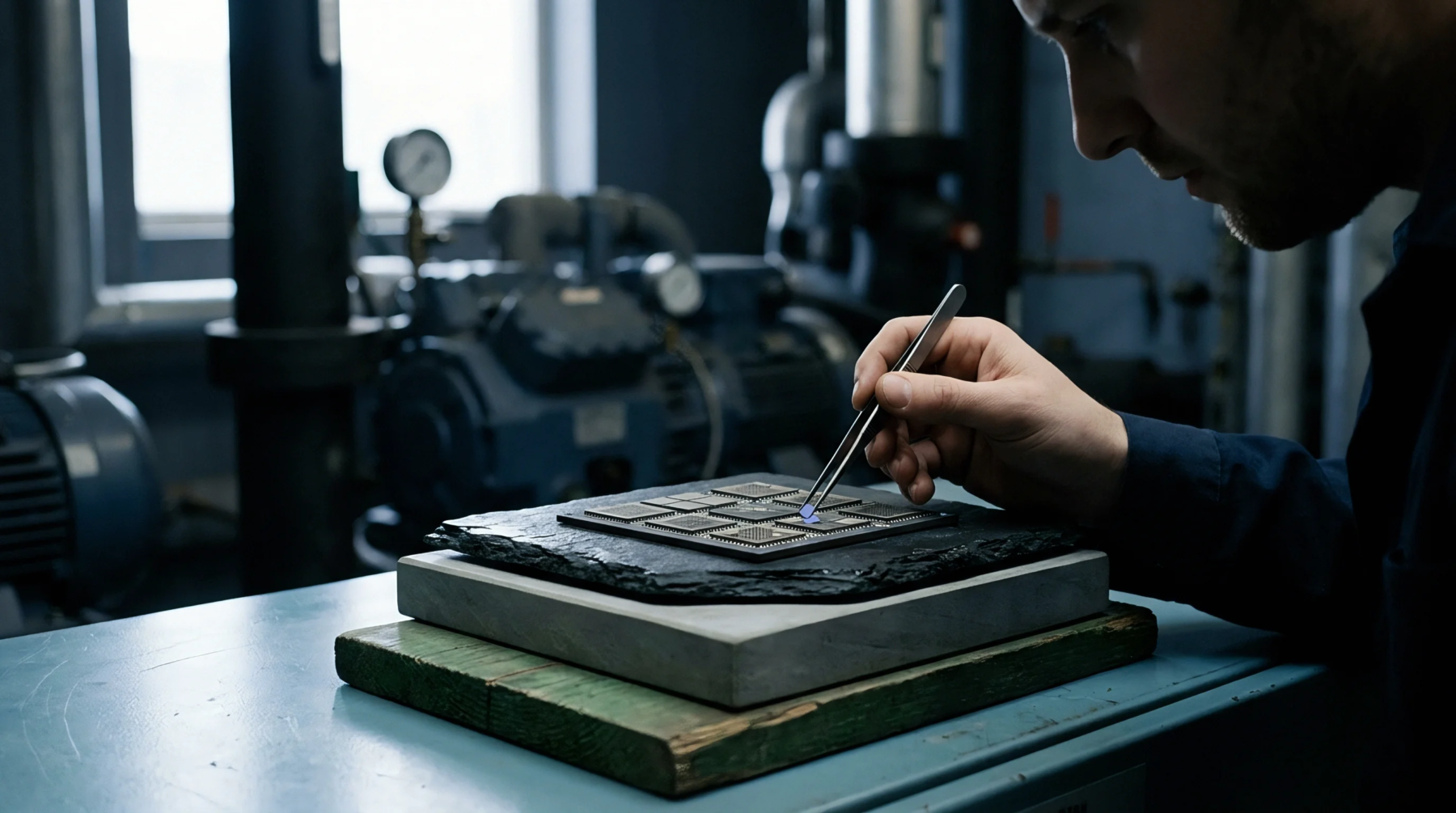
The structural origin of this phenomenon lies in the mechanical stresses that develop between the silicon die and its molded plastic housing. As temperature changes, different thermal expansion rates cause the package to squeeze and bend the internal silicon. This mechanical strain alters the bandgap voltage of the semiconductor junctions through the piezoresistive effect.
When the temperature returns to room level, the plastic housing does not relax fully or immediately, trapping stress within the assembly.
Measurement Methodology
A rigorous measurement methodology requires multiple sequential temperature sweeps to characterize this behavior accurately. Testers place the device under test inside a precision environmental chamber, monitoring the output voltage at specific temperature steps. They record the output during the upward ramp and compare it to the values obtained during the downward ramp.
To isolate the true hysteresis from simple linear drift, the chamber is held at each temperature point until thermal equilibrium is reached throughout the device body. This test procedure is typically repeated over several cycles to separate random thermal noise from the deterministic parabolic shape of the hysteretic response, ensuring that the resulting calibration curves are statistically sound.
Systematic Error
This systematic error cannot be easily compensated by simple digital algorithms because the drift is path-dependent and non-linear. System designers must select components with ceramic packaging or implement mechanical isolation to minimize the transfer of stress to the die. By choosing devices designed for low stress, high-precision instrumentation achieves long-term reliability and minimizes the need for frequent field recalibration.