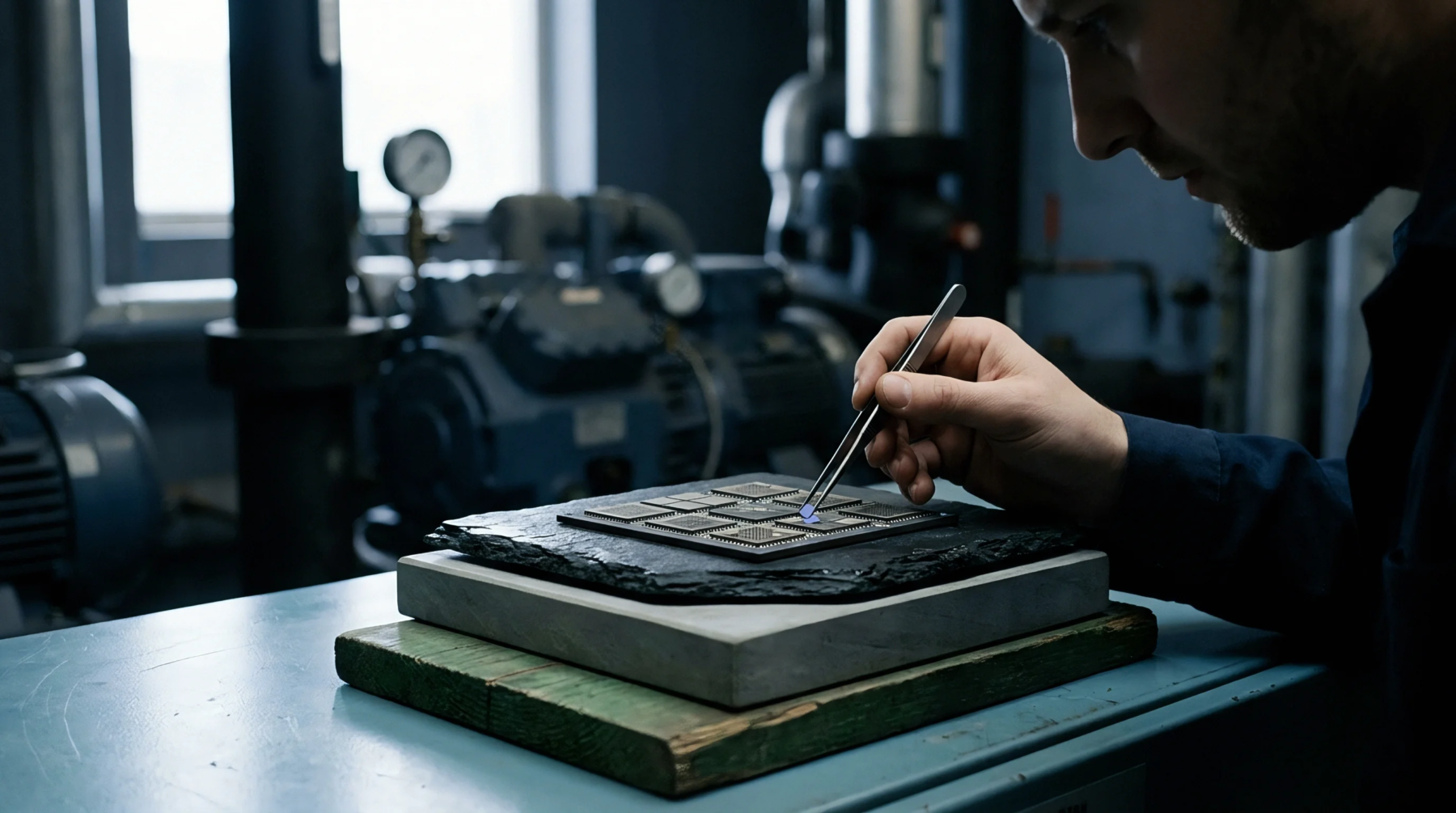
Mechanical Coupling
Epoxy encapsulants exert compressive and shear forces upon encapsulated semiconductor dies due to volumetric contraction and mismatched thermal expansion properties. Packaging steps introduce mold compound stress as the liquid thermoset polymer cures and cools from transfer molding temperatures to room temperature. This mechanical force alters the electrical performance of underlying silicon structures through stress-sensitive solid-state interactions.
Piezoresistive Transduction
Silicon exhibits piezoresistive behavior where mechanical strain shifts charge carrier mobility and changes localized resistivity profiles across active diffusion regions. Encapsulant pressure acts directly on integrated resistors, bandgap references, and input stages, producing unpredictable offset voltage drift. As ambient operating temperatures swing, differing coefficients of thermal expansion between the copper leadframe, silicon die, and epoxy resin continually vary the applied stress vector.
Cure Shrinkage
Polymerization of epoxy matrices during curing induces irreversible chemical shrinkage that locks baseline mechanical tension into the finished package. High filler loadings of fused silica particles reduce the bulk coefficient of thermal expansion, yet local particle contact points generate intense microscopic stress concentrations on the die surface. Moisture absorption by the epoxy during storage expands the polymer matrix, producing hydro-mechanical drift that disrupts post-assembly calibration parameters.
Environmental qualification screens subject packaged devices to accelerated moisture resistance testing and high-temperature storage to quantify long-term baseline drift.
Package Reliability
Die top coatings and compliant silicone polyimide buffer layers decouple the fragile silicon surface from the surrounding thermoset matrix.