Viscoelastic Stress Relaxation Fundamentals in Silicon Transducer Packaging
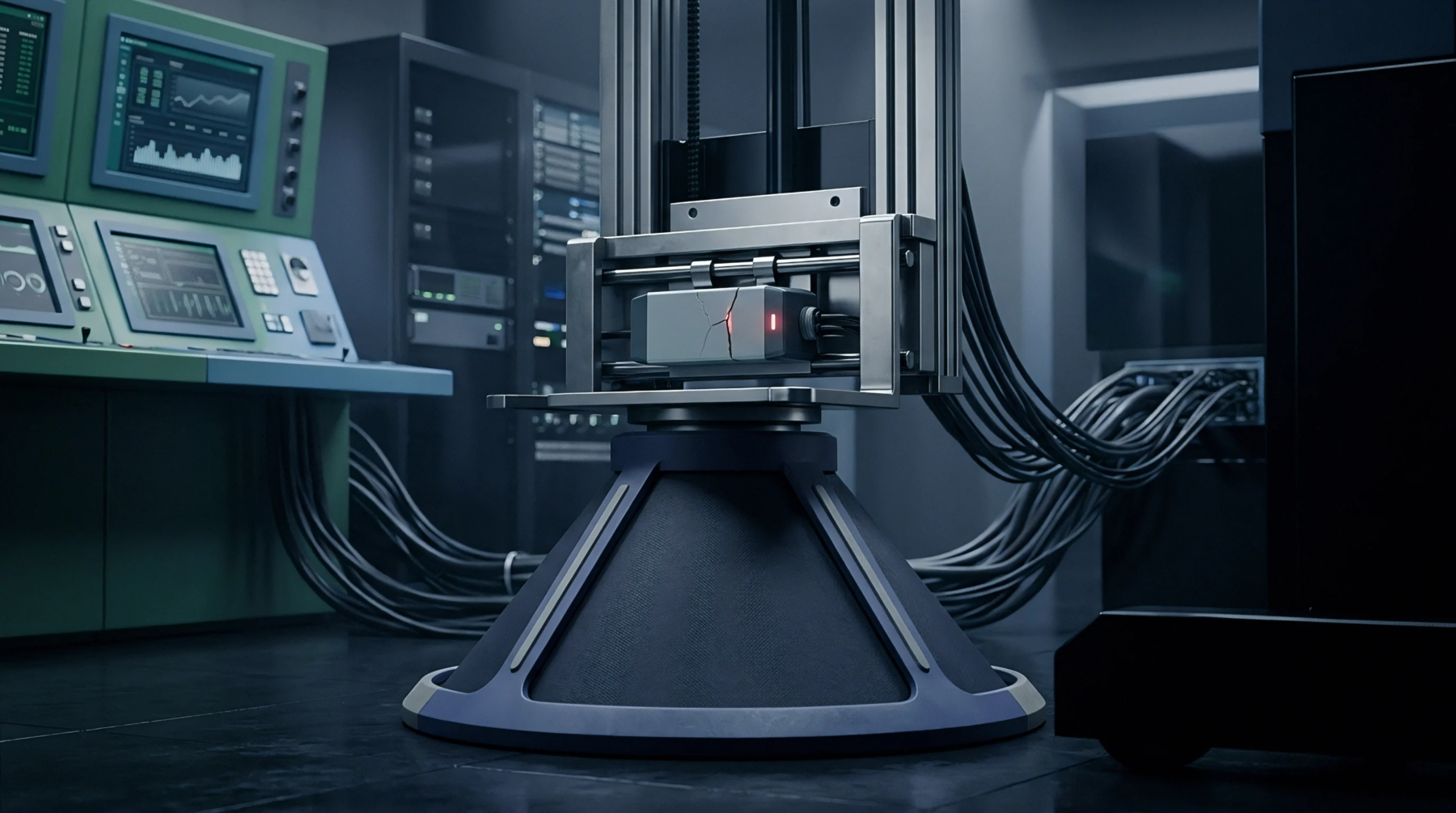
Die-attach stress relaxation transfers decaying mechanical strain into silicon sensing diaphragms, creating irreversible zero-point drift during thermal dwell.
Stabilization bake procedures govern the evaluation of semiconductor devices under elevated storage temperatures without electrical bias applied during the exposure interval. MIL-STD-883 Method 1008 specifies the protocols for determining the resistance of microcircuits to high-temperature degradation over extended durations. Qualification testing laboratories employ this procedure to accelerate aging mechanisms and expose potential latent defects stemming from assembly anomalies or material incompatibilities.
Elevated thermal storage forces atomic diffusion and intermetallic compound growth at wire bonds and die attaches. The standard defines specific test condition temperatures ranging from 125 degrees Celsius up to 300 degrees Celsius or higher depending on the thermal rating of the package technology.
Prolonged heat exposure accelerates degradation processes within solid-state components by encouraging ionic contamination migration across passivated surfaces and gate oxides. Semiconductor manufacturers establish baseline electrical parameters prior to thermal exposure to quantify subsequent parameter shifts measured at room temperature following cooling cycles. Leakage currents typically increase as moisture trapped inside hermetic cavities redistributes across internal structures or as oxide charges accumulate under thermal gradients.
Packaging materials experience mechanical stress due to mismatched coefficients of thermal expansion among silicon dice, lead frames, and molding compounds. Post-stress electrical endpoint measurements reveal whether the package maintains hermetic seal integrity and whether internal ohmic contacts remain stable.
Environmental test chambers executing this method require precise thermal uniformity and stability across the workspace volume to ensure every specimen experiences identical stress severities. Metrology technicians verify chamber spatial temperature accuracy using multi-point thermocouple arrays positioned near the load fixtures during periodic maintenance intervals. Radiant heat transfer and convective airflow characteristics inside the oven must prevent localized hot spots that exceed the permitted tolerance bands specified in the governing document.
Temperature controllers maintain setpoints within tight margins throughout endurance runs lasting hundreds or thousands of hours. Calibration traceability to national standards ensures repeatability across different testing facilities and prevents false acceptance of marginal semiconductor lots.
Pass criteria rely on delta limits assigned to leakage currents, threshold voltages, and output drive strengths measured before and after the thermal exposure interval. Component engineers determine these allowable parameter deviations based on application reliability models and circuit design margins. Exceeding a specified parameter shift indicates structural breakdown such as purple plague formation at gold-aluminum interfaces or severe oxide degradation.
Destructive physical analysis frequently follows catastrophic failures to identify the exact physical mechanism responsible for the electrical drift. High-temperature storage duration acts as a primary predictor of long-term field reliability for microelectronic components deployed in demanding industrial and aerospace environments.
Die-attach stress relaxation transfers decaying mechanical strain into silicon sensing diaphragms, creating irreversible zero-point drift during thermal dwell.
Expertise is a utility, not a secret. sentiention™ publishes its working knowledge as open reference: intelligence layer covering the materials it sources, the markets it enters, and the reference that serves both.