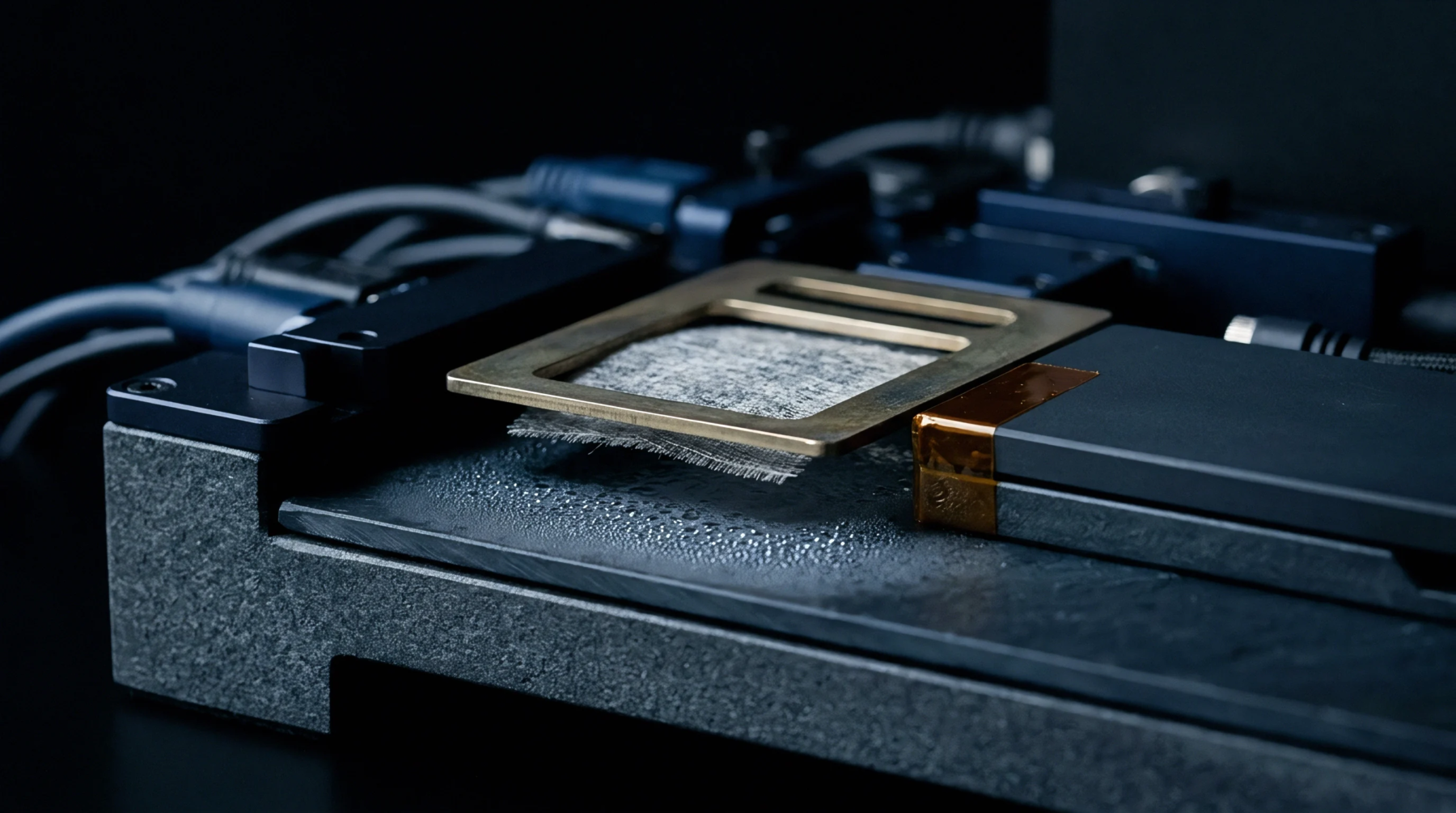
Surface Reaction
Chemical film growth on metallic connector bases occurs when ambient atmospheric moisture reacts with exposed alloy components during thermal processing or long term storage. Leadframe oxidation degrades the interfacial integrity required for subsequent molding and wire bonding operations by creating a non-conductive barrier. Base materials containing copper alloys are particularly susceptible to this reaction as oxygen diffusion increases with elevated furnace temperatures.
Material Tolerance
Engineering specifications for semiconductor packaging define a threshold for surface discoloration that remains acceptable before contact resistance reaches an unrecoverable state. Manufacturers measure this drift through spectrophotometric analysis of the reflected light intensity off the contact area compared against a freshly etched reference specimen. Optical sensors quantify the degree of darkening to establish whether a batch exceeds the limit of allowable particulate deposition.
Thermal Process
Atmospheric controls inside a conveyor oven mitigate the rate of thin film formation through the continuous flow of inert nitrogen gas. This displacement of oxygen prevents the development of stable metal oxides that otherwise impede the adhesion of organic encapsulants. Excessive dwell time in heated zones during the assembly sequence accelerates the growth of these interfacial films despite the presence of protective gas blankets.
Bonding Quality
Electrical impedance across a lead terminal increases when the oxide layer thickness prevents the formation of a robust metallic connection. Mechanical shear tests identify the strength of the interface between the metal surface and the plastic mold compound or gold wire bond. Consistent maintenance of surface purity ensures the reliability of the electronic assembly under high humidity conditions.