Wiring Configuration
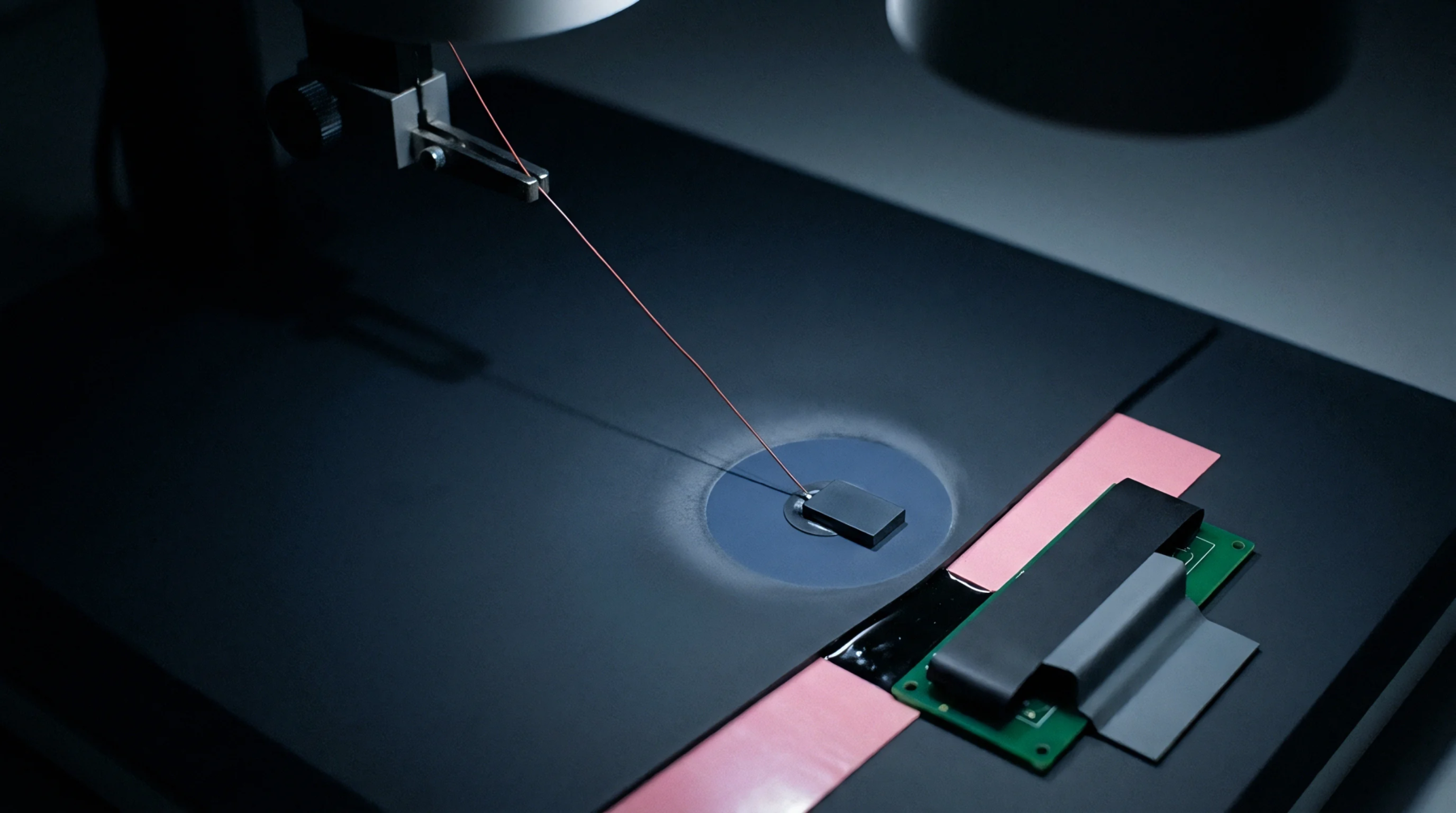
Precision low-resistance measurements require separating the current-carrying paths from the voltage-sensing paths to eliminate lead resistance errors. A four-wire sensing arrangement, often called a kelvin connection, achieves this isolation by using two dedicated lines to supply the test current and two separate lines to measure the voltage drop. This setup prevents the test lead resistance from affecting the voltage measurement.
The resulting reading represents only the value of the device under test.
Error Elimination
Sensing lines carry almost zero current, which ensures that the voltage drop across the measurement leads is negligible. High-current environments benefit most from a kelvin connection because the contact resistance of the terminals can otherwise generate substantial measurement errors. In automated test equipment, these contact errors can lead to false failures during production checks.
Eliminating this offset yields a highly repeatable measurement process.
Lead Compensation
Coaxial and shielded cables reduce electromagnetic interference in high-accuracy circuits. When employing a kelvin connection, keeping the paired sense and force lines close together minimizes the loop area and limits inductive pickup. This cabling method maintains the integrity of the measurement from the instrument to the test point.
Calibration Practice
Metrology laboratories rely on this configuration when calibrating high-current shunts and low-value standard resistors. This method establishes the baseline accuracy required for traceably calibrating field equipment.