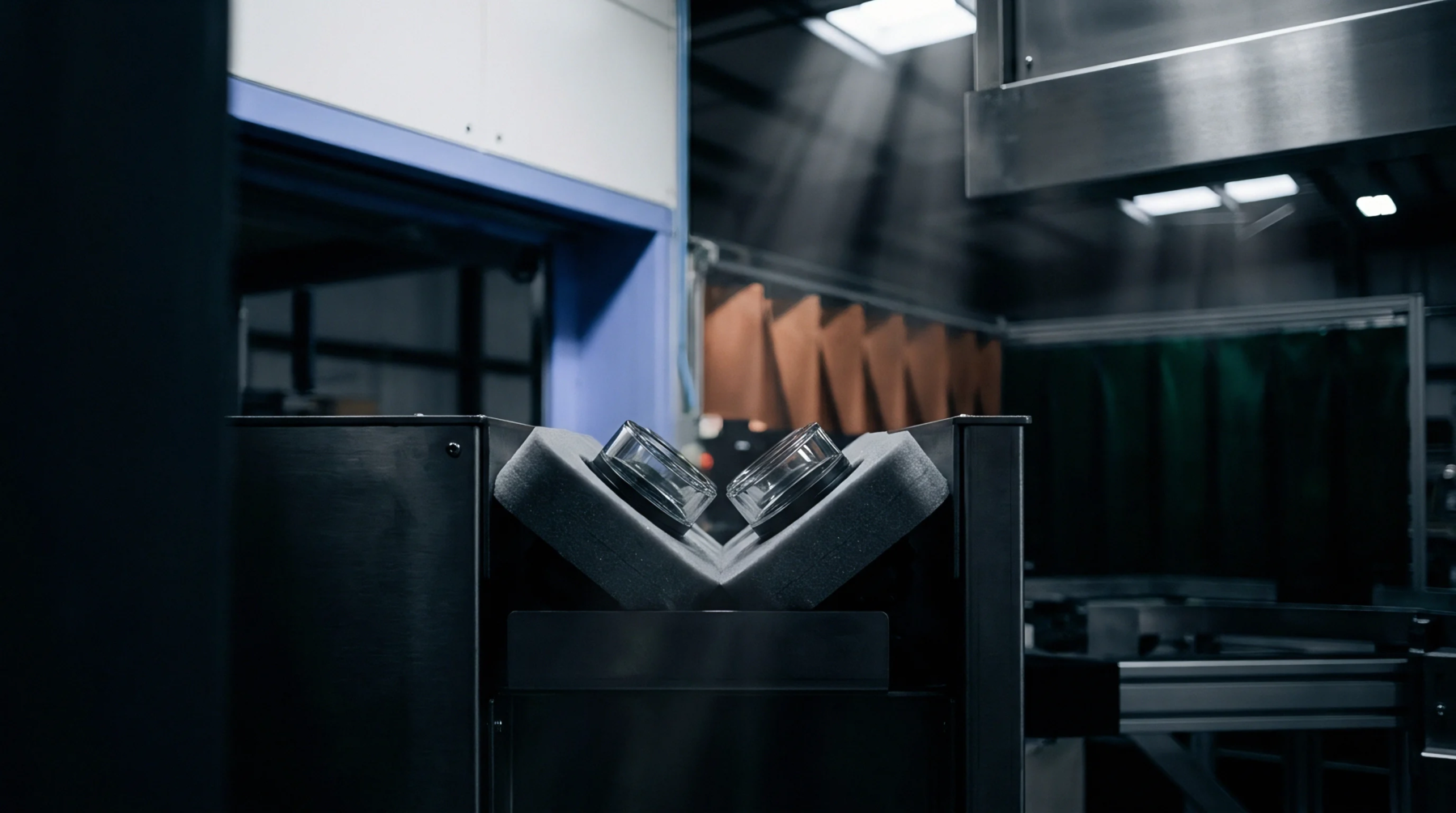
Mechanical Isolator
Precision sensor packages incorporate an intermediate mounting platform fabricated from borosilicate or fused silica to isolate delicate sensing dies from package-induced stresses. Microelectromechanical pressure transducers and acceleration sensors mount upon a glass pedestal to decouple active silicon membranes from housing deformations. The structural component provides mechanical standoff, isolating silicon assemblies from printed circuit board warpage and mismatched thermal expansions.
Application boundaries are defined by maximum shock limits and acoustic resonance frequencies of the bonded assembly.
Stress Dissipation
Anodic bonding or specialized glass-frit seals fuse the silicon die directly to the polished top surface of the glass element at elevated temperatures. The bottom surface fastens to the metallic or ceramic sensor housing using compliant silicone or rigid epoxy adhesives. By utilizing a material with a thermal expansion coefficient closely matched to silicon, a glass pedestal minimizes thermal mechanical strain transmitted to the active sensing element.
Strain isolation prevents false pressure readings and baseline drift across wide thermal ranges. The thickness and aspect ratio of the pedestal determine its mechanical compliance, balancing shock survival against structural strain isolation. Channeling through the glass allows media access to absolute pressure reference cavities without inducing mechanical stress on the silicon diaphragm.
Thermal Hysteresis
Mismatched thermal expansion coefficients between the glass standoff and the outer package create shear stresses at the adhesive interface. Temperature cycling causes microscopic plastic deformation or micro-void growth within the joining adhesive, leading to zero-point measurement hysteresis. Residual stresses from the initial anodic bonding step can also relax slowly over years of service, producing continuous offset drift in micro-machined strain gauges.
Mounting Qualification
Inspection criteria evaluate dimensional tolerances, surface flatness and void-free bond coverage using acoustic microscopy and optical interferometry. Helium mass spectrometer leak detectors verify hermetic integrity across glass-to-silicon and glass-to-metal joints down to fine vacuum standards. Thermal shock cycles followed by full-span calibration runs confirm zero-offset repeatability across specified operating envelopes.
A glass pedestal maintains baseline stability across thousands of operational pressure cycles by isolating active piezoresistive bridges from external mounting torque.