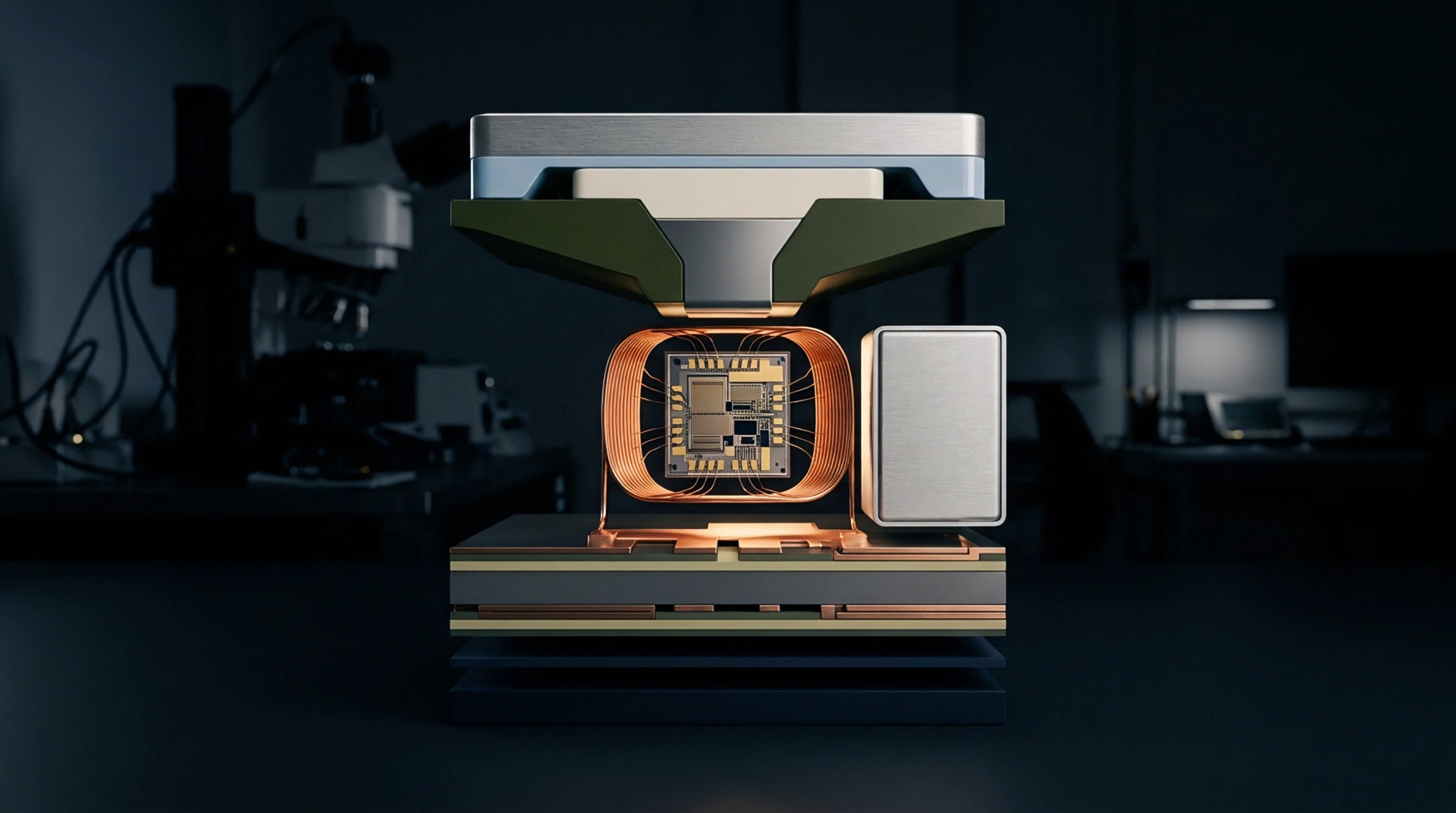
Spectral Perturbation
Systematic variation of an oscillatory stimulus across a defined spectral band characterizes the dynamic transfer function of electromechanical systems and viscoelastic materials. A continuous or stepped frequency sweep exposes frequency-dependent behavior such as phase lag and mechanical damping. The boundary of this measurement protocol terminates where non-stationary test conditions or nonlinear sample deformation render linear frequency response calculations invalid.
Excitation Progression
Controlled signal generators step or sweep an excitation signal across transducers and test specimens to capture dynamic properties across decades of excitation rates. In dynamic mechanical analysis, sinusoidal strain oscillations reveal the transition from glassy elasticity to rubbery equilibrium as driving rates vary. Accelerometer calibration protocols drive shaker tables through programmed frequency intervals to map sensor sensitivity and cross-axis resonance peaks.
Settling delays at each discrete frequency step ensure transient responses decay before data acquisition captures steady-state harmonics. Swept sine excitations distribute energy evenly over time, delivering higher signal-to-noise ratios than broadband impulse strikes.
Response Extraction
Dynamic response extraction separates the resulting sensor output into in-phase real components and out-of-phase imaginary components across the excitation range. Lock-in amplifiers and fast Fourier transform analyzers isolate the fundamental excitation frequency, rejecting ambient noise and harmonic distortion products. Viscoelastic evaluation determines the storage modulus from the in-phase stress component and the loss modulus from the ninety-degree out-of-phase stress component.
For electrical sensors, swept impedance analysis identifies resonant and anti-resonant frequencies where reactive components cancel out entirely.
Resonant Characterization
Qualification procedures establish baseline compliance by verifying sensor frequency limits against traceable reference transducers. Sweep rate parameters must be selected to avoid distortion of high-Q resonance peaks during rapid frequency progression. Sweeping too quickly shifts peak amplitudes and creates artificial frequency offsets, while excessively slow sweeps subject delicate specimens to excessive fatigue cycles.
Calibrated frequency sweep protocols guarantee that vibration transducers maintain flat sensitivity within tight manufacturing tolerances prior to field deployment.