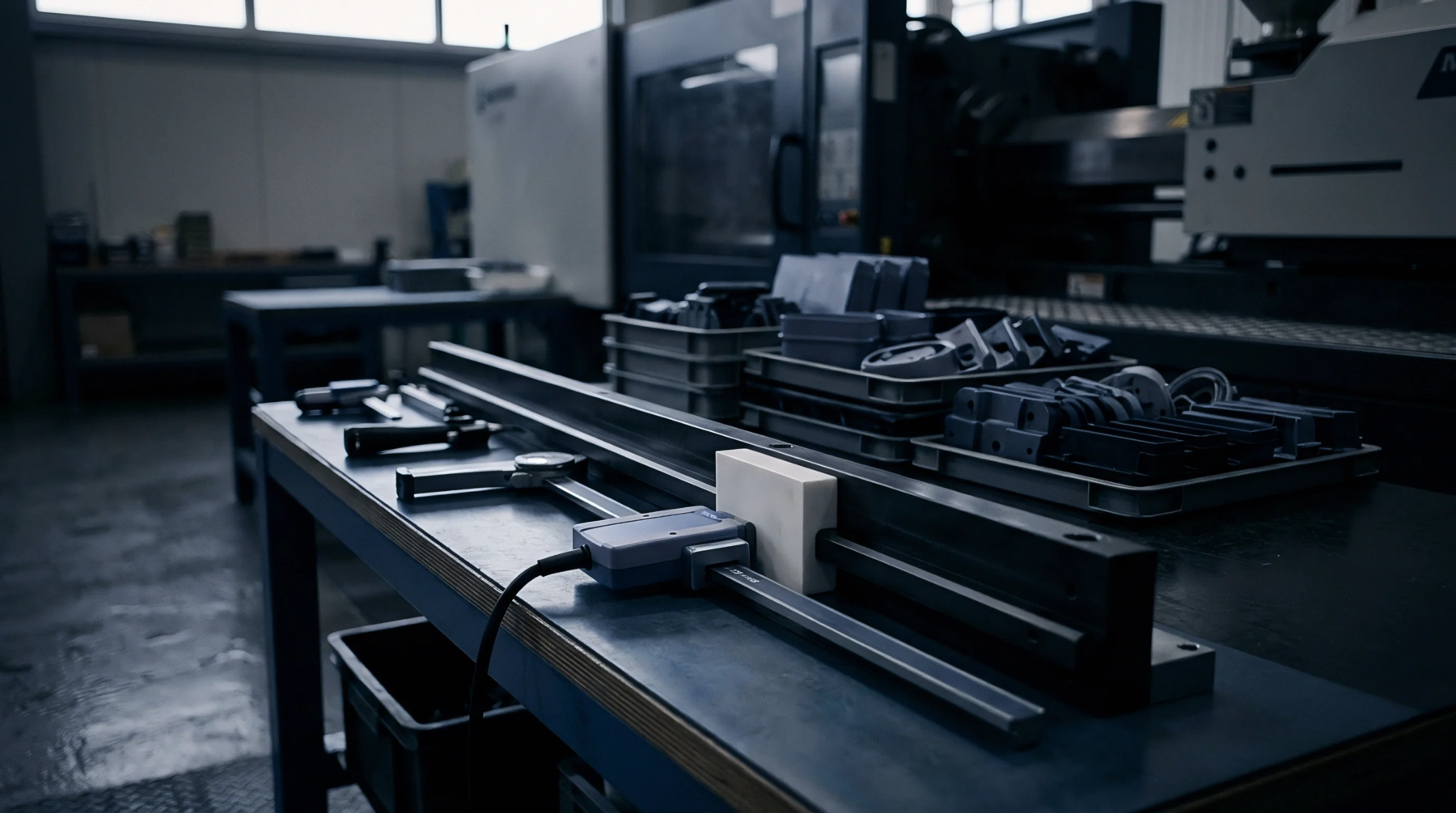
Sensing Mechanism
Linear measurement devices convert physical movement into proportional electrical signals. This conversion is achieved by tracking the position of a movable core relative to a set of stationary electromagnetic coils. When the core moves, the mutual inductance between the primary coil and the secondary coils changes in a linear fashion.
This design allows a displacement transducer to record minute shifts in position with high resolution.
Signal Conditioning
Electronic circuits filter the analog voltage to minimize electrical noise during operation. Demodulators convert the alternating current output into a stable direct current signal that digital controllers can interpret. High-frequency filters eliminate unwanted harmonics caused by nearby industrial equipment.
In this way, the displacement transducer delivers a reliable measurement that is immune to minor power supply fluctuations.
Calibration Interval
Periodic validation ensures the measurement accuracy remains within original manufacturing tolerances. These calibration cycles are typically scheduled every twelve months to account for mechanical wear and thermal aging of the internal components. Standardized test blocks are used to verify linearity at multiple points across the full measurement stroke.
If a displacement transducer exhibits non-linear behavior, the output curve must be adjusted electronically to restore specified tolerances.
Installation Boundary
Mechanical attachment points must be aligned to prevent off-axis forces from damaging the shaft. Friction between the internal guide bearings and the moving rod can cause premature failure if the sensor is subjected to lateral forces. When implementing a displacement transducer, the housing must be rigidly clamped to a stable reference frame to avoid vibration-induced errors.
Protective boots are often added to prevent the ingress of dust or water in harsh industrial environments. This physical boundary is particularly important when the sensor is installed on heavy industrial machinery where mechanical misalignments can develop over time.