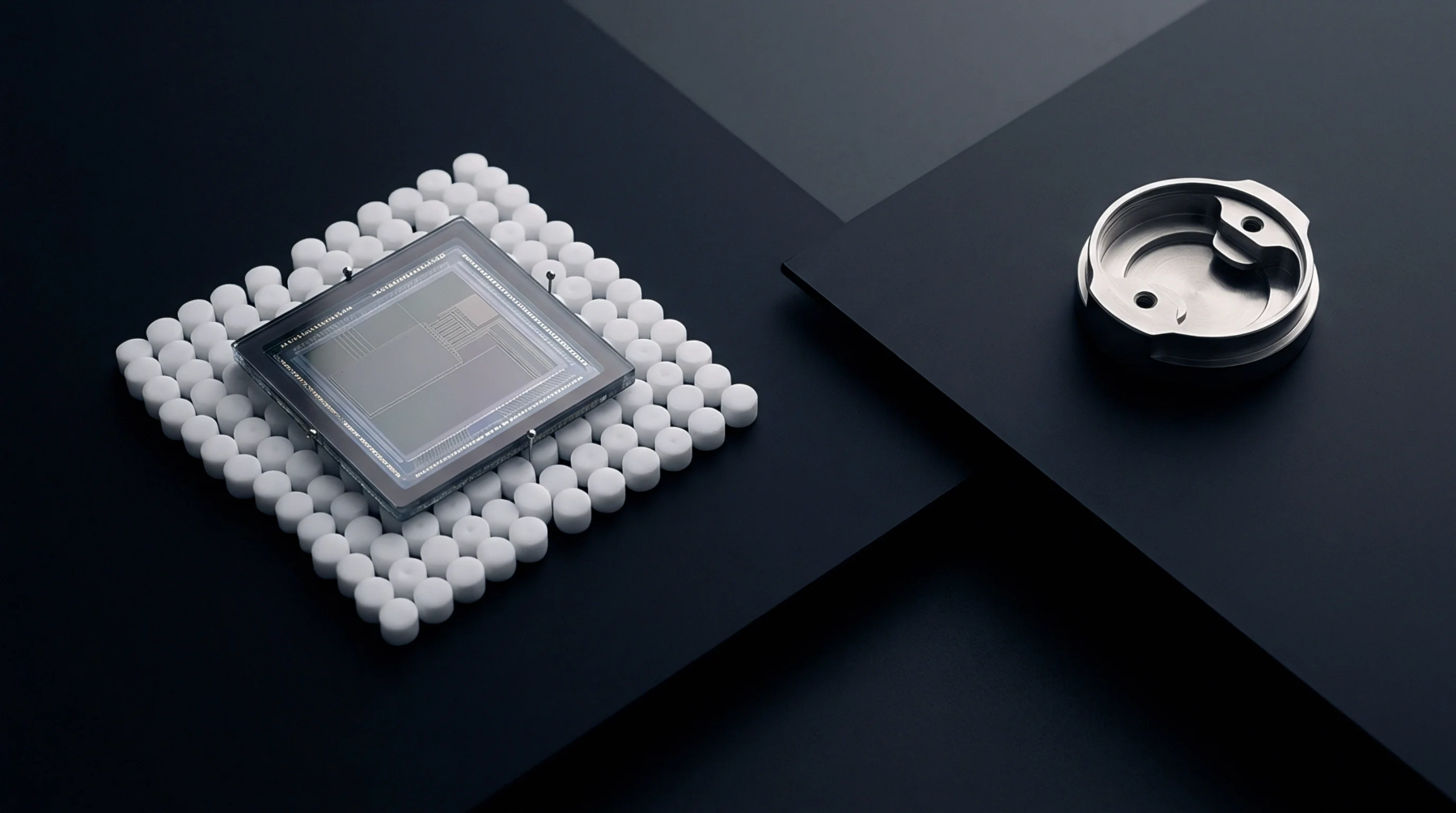
Excitation Source
Electronic compensation methods reduce temperature-induced errors in piezoresistive sensor bridges by stabilizing the excitation conditions. For many silicon micro-machined sensors, constant current drive compensation utilizes a stable current source to power the bridge, causing the excitation voltage to rise as the temperature increases and the bridge resistance goes up. The technique is bounded by the compliance voltage of the current source and the self-heating limit of the sensor elements.
Thermal Sensitivity
Piezoresistive coefficients decrease with temperature, which reduces the sensitivity of the sensor. Using constant current drive compensation offsets this loss by increasing the bridge voltage, because the temperature coefficient of resistance is positive. This interaction helps to maintain a nearly constant sensitivity over a specified operating temperature range.
Metrological Alignment
Determining the optimum current value requires characterizing the temperature coefficients of both the bridge resistance and the sensitivity. Calibrating constant current drive compensation involves measuring the bridge output at multiple temperatures under zero and full-scale pressure. This calibration is verified at reference points to ensure the residual temperature error remains within the specified tolerance of the device.
Circuit Integration
Integration of the constant current source can be achieved using operational amplifiers or dedicated sensor interface chips. This implementation minimizes the need for complex digital calculation.