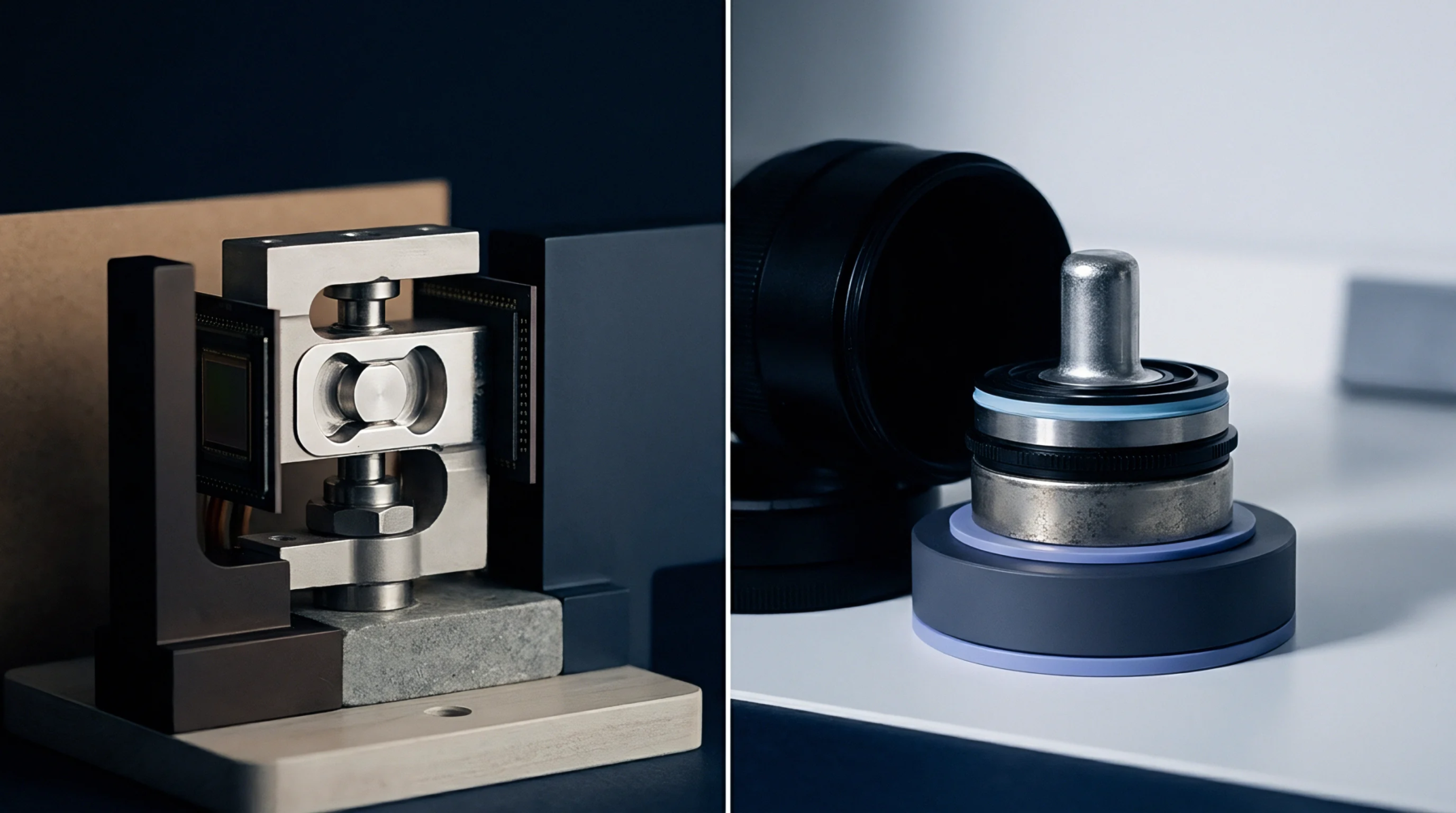
Selecting Valid Kinetic Models for Accelerated Four Week Transducer Qualification
Validating four-week transducer qualification requires deriving activation energies empirically across stepped temperatures to prevent severe drift underestimation.
Thermal soak intervals maintained during environmental qualification isolate predictable time-dependent degradation modes in solid-state measurement components. An accelerated aging dwell exposes test hardware to elevated temperatures, humidity levels, or electrical bias for an uninterrupted duration calculated to simulate multi-year operational drift. The targeted interval permits observation of diffusion, intermetallic compound growth, and dielectric breakdown without inducing artificial failure mechanisms unrepresentative of field operation.
Boundary conditions terminate the validity of the exposure if temperatures surpass glass transition thresholds or activate secondary decomposition kinetics not governed by the primary activation energy model.
Temperature shifts scale natural passage of operating life according to the Arrhenius relationship, allowing the acceleration factor to determine the duration of the thermal plateau. Elevated test temperatures compress years of physical field stability monitoring into hundreds of continuous hours. Calculation of the required duration relies on the apparent activation energy of the primary degradation mode, which commonly ranges between 0.4 and 0.9 electron volts for semiconductor packaging, sensor die attachment, and passive passivations.
Selecting an unverified activation energy alters the equivalent operating hours dramatically, producing either undetected field vulnerabilities or unwarranted physical damage. Thermal chamber gradients, air velocity variations, and self-heating effects from applied bias introduce temperature non-uniformities across the fixture board that shift the intended aging acceleration rate.
Metrological validation requires pre-stress functional baseline recording followed by intermediate and post-soak electrical parameter measurements under strictly defined reference conditions. During qualification runs, instruments undergo continuous monitoring or stepped intermediate verification to capture parametric drift rather than waiting solely for terminal catastrophic open-circuit or short-circuit failures. Readouts verify analog-to-digital converter linearity, zero-point offset stability, and reference voltage drift against pre-dwell calibration baselines.
Exposure ends when the calculated operating lifetime equivalence is reached, where post-dwell inspection verifies that mechanical creep, solder joint intermetallics, and resistance shifts fall within the limits established by procurement specifications. Component lots with excessive baseline drift indicate early wear-out mechanisms that disqualify the batch from extended service deployments.
Exceeding permissible temperature plateaus initiates unwanted mechanical degradation, such as package delamination or sensor diaphragm warping, caused by mismatched thermal expansion coefficients rather than genuine operational wear. When thermal limits cross physical phase boundaries, the kinetic acceleration model fails and results cannot be correlated to low-temperature field lifetimes. The duration of the thermal exposure must therefore remain bounded by the maximum junction temperature and the decomposition temperatures of underlying potting materials.
Accelerated aging dwell protocols deliver dependable lifecycle assurance only when operating stress models remain confined to the single degradation mechanism targeted by the qualification envelope.
Validating four-week transducer qualification requires deriving activation energies empirically across stepped temperatures to prevent severe drift underestimation.
Expertise is a utility, not a secret. sentiention™ publishes its working knowledge as open reference: intelligence layer covering the materials it sources, the markets it enters, and the reference that serves both.