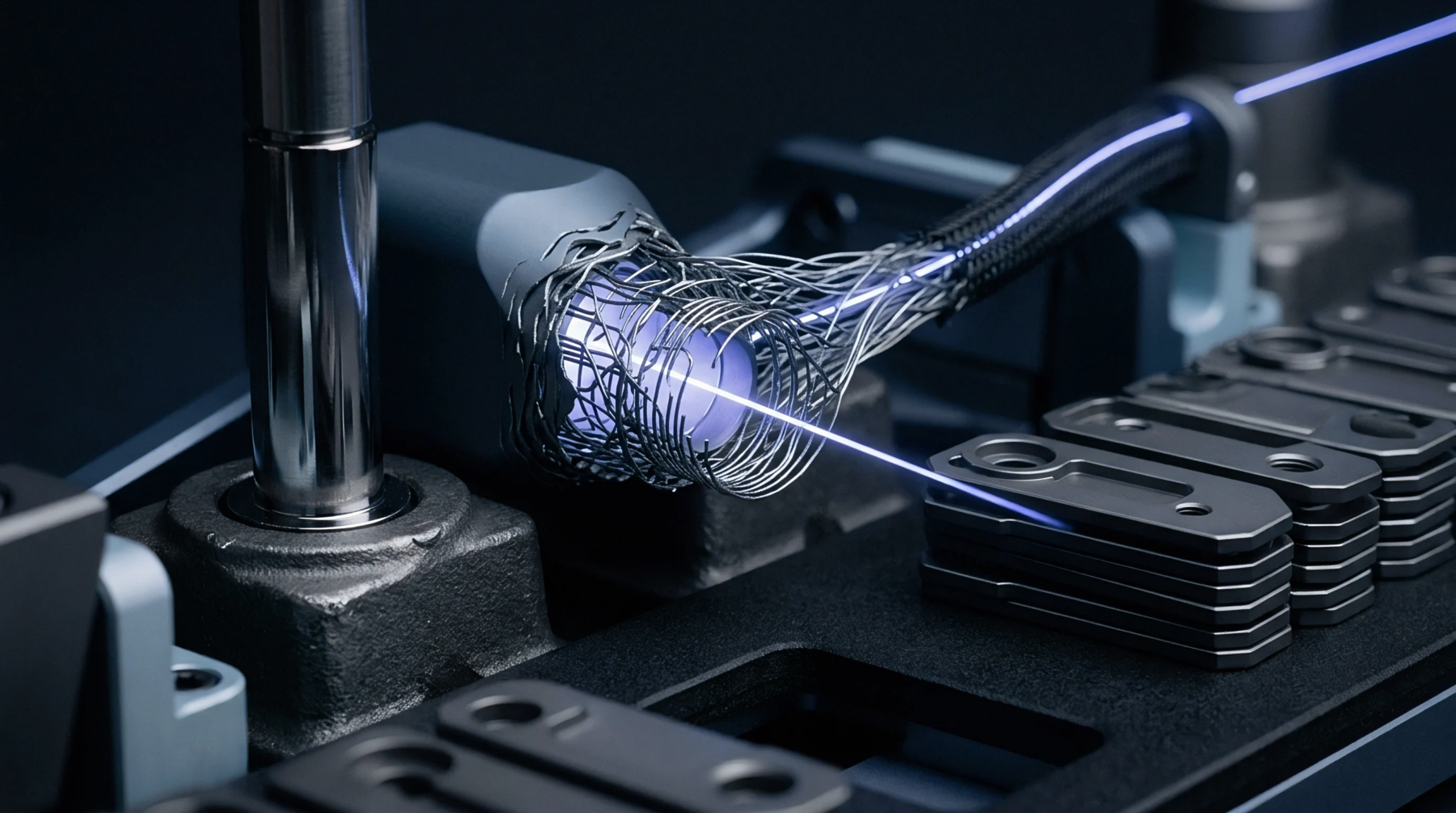
Fracture Mechanism
Ductile rupture in metallic interconnects and structural alloys progresses through the growth and merging of microscopic internal cavities under sustained tensile strain. The process of void coalescence unites neighboring micro-voids into macroscopic cracks, leading to final mechanical separation in solder joints and wire bonds. Nucleation begins at intermetallic compound inclusions or grain boundary triple points.
The mechanism stops governing deformation under purely compressive stress states or during low-temperature brittle cleavage.
Stress Localization
Plastic deformation concentrates strain around growing micro-voids, accelerating internal cavity expansion during thermal cycling. In lead-free solder interconnects, electromigration and thermomigration drive vacancy condensation, producing dense void arrays along interface layers. Intermetallic growth creates brittle interfaces susceptible to rapid void growth under mechanical shock loading.
Void growth rates depend on ambient temperature and hydrostatic stress magnitude.
Joint Failure
High-resolution scanning acoustic microscopy and micro-focus X-ray inspection detect internal void distribution within microelectronic packages prior to crack formation. Void growth reduces effective load-bearing cross-sectional area, increasing local electrical resistance and thermal impedance across solder joints. Thermal fatigue testing monitors electrical resistance spikes to signal the onset of macro-crack propagation driven by coalescing internal voids.
Qualification standards define allowable void area percentages relative to total joint surface area.
Detection Limit
Ultrasonic imaging resolution restricts non-destructive detection of individual micro-voids below micron scales. Physical cross-sectioning combined with electron microscopy provides definitive verification of interface void morphology.