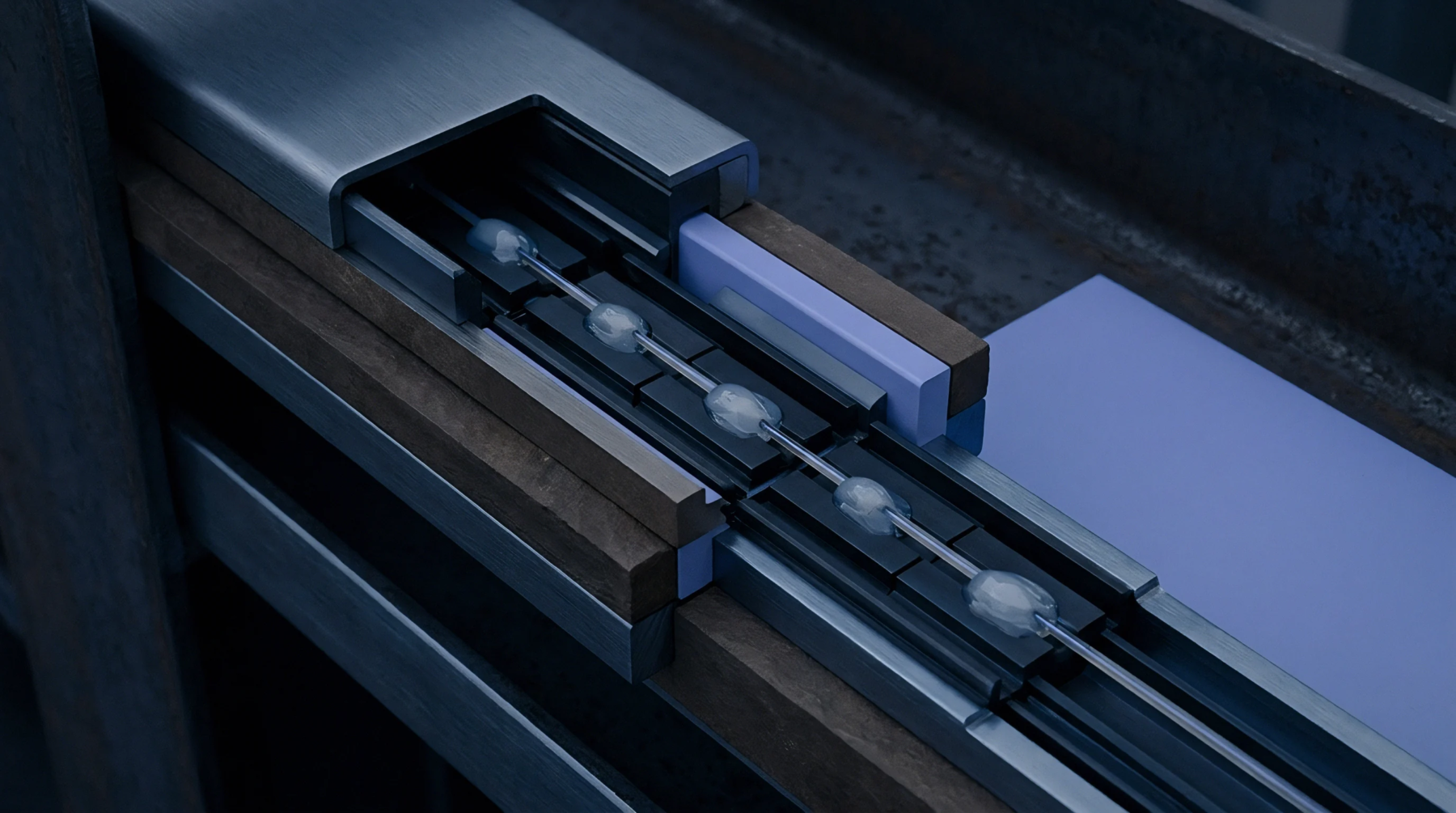
Structural Deformation
Structural displacement defines the progressive change in the geometry of a support fixture or sensor housing due to temperature gradients. In high-precision measurement systems, thermal frame drift introduces positional errors by causing the reference frame of the sensor to expand or contract non-uniformly. This drift shifts the relative position of the sensing element with respect to the target, creating a temperature-dependent bias.
The offset is often non-linear and depends heavily on the rate of environmental temperature change.
Metrological Impact
Calibration algorithms struggle to correct for this phenomenon when the heat source is internal, as power dissipation from electronic components creates localized thermal gradients. To quantify this effect, test benches monitor both the frame temperature and the sensor output during controlled heating cycles. The measurement sheet defines the thermal coefficient of the frame, allowing software to apply dynamic corrections.
Material Compensation
Low-expansion alloys such as Invar are frequently selected for construction of these reference frames to minimize the physical movement. These materials exhibit near-zero coefficients of thermal expansion over standard operating ranges, providing a stable platform for precision encoders.
Design Optimization
Active cooling systems or thermal isolation barriers also help prevent heat transfer from motors or electronics to the structural frame. By maintaining a uniform temperature across the support structure, these measures ensure that the sensor’s baseline alignment remains stable during continuous operation.