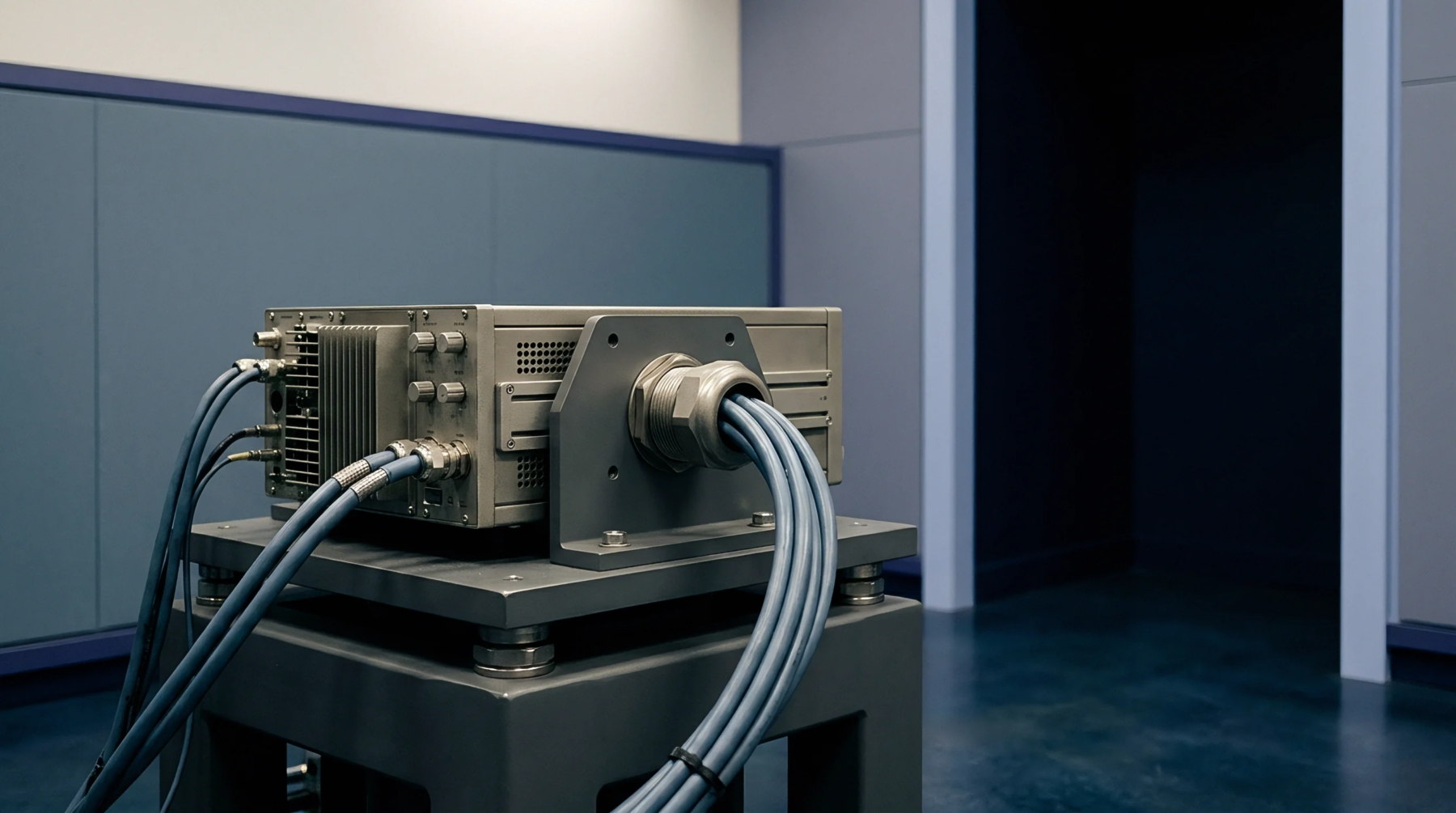
Offset Characterization
Mapping the temperature-dependent shift of a sensor’s zero point enables the subtraction of predictable errors from the raw signal. Thermal bias modeling identifies the mathematical relationship between the internal temperature of the device and the output observed when no stimulus is applied. This model provides the foundation for high precision instrumentation where even millidegree changes can cause a noticeable drift in the reported data.
Mathematical Form
Linear or second order equations often suffice to describe the bias shift over moderate temperature ranges. Some advanced applications utilize spline interpolation or high-order polynomials when the sensor exhibits complex nonlinear behavior near the edges of its thermal envelope. Thermal bias modeling must also account for the hysteresis that occurs when the device is cycled through its full temperature range.
Data Acquisition
Training the model requires an extensive data set collected during a slow thermal sweep or a series of stable soak points. Technicians use a precision reference to verify that the observed shifts are truly internal and not a result of external mounting stresses. The quality of the thermal bias modeling depends directly on the resolution of the temperature sensor integrated into the device.
Compensation Logic
Real time processors apply the model by calculating the expected bias at the current temperature and subtracting it from the measurement. This step occurs after the initial digitization but before any scaling or filtering.