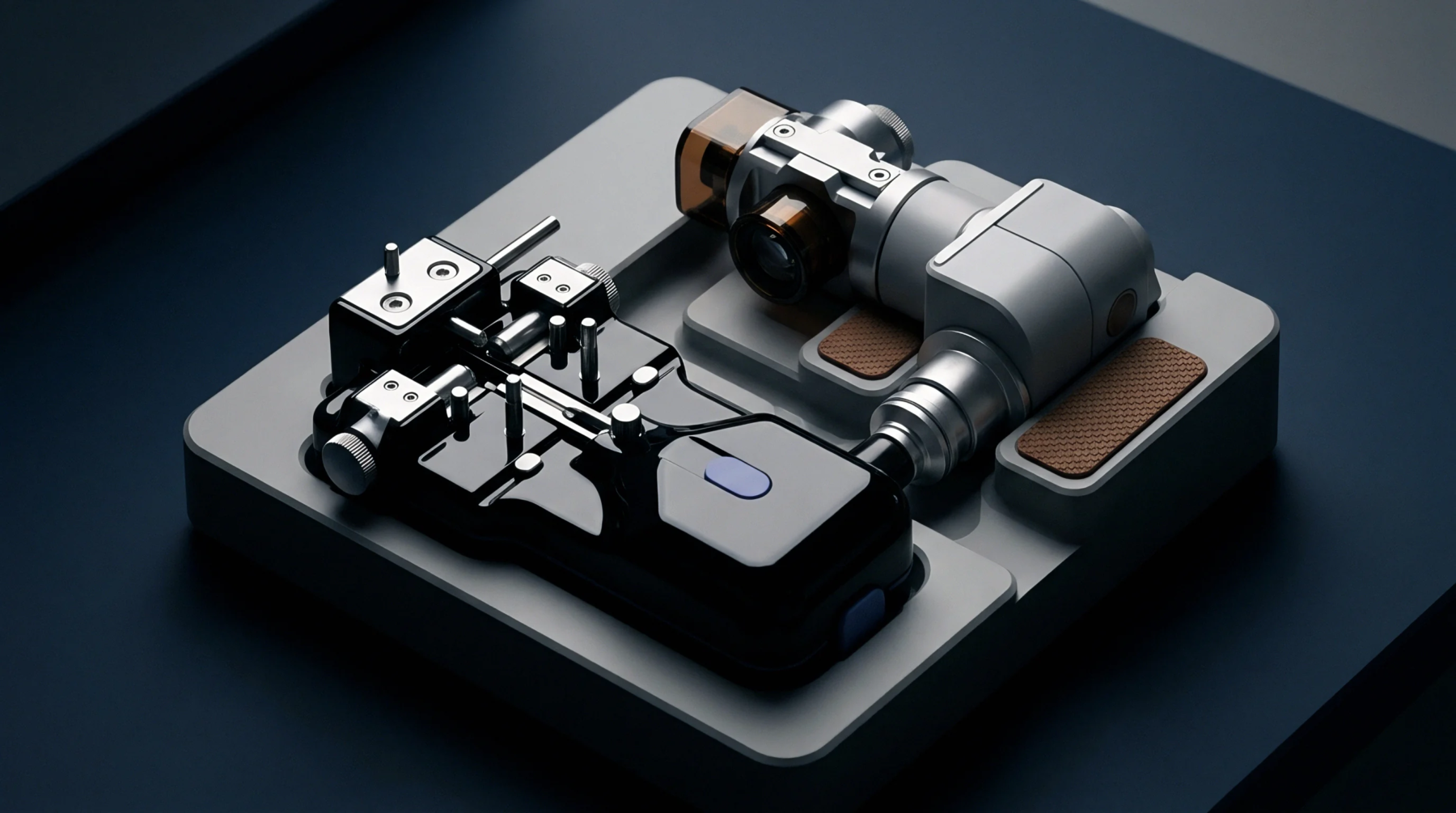
Optical Design
Precision rotation rate sensors utilizing Sagnac interferometry provide directional angular velocity measurements for tactical navigation systems. Closed-loop interferometric fiber optic gyroscopes and compact ring laser gyroscopes form the core architecture of these units. Incorporating tactical optical gyroscopes into integrated navigation units provides continuous heading and attitude reference without relying on external satellite positioning signals.
Inertial Performance
Bias drift stability directly determines orientation dead-reckoning performance over operational mission timelines. Typical tactical optical gyroscopes exhibit bias stability ranging between zero point one and one degree per hour under dynamic thermal environments. Internal superluminescent diodes, polarization-maintaining fiber coils and digital signal processors work synchronously to minimize angle random walk and scale factor errors.
Thermally induced Faraday effects are mitigated through multi-layer mu-metal shielding to prevent stray magnetic fields from corrupting optical phase measurements.
Qualification Protocol
Multi-axis rate tables calibrate gyro performance inside environmental test chambers. Qualification of tactical optical gyroscopes requires measuring zero-rate output offset, g-sensitivity and thermal hysteresis across full operating vibration profiles. Automated calibration stations generate polynomial compensation coefficients stored within onboard sensor memory modules to correct real-time drift.
Operational Envelope
Extreme mechanical shock events exceeding internal structural damping capabilities induce temporary optical misalignment and signal loss. Environmental operation of tactical optical gyroscopes degrades when ambient temperature change rates exceed internal algorithm tracking bounds.