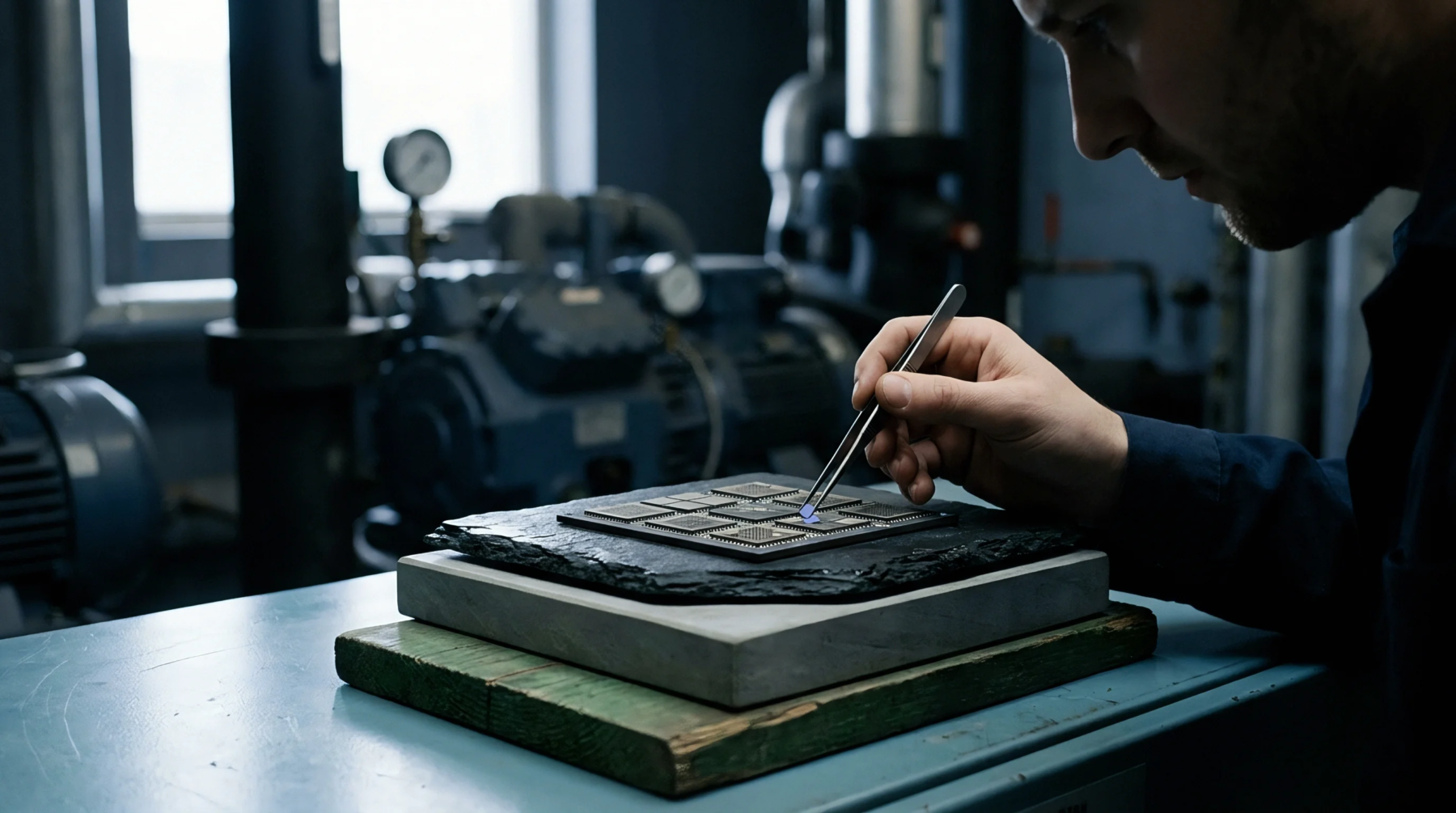
Reliability Process
Semiconductor manufacturing includes a rigorous testing phase to ensure that integrated circuits meet their functional and reliability requirements before they reach the market. Silicon qualification involves subjecting a sample of chips to extreme electrical and environmental stress to prove their long-term durability. This process confirms that the design can survive the intended operating life without degradation.
It is a mandatory step for any new hardware platform.
Accelerated Aging
Accelerated aging reveals potential failures. During silicon qualification, devices are placed in high-temperature operating life chambers where they run at elevated voltages for hundreds of hours. This simulates years of real-world use in a short period, allowing engineers to identify mechanisms such as electromigration or gate oxide breakdown.
Any failure during this phase requires a root cause analysis to determine if the design or the manufacturing process needs changes.
Environmental Stress
Mechanical and thermal shocks are applied. The chips are subjected to rapid temperature cycling and moisture sensitivity tests to verify the integrity of the packaging and the wire bonds. These tests ensure that the silicon qualification covers not just the electrical logic but also the physical protection of the die.
Resistance to electrostatic discharge is also verified to prevent damage during handling and assembly.
Formal Documentation
Test reports provide the evidence of quality. The results of the silicon qualification are compiled into a formal document that is often required by customers in the automotive or industrial sectors. This report lists the sample sizes, the test conditions and the failure rates observed during the process.
Successfully passing these tests allows the manufacturer to release the product for high-volume production.