Mechanical Decoupling
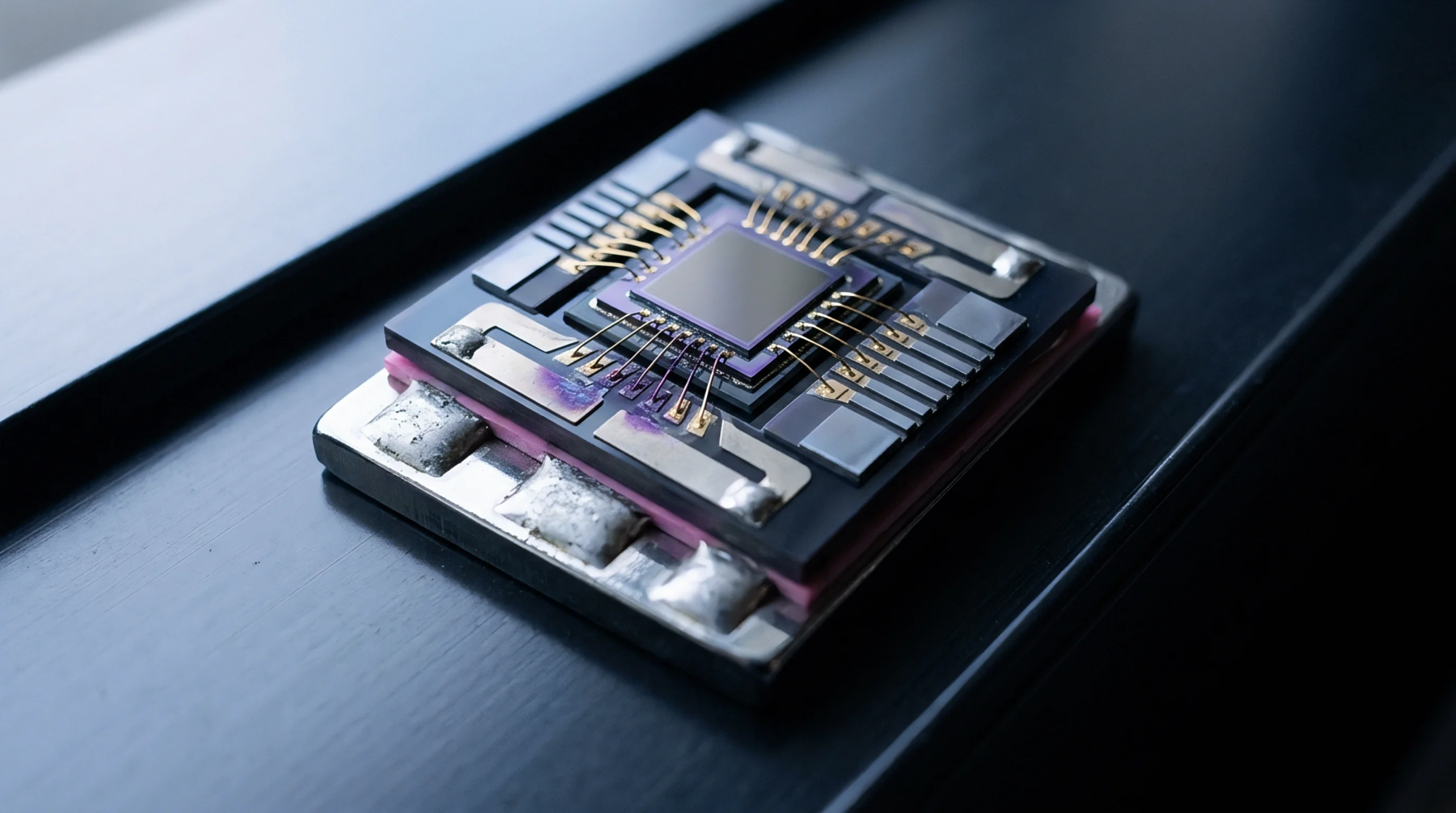
Differential force attenuation defines the procedure that maintains lateral load independence during high-precision tactile sensing. Shear stress isolation functions by introducing a compliant interstitial layer between the primary contact surface and the force transducer. This arrangement minimizes tangential friction errors that occur when horizontal drag interferes with vertical compression readings.
The design ensures the sensor registers only normal force components without unwanted influence from transverse vector shifts.
Calibration Stability
Thermal drift and material creep frequently introduce noise into the signal chain of sensitive instruments. Shear stress isolation addresses these variances by providing a stable mounting interface that dissipates directional kinetic energy before it reaches the gauging element. Standard ISO 17025 testing protocols verify that the presence of this buffer zone reduces measurement uncertainty by a factor of three in high-friction environments.
Laboratory verification requires a controlled friction plate test to quantify the residual lateral coupling coefficient of the assembly.
Assembly Geometry
Rigid mounting hardware often creates mechanical bridges that transmit parasitic shear loads directly into the sensing structure. Effective shear stress isolation relies on custom elastomer gaskets or suspended flexure frames that absorb shear energy while allowing vertical travel. Successful implementation depends upon the stiffness ratio between the isolation medium and the transducer substrate.
A mismatch in these moduli degrades signal fidelity by allowing excessive displacement during the contact cycle.
Operational Accuracy
Electronic signal conditioning filters cannot recover data lost to significant mechanical lateral interference at the point of contact. Integrating proper shear stress isolation into the probe architecture guarantees that every raw voltage output corresponds to a pure axial measurement. The physical decoupling of these vectors improves the repeatability of readings across diverse surface textures and varying lubrication levels.
Accurate force transduction depends entirely upon the integrity of the physical interface separating the sensing element from tangential environmental inputs.