Alloy Microstructure
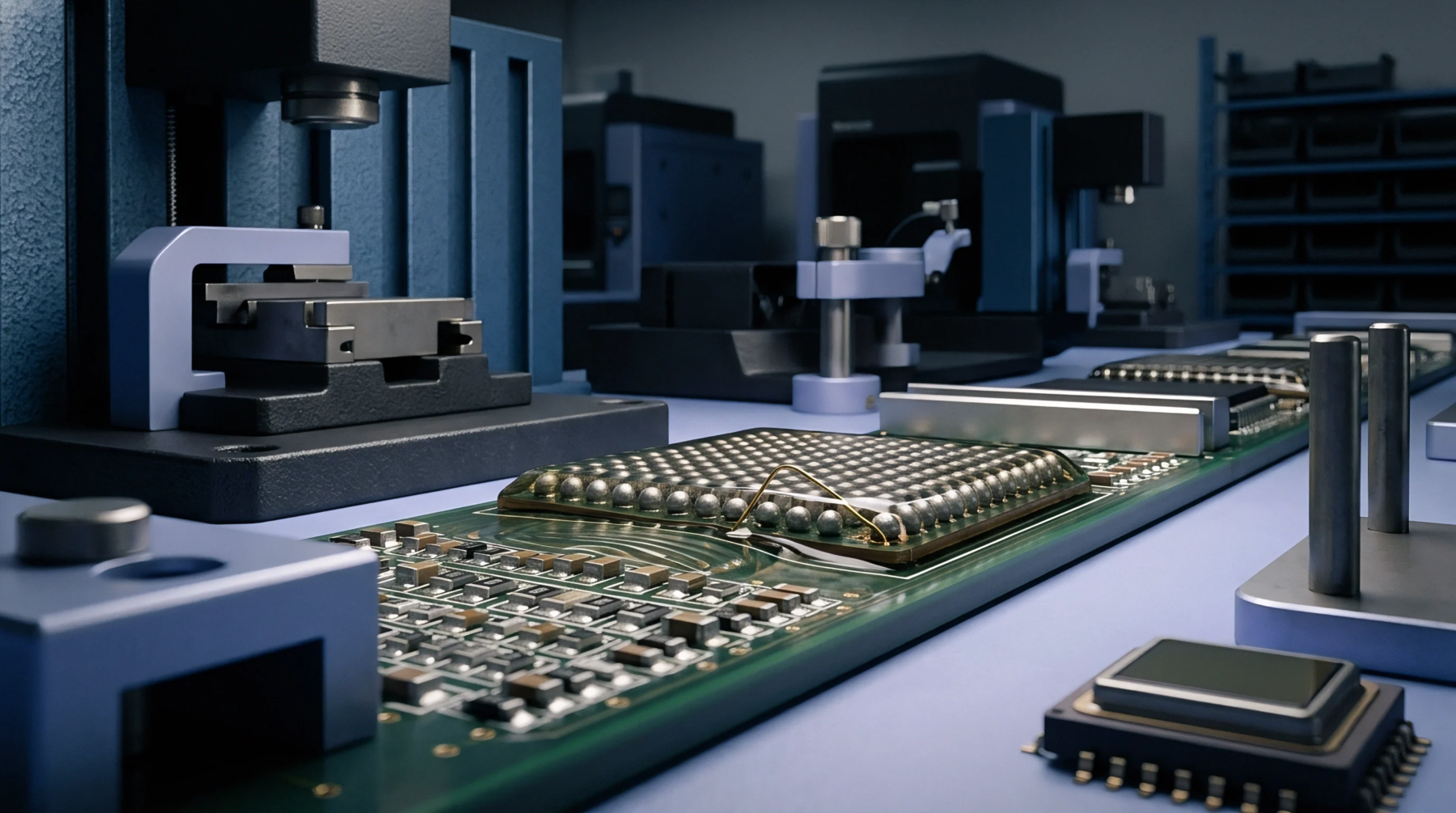
Lead-free interconnect metallurgy composed of ninety-six point five percent tin, three percent silver, and zero point five percent copper forms the standard mechanical and electrical bond across modern printed circuit assemblies. Reliability laboratories evaluate each sac305 solder joint to establish fatigue lifespans under thermal cycling, vibration, and mechanical shock environments. The solidified microstructural matrix consists of primary beta-tin dendrites surrounded by a eutectic network of intermetallic Ag3Sn plates and Cu6Sn5 particles.
Fatigue Mechanism
Cyclic temperature swings induce thermo-mechanical fatigue due to significant mismatches in thermal expansion coefficients between surface-mount component bodies and underlying organic circuit boards. Under thermal cycling, plastic shear strain accumulates in the bulk solder, causing recrystallization of the beta-tin grains and generating high-angle grain boundaries along which creep cracks propagate. Intermetallic compound layers formed at the board pad interface grow thicker over time, consuming copper and creating brittle interfaces vulnerable to shock fractures.
Board Flexure
Dynamic mechanical stresses generated by board bending, drop impact, and connector mating impart severe tensile and shear loads onto surface-mount terminations. Strain limits defined in industrial assembly standards establish maximum allowable board strain levels around ball grid array packages to protect the interconnect from intermetallic cleavage. Sourcing specifications mandate rigorous testing of underfill adhesives, solder paste chemistries, and surface finishes like immersion silver or electroless nickel immersion gold to improve interconnect durability.
Inspection Window
Structural integrity assessments for this specific alloy system require microstructural analysis, dye-and-pry testing, or electrical event detectors during shock testing. X-ray inspection identifies solder bridging and internal voids but cannot resolve micro-cracks or intermetallic degradation along the pad interface. Testing protocols that monitor continuous electrical resistance detect the transient microsecond open-circuits that signal crack initiation long before complete joint separation occurs.
Standard qualification parameters for these interconnects cease to apply when operating temperatures exceed one hundred twenty-five degrees Celsius, where accelerated thermal creep dominates failure kinetics.