Thermal Gradient
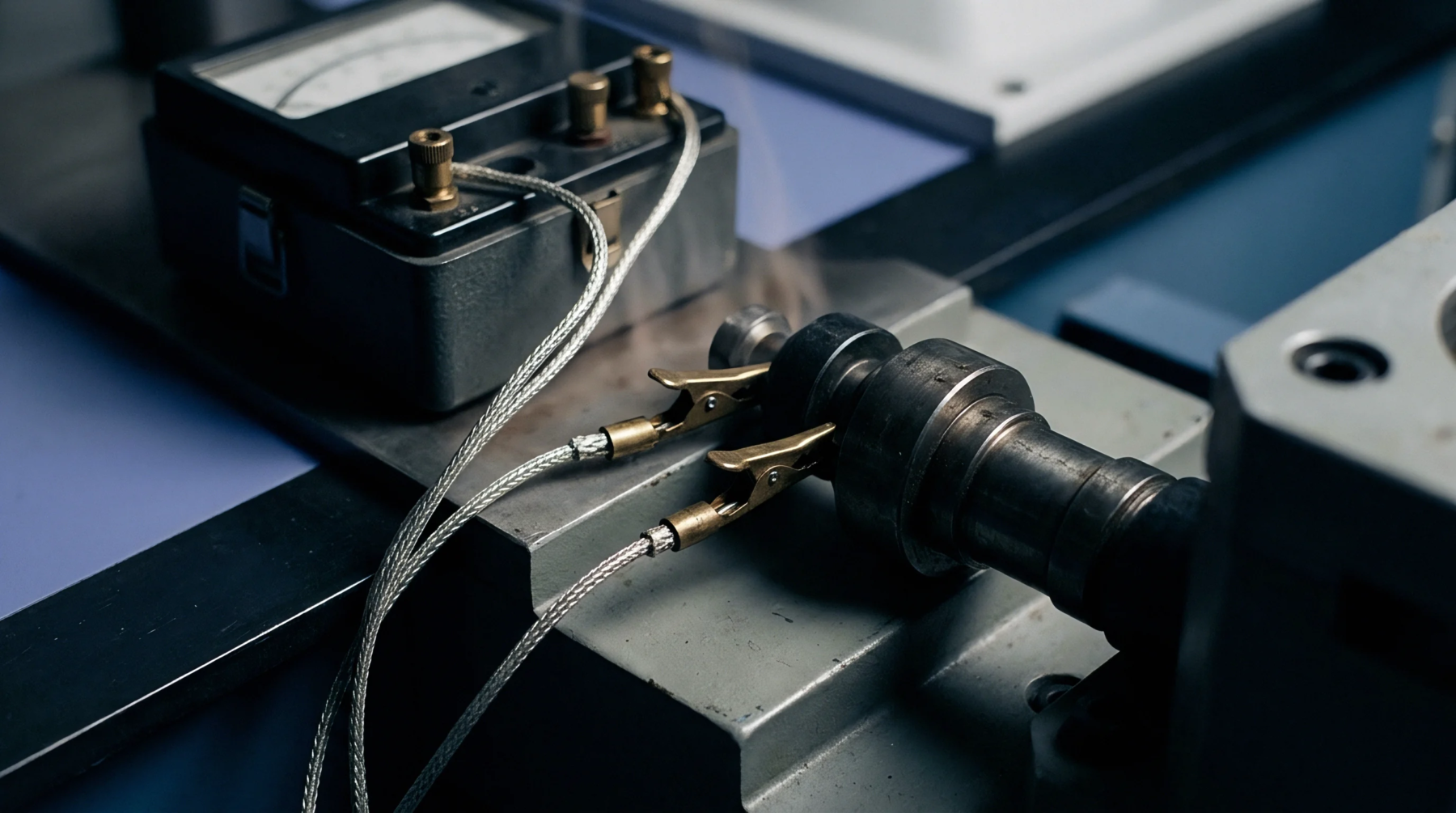
Non-isothermal drift describes a systematic measurement error that occurs when spatial temperature variations across a sensor body induce parasitic electromotive forces or mechanical stress differentials. This phenomenon governs sensor output stability whenever ambient thermal fields fluctuate outside strict laboratory baselines, and the physical boundary of the effect terminates where thermal equilibrium is reached across the entire transducer assembly. Calibration laboratories isolate instruments in temperature-controlled baths to quantify this behavior before deployment, generating correction matrices that technicians apply during data logging.
Gradient Vector
Thermal gradients generate localized mechanical strain within dissimilar metal junctions inside the sensing element, altering electrical resistance through piezoresistive coupling. Conduction pathways through the housing distribute heat unevenly, causing differential expansion rates that distort output signals independently of the target variable. Manufacturers specify operating temperature limits within factory datasheets, defining the threshold beyond which the measurement error exceeds nominal sensor accuracy classes.
Compensation Protocol
Dual-element sensing arrays counteract differential heating by measuring temperature at both the measuring junction and the reference terminal simultaneously. Signal processing hardware subtracts the calculated parasitic offset from the primary measurement stream in real time, restoring accuracy during field operations. Quality assurance engineers verify these algorithms against international calibration standards before issuing certificates of conformity.
Field Variance
Field installations experience dynamic thermal gradients that laboratory testing rarely reproduces, leading to uncorrected errors during continuous monitoring tasks. Wind currents and solar radiation strike enclosures unevenly, creating temperature differentials across the sensor body that standard zero-point adjustments fail to capture. Metrologists minimize this residual uncertainty by applying thermal insulation blankets around exposed transmitter housings.