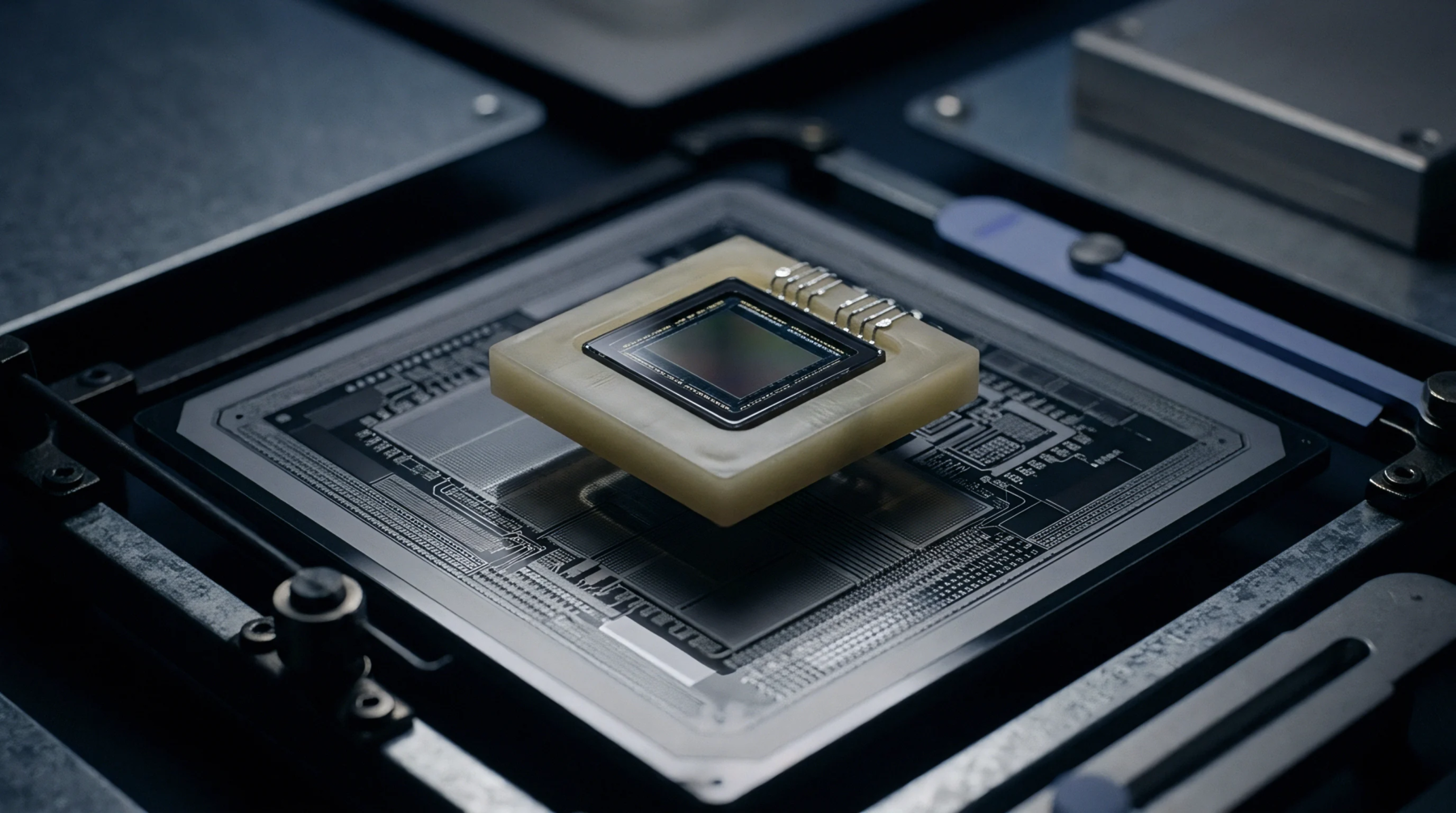
Encapsulant Material
Epoxy resin containing silica fillers is used to protect and reinforce flip-chip interconnects. This material, applied during the packaging stage as molded underfill, fills the gap between the chip and substrate while simultaneously forming the protective package body. This combined process improves the structural integrity of the final assembly.
Flow Dynamic
Flow behavior during the compression molding process is governed by the viscosity of the heated epoxy. As the mold closes, the molten molded underfill is forced through the narrow gap between the die and substrate, surrounding the solder microbumps. If the viscosity is too high or the filler particles are too large, voids will form in the underfill layer.
These voids create weak points where stress concentrations can build up during thermal cycling, leading to early device failure.
Stress Profile
Residual mechanical stress occurs when the package cools from the molding temperature to room temperature. Since the epoxy substrate has a higher expansion coefficient than the silicon die, cooling forces the package to bow. This warpage exerts high stress on the solder bumps, which can result in cracking or delamination.
Optimizing the curing profile of the molded underfill reduces this internal stress and improves the coplanarity of the package.
Delamination Prevention
Adhesion between the underfill material and the chip surface is critical to preventing moisture ingress and corrosion. Any contamination on the die surface before encapsulation will compromise this bond and lead to interfacial separation. Plasma cleaning is often utilized prior to the molding step to remove organic residues and increase surface energy.
This treatment ensures a robust chemical bond, preventing the propagation of microcracks and extending the operational lifetime of the chip under harsh conditions. Testing is performed using acoustic microscopy to verify that the interface is free of voids and delamination.