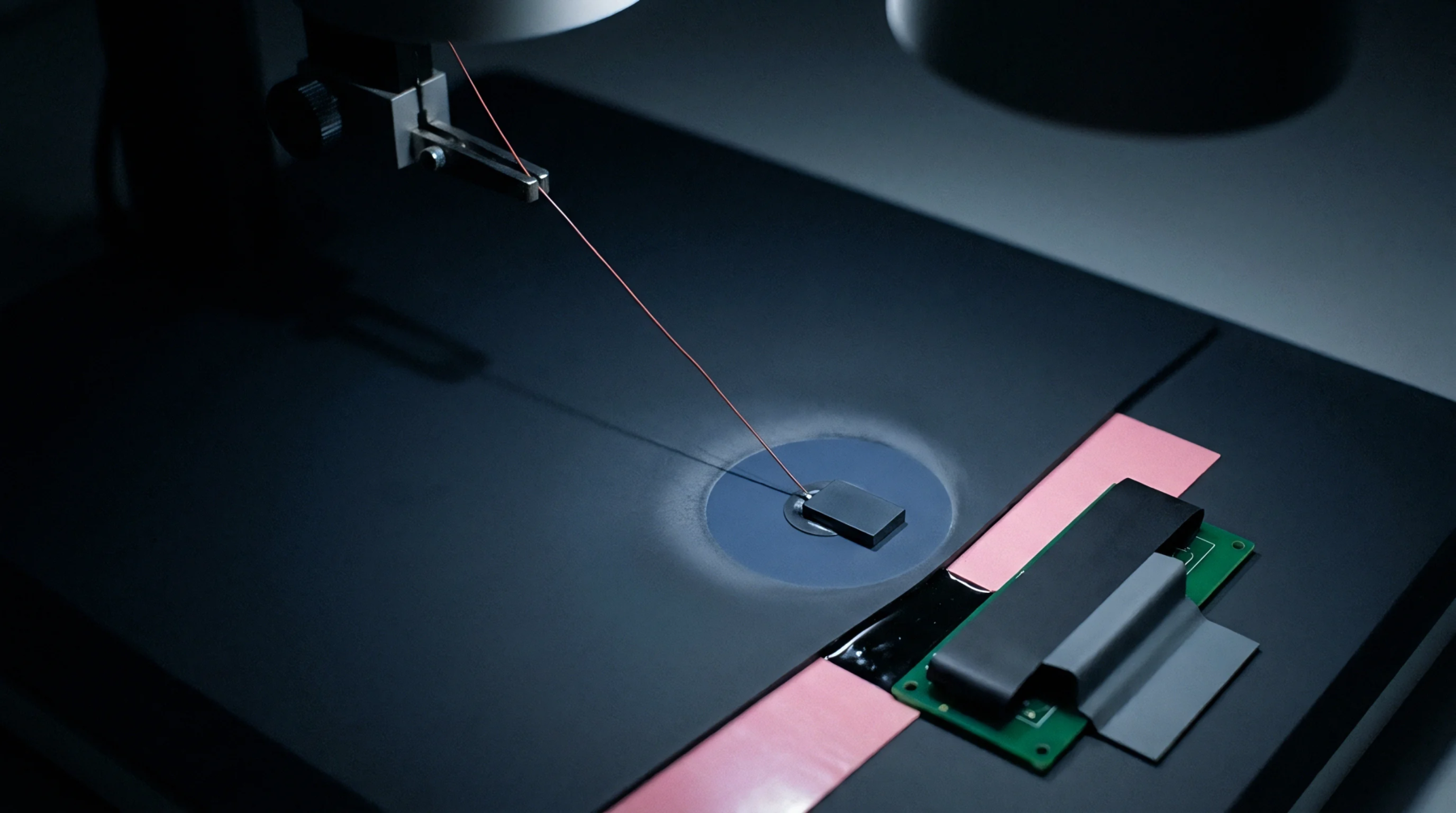
Rate Relationship
Chemical and physical degradation rates in solid state materials often slow down as the reaction product builds up. This progression, which is mathematically described by log time kinetics, models the deceleration of processes like oxide growth or stress relaxation. The reaction rate decreases in inverse proportion to the elapsed time.
This pattern describes degradation processes that are initially very rapid but stabilize over extended periods.
Ageing Mechanism
Dielectric relaxation and charge trapping in metal oxide semiconductor devices follow this non-linear time dependency. Under constant bias stress, the parameter drift driven by log time kinetics shows a rapid initial change before tapering off into a long-term steady state. This relationship helps testing engineers to predict long-term stability from relatively short-term stress data.
It avoids the need for years of continuous testing.
Prediction Tool
Acceleration models based on these logarithmic rates allow designers to qualify materials for decadal service lives. Applying log time kinetics to data collected during high-temperature operational life tests enables accurate calculation of end-of-life parameters. This calculation establishes whether the device will remain within specification limits.
Tolerance Drift
System margins must accommodate this predictably slowing parameter drift over the lifetime of the system. This design consideration ensures that the initial rapid shift does not cause system failures before the circuit stabilizes.