Board Decoupling
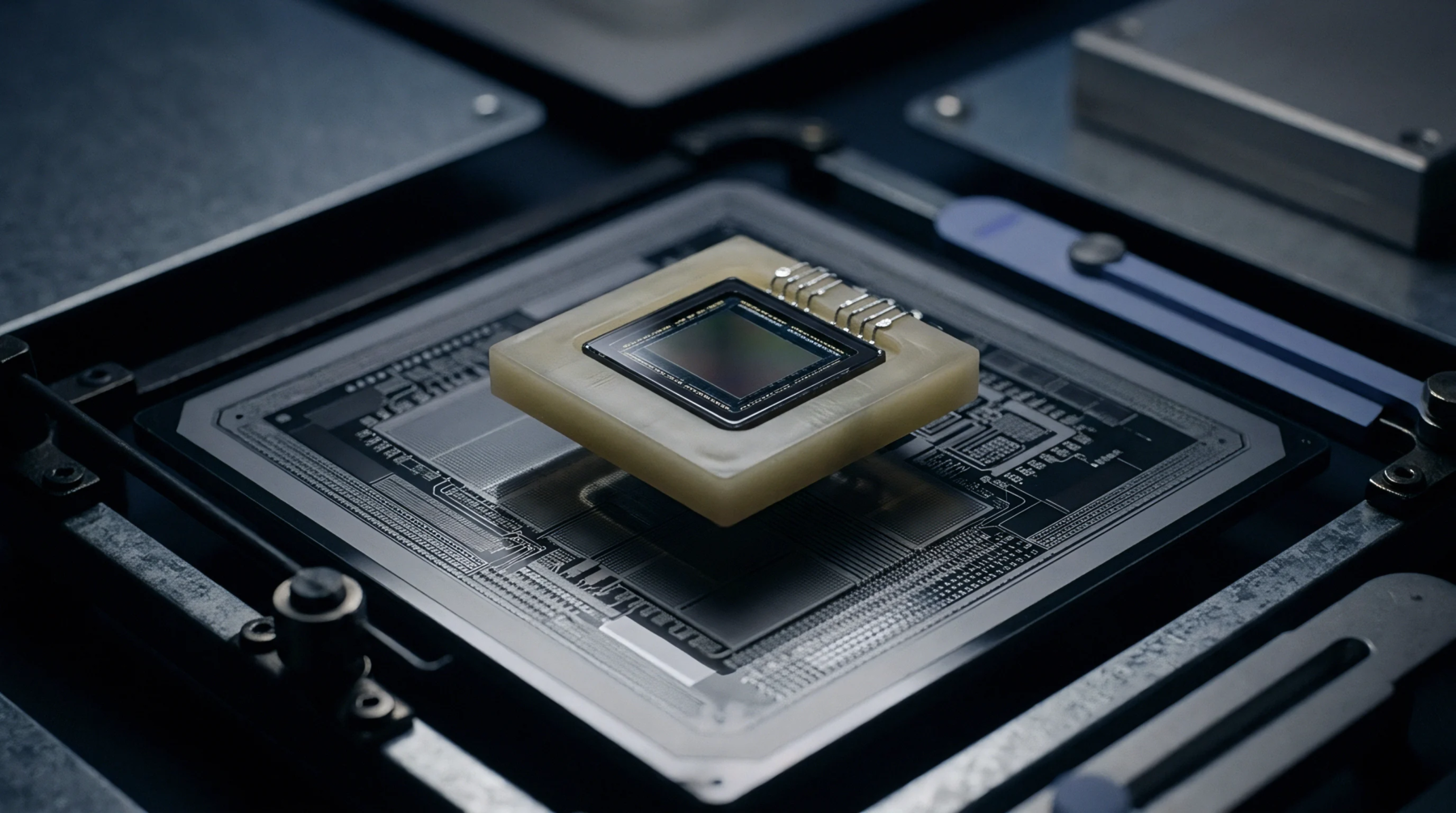
Structural decoupling features reduce the transmission of printed circuit board flexure into surface mounted land grid array sensor packages. Implementing LGA package mechanical isolation prevents external substrate strain from bending the underlying land grid array contacts and altering sensor outputs. Physical routing slots cut around the package perimeter direct bending stress pathways away from critical sensing regions.
Flexible interposers or compliance solder pads absorb micro-deformations caused by thermal or mechanical loads. Automated optical inspection tools verify isolation slot dimensions and pad co-planarity to ensure decoupling performance before system deployment.
Strain Suppression
Mechanical stress isolation reduces signal drift in strain-sensitive inertial and pressure sensors mounted on main board assemblies. Perimeter cutouts in printed circuit boards dissipate bending energy before it reaches component solder pads. Corner relief structures prevent localized stress concentrations from warping the package substrate during board assembly.
Precision placement of isolation channels guarantees sensor baseline stability during structural vibration events.
Substrate Interconnect
Land grid array packages connect directly to circuit boards via planar array contact pads without flexible lead structures. Direct solder connections transfer substrate flexure straight into the component package if mechanical isolation is absent. Compliant interconnect materials or specialized contact arrays damp transmitted strain without sacrificing signal fidelity.
Mechanical testing measures resistance changes and physical deformation across the array during board bending.
Signal Integrity
Isolating sensitive sensor dies from mechanical board strain maintains calibration accuracy and measurement repeatability over time. Unwanted structural stress alters internal piezoresistive element values, creating false measurement signals. Decoupling features preserve factory zero-point calibrations by shielding components from external structural forces.
System performance verification confirms that isolation structures prevent stress-induced output shifts under field operating conditions.