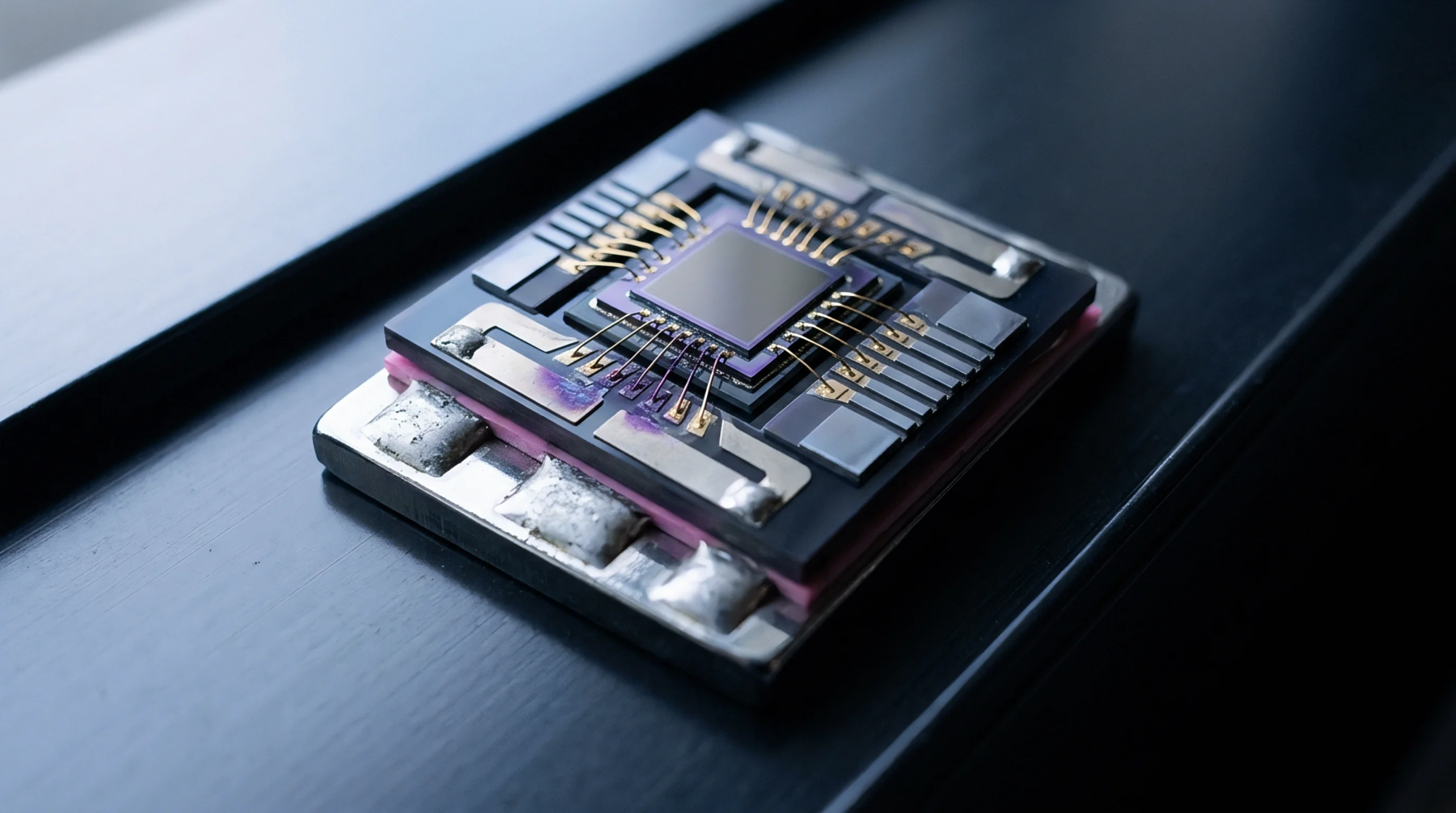
Thermal Measurement
Thermal measurement validation follows JEITA ED-7306 to confirm that semiconductor packages dissipate operational heat within allowable temperature limits. Thermocouples and infrared sensors record junction temperatures under stabilized electrical load conditions inside climatic chambers. Reference standards require mounting the device under test onto a standardized test board with specific copper trace thicknesses to eliminate thermal boundary resistance artifacts.
Calibration drift in the measuring equipment introduces systematic bias that must be subtracted from the final temperature reading before comparison against maximum ratings.
Resistance Calibration
Resistance calibration procedures verify the thermal resistance coefficient specified by JEITA ED-7306 by applying a known heating current and measuring forward voltage shifts in the sensing diode. Bridge circuits detect millivolt fluctuations that correspond to junction temperature changes during transient cooling intervals. Thermal transient testing equipment generates step functions in electrical power while sampling voltage decay curves at high acquisition rates.
Parasitic lead resistance distorts the apparent voltage drop, so four-wire Kelvin connections prevent wiring impedance from corrupting the calculated thermal impedance value.
Signal Drift
Signal drift degrades measurement repeatability during prolonged thermal stress testing if ambient humidity alters the insulation resistance of the test socket. Moisture condensation on the printed circuit board creates leakage currents that mimic junction voltage changes, leading to false thermal resistance calculations. Operators isolate the test chamber environment with dry nitrogen purges to maintain dew point boundaries below minus forty degrees Celsius throughout the entire logging cycle.
Contact wear on spring probe pins increases electrical resistance over successive insertion cycles, which forces periodic verification against known reference resistors to preserve measurement traceability.
Thermal Resistance
Thermal resistance calculations governed by JEITA ED-7306 establish the maximum allowable power dissipation for power semiconductor devices operating in industrial environments. Ambient temperature fluctuations interfere with steady-state thermal equilibrium, so testing protocols mandate strict temperature control within plus or minus zero point one degrees Celsius in the surrounding air. Heat sink thermal capacity dictates the duration of the transient response phase, requiring extended logging periods to capture true asymptotic temperatures.
Calculated junction-to-case thermal resistance values determine whether a semiconductor package meets the thermal performance threshold required for reliable deployment in high-power electronic systems.