Thermal Expansion Effects on Silicon Substrate Inertial Sensor Drift
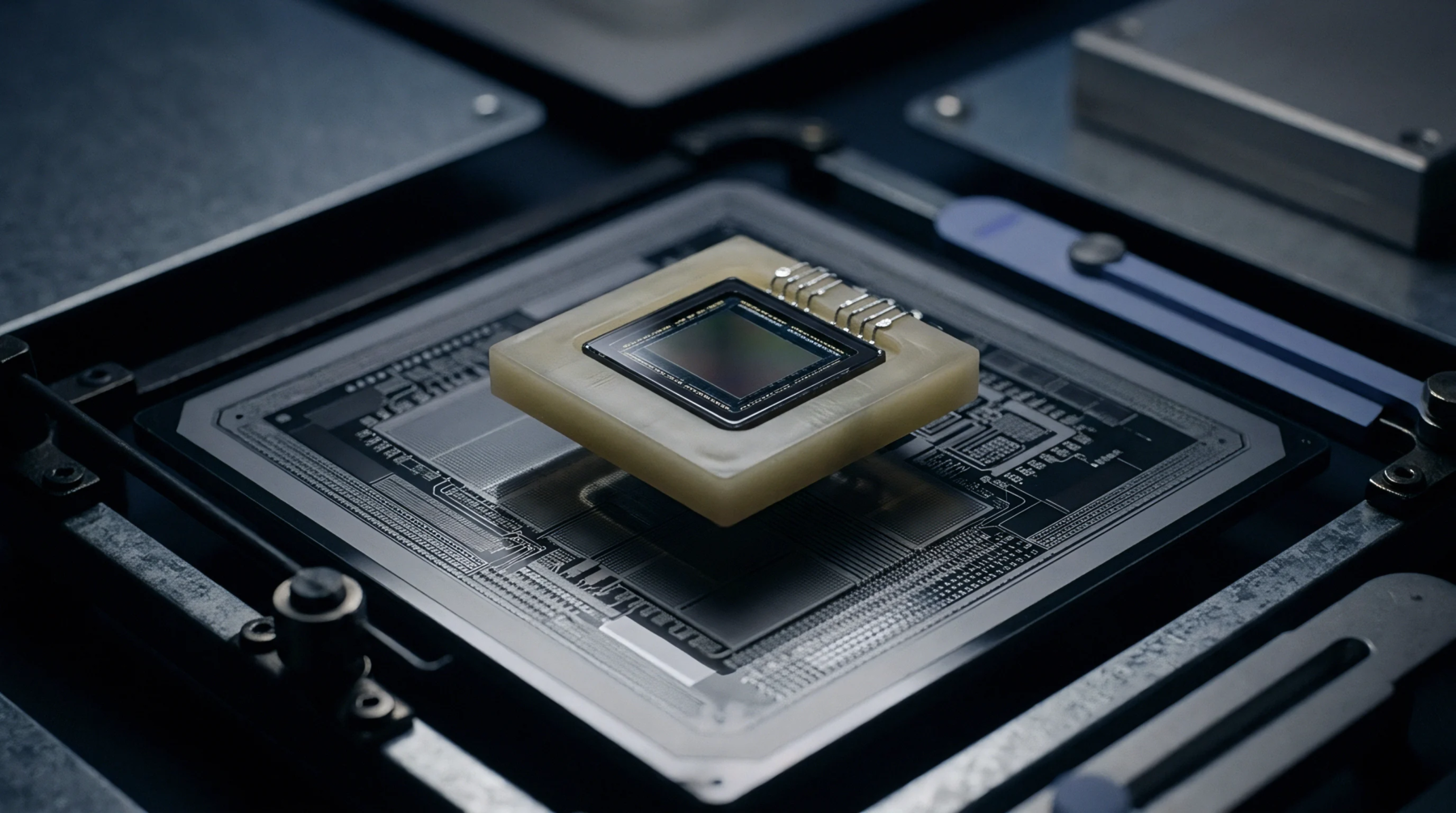
Silicon substrate expansion mismatches create stress across MEMS structures, driving zero-g drift that demands isolated anchors and hysteresis modeling.
Multilayered electronic packaging consists of a dense arrangement of alumina or glass-ceramic sheets laminated with conductive metal patterns and fired simultaneously within a controlled atmosphere furnace to create a monolithic structure. High temperature co-fired ceramic components provide the electrical interconnects and thermal management required for high density circuits in harsh environments. Fabrication requires stacking thin green tapes printed with refractory metal inks like tungsten or molybdenum.
These stacked layers undergo a firing cycle exceeding one thousand degrees Celsius. Temperatures during this firing phase dictate the final shrinkage of the body, which technicians must account for during the design stage to ensure alignment of vias and pads. The resulting module achieves gas-tight hermeticity, shielding sensitive internal circuitry from moisture and contaminants.
High temperature co-fired ceramic parts retain mechanical integrity under thermal cycling conditions that would degrade organic substrates.
Dimensional stability determines the yield of production batches because uneven shrinkage leads to misaligned connection points. Metrologists monitor alignment using optical registration systems before and after the heat treatment. Variation in tape thickness or composition alters the local shrinkage rate.
Calibration of the furnace temperature profile remains the primary control factor for minimizing warping. Operators verify these dimensions against standard gauges to determine if the batch meets the tolerance requirements set by the component drawing. Any deviation from the target shrinkage value necessitates a recalibration of the punching patterns used for the green state sheets.
Electrical performance relies on the conductivity of the internal metal traces and the dielectric constant of the ceramic material. Engineers measure insertion loss and impedance matching across the frequency range of the application. High temperature co-fired ceramic modules offer stable permittivity, which minimizes propagation delay in high frequency digital circuits.
Metal trace resistivity increases if the firing atmosphere contains trace oxygen, as this oxidizes the tungsten or molybdenum conductors. Insertion loss stays within acceptable bounds only when the ceramic density is high and void formation is suppressed during the liquid phase sintering step. Testing equipment must include vector network analyzers to characterize the return loss of these buried conductive paths in the finished package.
Batch consistency depends on the particle size distribution of the starting ceramic powder and the viscosity of the conductive pastes. Analytical methods such as scanning electron microscopy confirm the pore structure and phase composition of the fired body. Suppliers define the mechanical strength through three point bend tests performed on representative samples taken from each production lot.
Thermal expansion coefficients must match the mounted semiconductor dice to prevent fatigue at the attachment interfaces. High temperature co-fired ceramic devices possess a predictable thermal expansion rate that facilitates reliable flip-chip or wire-bonded interconnections. The coefficient of thermal expansion remains the fundamental parameter defining the long term reliability of the assembly.
Silicon substrate expansion mismatches create stress across MEMS structures, driving zero-g drift that demands isolated anchors and hysteresis modeling.
Expertise is a utility, not a secret. sentiention™ publishes its working knowledge as open reference: intelligence layer covering the materials it sources, the markets it enters, and the reference that serves both.