Composite Material
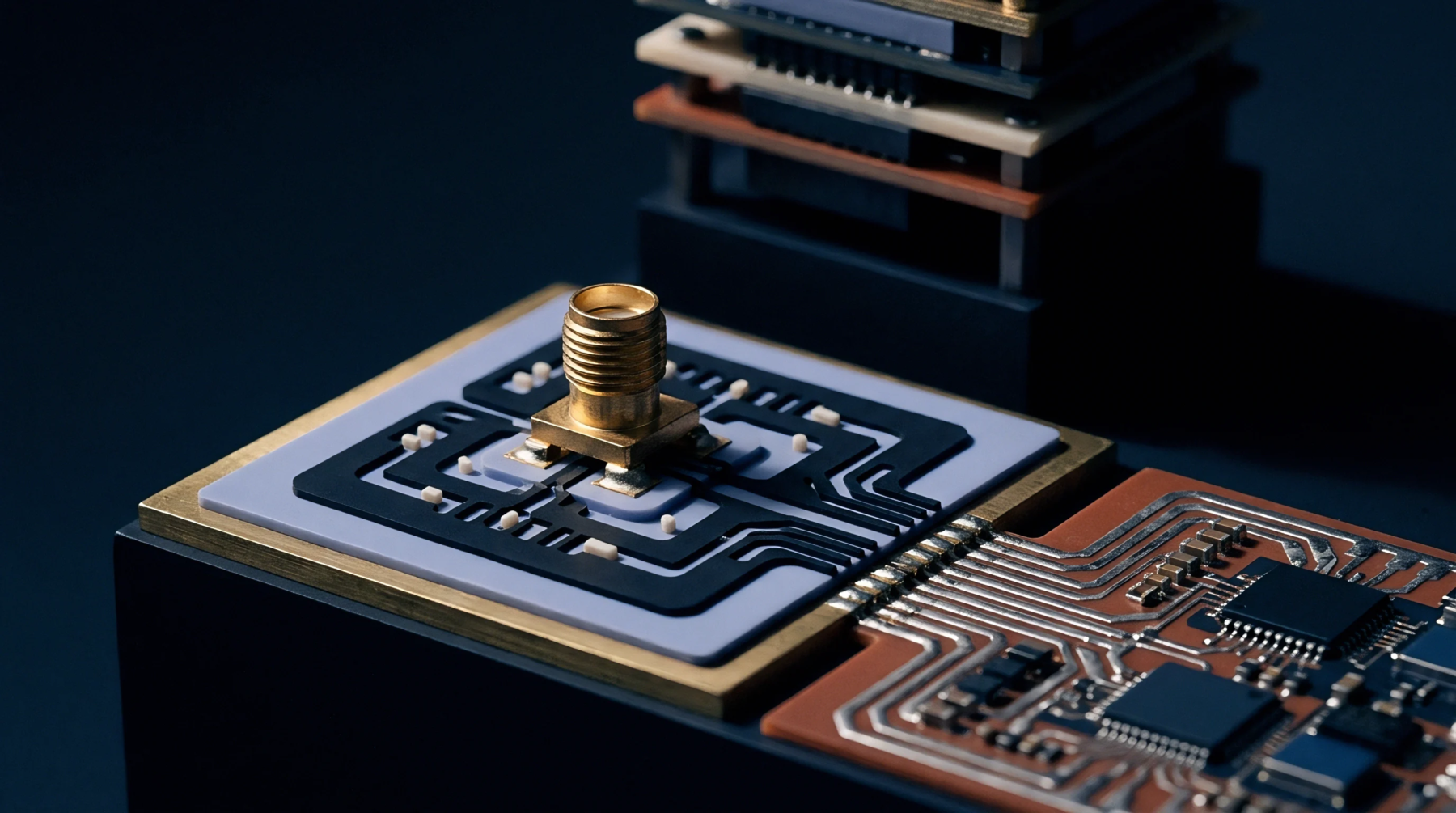
Glass-reinforced epoxy laminate sheets are the primary substrate material used in the fabrication of printed circuit boards. Known as FR-4, where the designation stands for flame retardant, this composite offers a reliable balance of mechanical strength and electrical isolation. It provides the structural foundation for both double-sided and multilayer board designs.
Thermal Performance
Thermal robustness is a critical parameter when selecting laminate grades for lead-free soldering processes. Higher-grade varieties of FR-4 feature a glass transition temperature exceeding one hundred and seventy degrees Celsius, preventing board warpage and barrel cracking in vias during thermal stress. Under sustained high temperatures, the resin can degrade, leading to delamination and electrical failure.
Multi-cycle reflow testing ensures that the laminate maintains its mechanical integrity through successive assembly stages.
Electrical Insulation
The relative permittivity of this laminate generally ranges from four to nearly five, varying with the ratio of resin to glass weave. This variation in the dielectric constant of FR-4 can lead to trace impedance mismatches at frequencies above one gigahertz, where more specialized low-loss substrates are typically required. Careful routing over uniform weave patterns helps minimize these effects.
Manufacturing Suitability
Exposure to humid environments can degrade the insulating properties of the epoxy matrix. Laminate sheets absorb a small percentage of moisture, which increases the dielectric constant. Baking the boards removes trapped moisture before assembly.