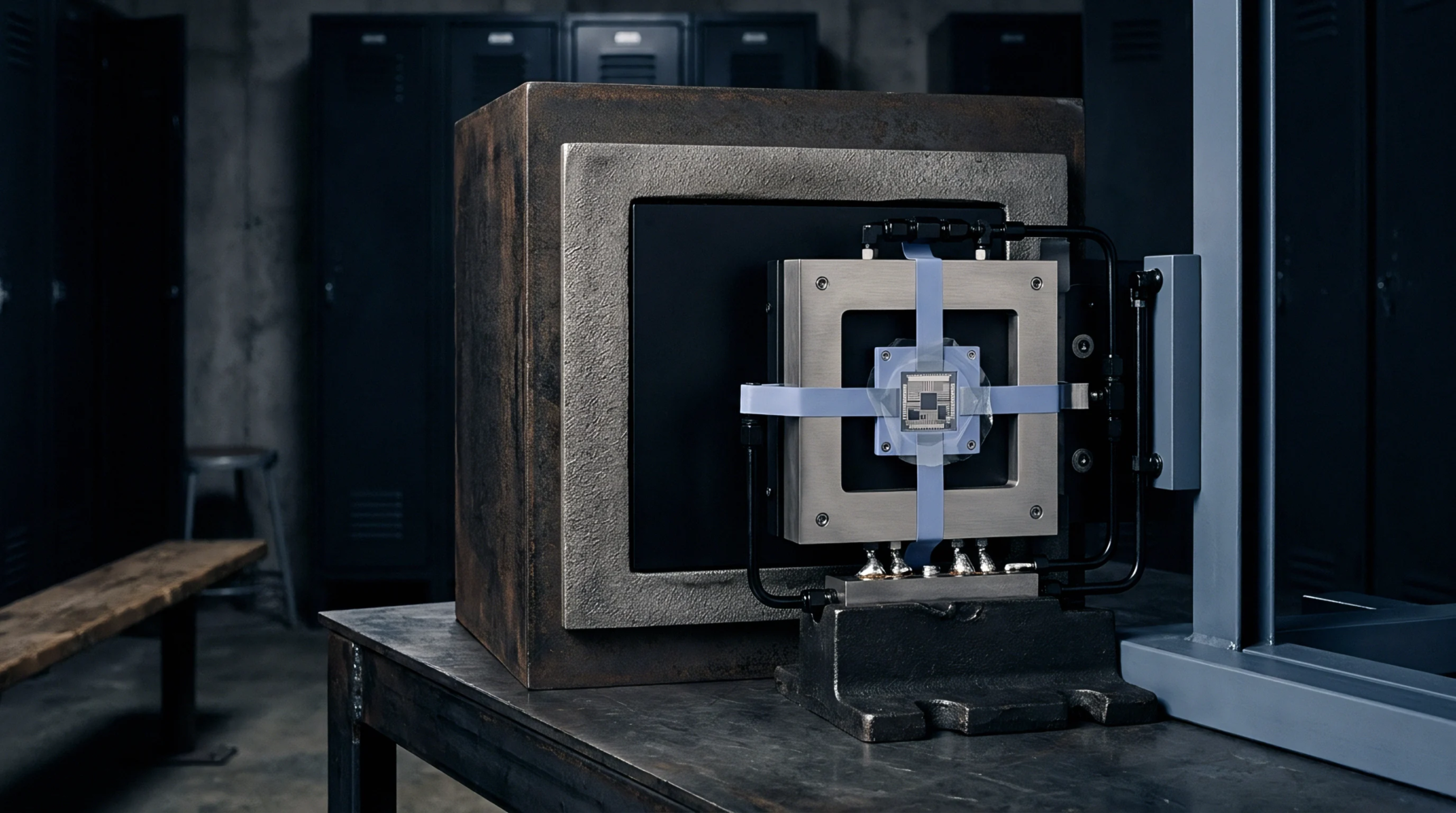
Chamber Calibration
A metrological exposure procedure subjects electronic transducers to controlled water vapor concentrations inside a sealed enclosure to determine saturation thresholds across defined temperature points. The environmental humidity test quantifies the moisture absorption rate of polymeric dielectres during sustained exposure cycles. Psychrometric charts supply the primary reference standard against which raw sensor outputs are compared during the procedure.
Condensation on the sensing element introduces severe drift by bridging microscopic traces on the circuit board. Calibration laboratories establish allowable error margins for the instrument before certification documents are issued to the end user. Hygrometer accuracy degrades when airborne particulate matter contaminates the optical mirror inside the dew point generator.
Vapor Gradient
Transient moisture injection generates local concentration spikes that challenge the response time of the device under evaluation. An environmental humidity test records the time constant required for the transducer to register sixty three percent of a step change in relative humidity. Air velocity across the test section must remain strictly constant to prevent thermal boundary layers from distorting the reading.
Fan speed variations create turbulent eddies that invalidate the local vapor pressure calculations.
Hysteresis Error
Mechanical stress from repeated swelling and shrinking of the sensing film introduces residual offset errors between rising and falling moisture ramps. The environmental humidity test isolates this hysteresis loop by cycling the chamber through full scale hydration and dehydration sequences without interruption. Polymeric materials exhibit memory effects that retain moisture molecules longer during the desorption phase than during the initial adsorption stroke.
Thermal compensation algorithms inside the signal processor correct for temperature dependent shifts in the calibration curve.
Moisture Ingress
Sealed enclosures undergo pressure differentials during rapid humidity changes that force water vapor past mechanical gaskets into the internal electronics bay. An environmental humidity test stresses housing seals by alternating extreme dew point conditions with dry air purges over extended durations. Internal condensation events trigger dielectric breakdown between adjacent copper traces on high impedance printed circuit boards.
Hermetic packaging prevents moisture migration through the outer shell during long term deployment in tropical climates.