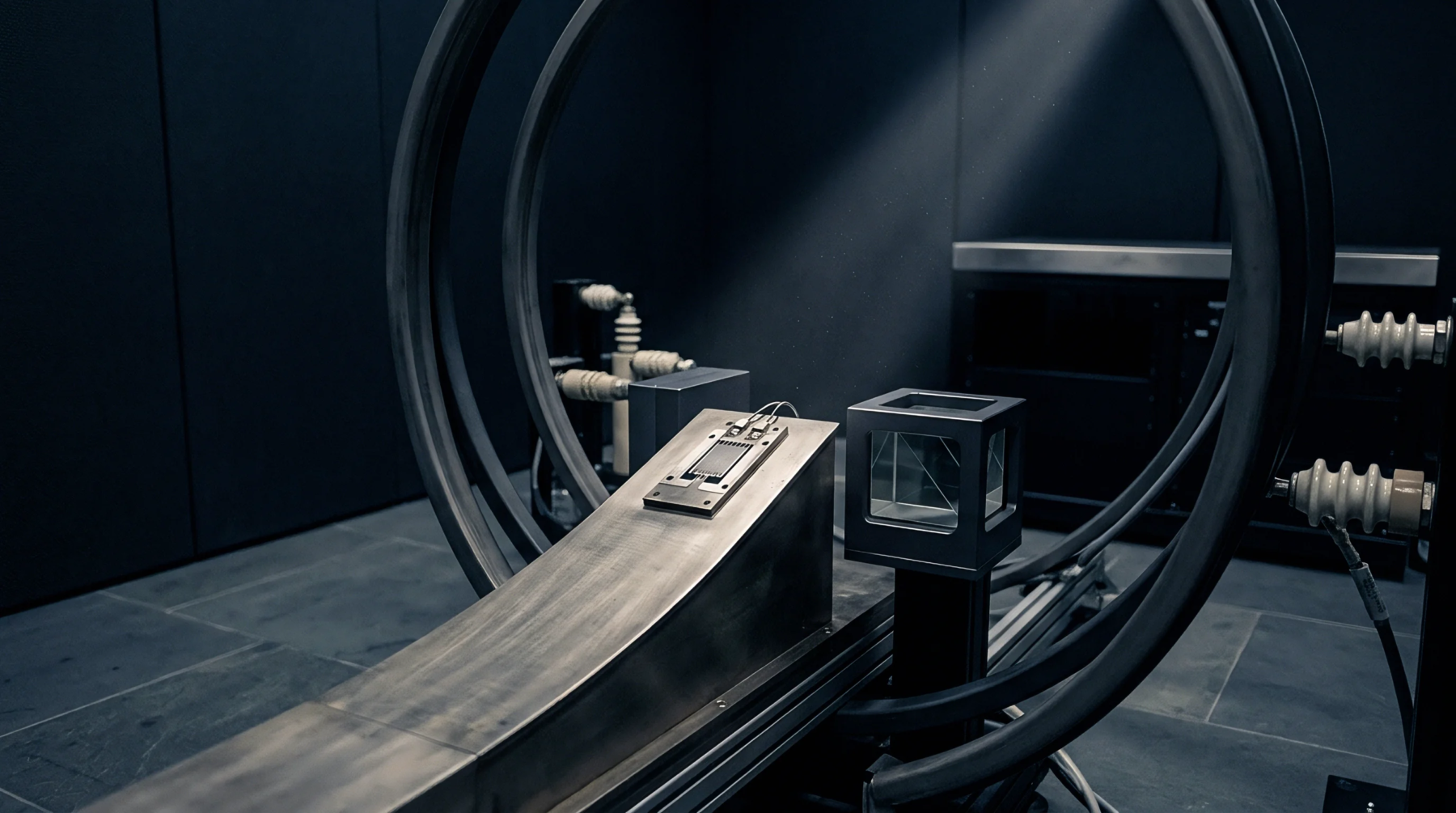
Sensor Measurement
Capacitive signal variance quantifies the microscale physical shift between parallel conductive plates within a sensing assembly. This electrostatic gap displacement tracks the precise movement of internal components when subjected to external mechanical forces or thermal expansion. Calibration against a laser interferometer establishes the baseline distance between these elements to ensure signal linearity.
Static pressure variations inside the housing shift the dielectric constant, thereby introducing an offset that necessitates a secondary compensation loop to maintain nominal output levels.
Mechanical Variance
Deviations in the measured gap arise from vibration and structural fatigue acting on the housing materials. Such electrostatic gap displacement registers as a shift in the recorded capacitance value, which then requires filtering to separate noise from genuine physical movement. Differential thermal expansion between the probe tip and the supporting substrate often creates a drift pattern that tracks with ambient temperature cycles.
Engineers isolate these artifacts by comparing the probe data against an independent reference thermometer located near the primary transducer.
Operational Accuracy
Reliable operation depends on the alignment of the internal electrode plates relative to the ground plane. Because electrostatic gap displacement remains sensitive to alignment errors, manufacturers specify strict tolerances for perpendicularity during final assembly. Non-parallel surfaces create a gradient in the electrical field, which causes non-linear responses during high-range operation.
Periodic verification against a master gauge confirms whether the instrument maintains its sensitivity throughout the full rated travel distance.
Output Fidelity
Stability of the converted voltage signal dictates the usable resolution of the measurement system. Any instability in the power supply voltage directly modulates the electrostatic gap displacement reading, adding an artificial layer of uncertainty to the data acquisition process. Shielded cabling reduces interference from external electromagnetic fields that would otherwise alias into the low-frequency component of the signal.
Consistent electronic performance ensures that the recorded distance accurately represents the physical state of the measured object under all rated operating conditions.