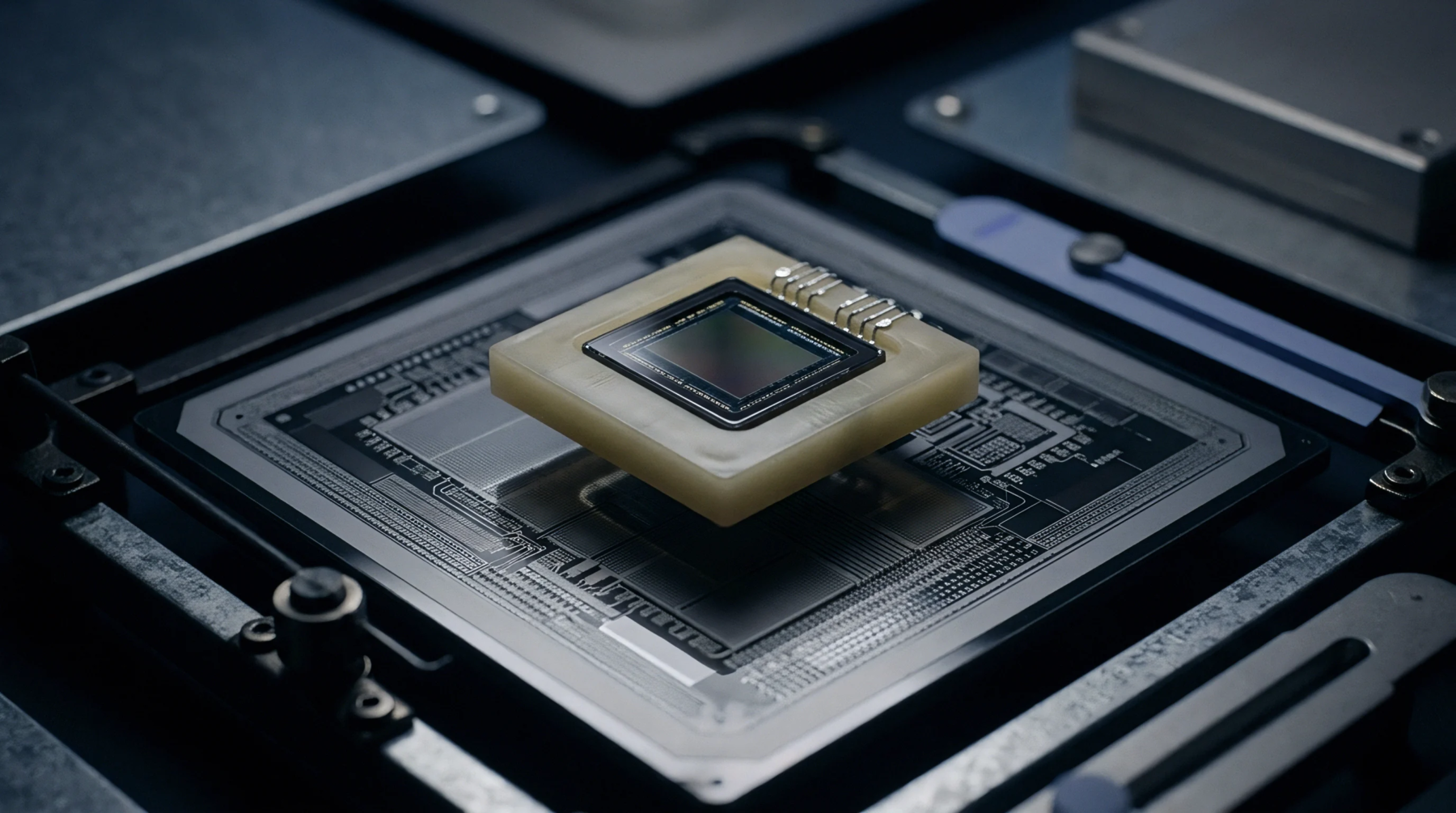
Transduction Architecture
Measurement designs that extract two distinct physical observables from a solitary mechanical or solid-state transducer provide simultaneous tracking of primary measurands and environmental cross-sensitivities. This dual-mode sensing architecture combines resonant frequency tracking with piezoresistive, capacitive, or optical detection on the same silicon die. The boundary of the technique stops at separate physical elements co-packaged on an alumina substrate, because true dual-mode operation demands that both output signals originate from identical sensing volume boundaries.
Decoupling Mechanism
Silicon microstructures exhibit temperature-dependent elasticity alongside their acceleration or pressure response. Driving a microstructure in its fundamental resonant mode allows frequency output to register mechanical stress, while simultaneous interrogation of electrical resistance across an internal bridge network yields die temperature. A digital processor then uses this co-located thermal signal to calculate polynomial compensation coefficients in real time.
This co-location eliminates spatial thermal lag between sensor core and compensation electronics.
Interference Boundary
Cross-axis mechanical coupling and electrostatic feedthrough restrict the isolation between simultaneous channels. Actuation voltages powering a resonant drive loop can induce parasitic capacitive currents in secondary displacement-sensing circuits, skewing zero-point calibration. Designers resolve this interference by separating operational frequencies, placing drive carriers well away from readout modulation bandwidths.
Calibration routines verify channel isolation by sweeping mechanical input while confirming that secondary channel deviation remains below baseline noise limits.
Verification Protocol
Acceptance testing evaluates rejection ratios under simultaneous dynamic acceleration and thermal ramping inside an environmental test chamber. The secondary mode must track environmental variables across the full military temperature range without shifting the primary measurement calibration by more than the manufacturer tolerance band. Dual-mode sensing provides continuous internal self-diagnostics by reporting impedance or resonance shifts when structural cracks alter the mechanical transfer function.