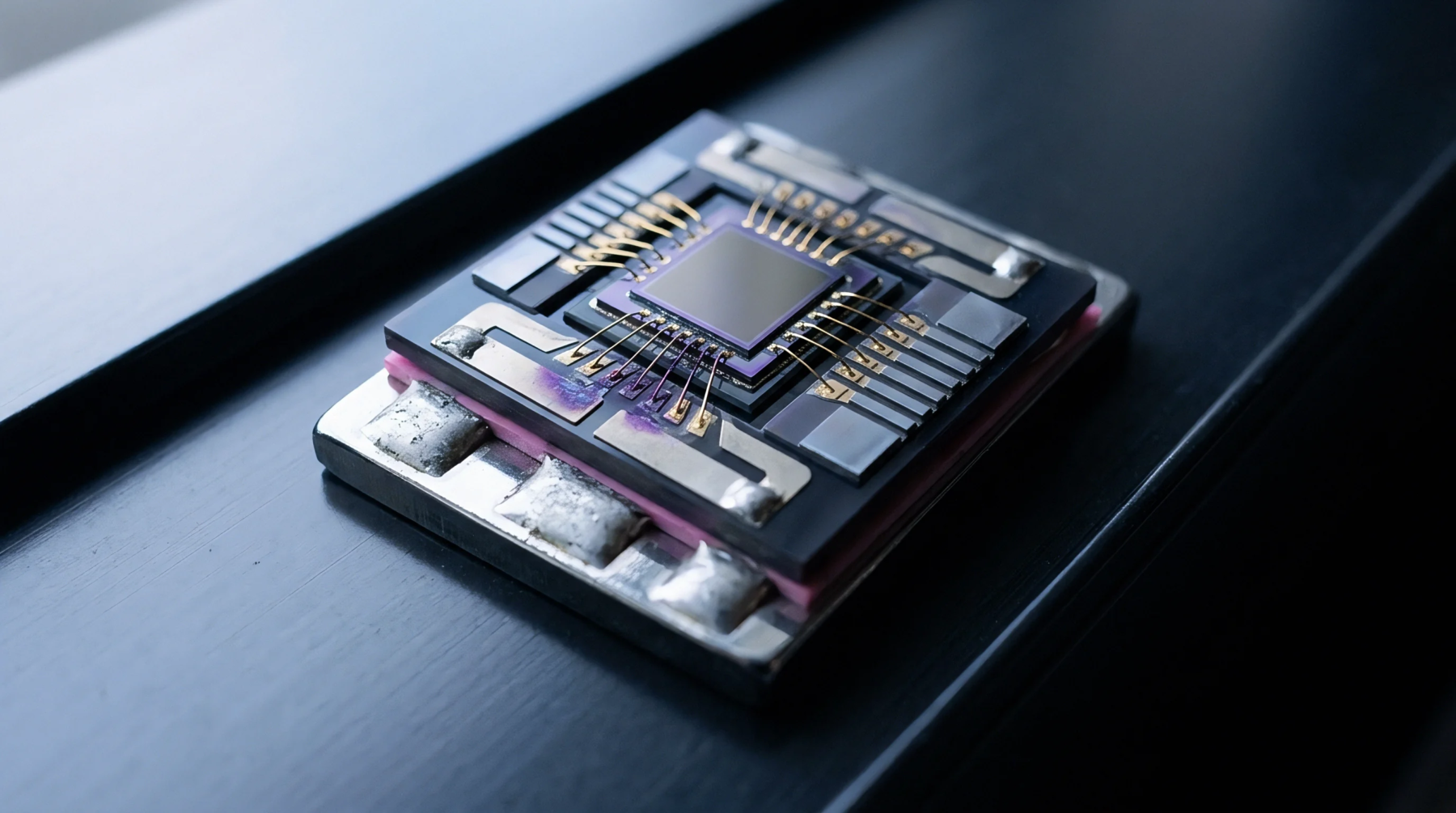
Microfabrication Technique
Deep silicon etching produces high-aspect-ratio trenches that electrically or mechanically separate distinct functional regions on a single wafer. Employing drie isolation prevents parasitic capacitance and signal cross-talk in integrated sensor designs. This step is fundamental for high-performance capacitive accelerometers.
Process Execution
The Bosch process alternates between etching cycles with sulfur hexafluoride and passivation cycles with octafluorobutane to achieve nearly vertical sidewalls. In drie isolation, the uniformity of the trench depth and sidewall angle determines the electrical isolation capability. Etch-stop layers are used to control the termination of the trench at the oxide interface.
Metrological Impact
Capacitive sensitivity is directly related to the physical dimensions and structural integrity of the isolated silicon beams. Any variation in the trench profile across the wafer introduces asymmetry, which translates to cross-axis sensitivity in the final sensor. Measurement of trench profiles is performed using scanning electron microscopy or optical scatterometry during production quality checks.
These inline measurements ensure that the geometric deviation remains within a tight tolerance of one percent, which prevents calibration drift in the completed accelerometer.
Mechanical Resilience
Silicon microstructures are susceptible to fracture if stress concentrations develop at the bottom of the etched trenches during mechanical shock. Rounding the trench corners reduces these stress concentrations and improves the structural reliability of the device. Consequently, isolated components remain stable under harsh shock conditions, preventing mechanical failures.